At a glance
The attack was a criminal and terrorism investigation, not a war. Police had already been moving toward Aum after the June 1994 Matsumoto sarin case (eight dead) and earlier crimes, including the 1989 murder of lawyer Tsutsumi Sakamoto and his family. Asahara Shoko, born Matsumoto Chizuo, was arrested on 16 May 1995. He was sentenced to death in 2004; the sentence became final in 2006.
Atlas Verification Checklist
0 / 4 verifiedCheck each criteria to confirm findings against the atlas verdict.
Tokyo subway sarin attack · tagline
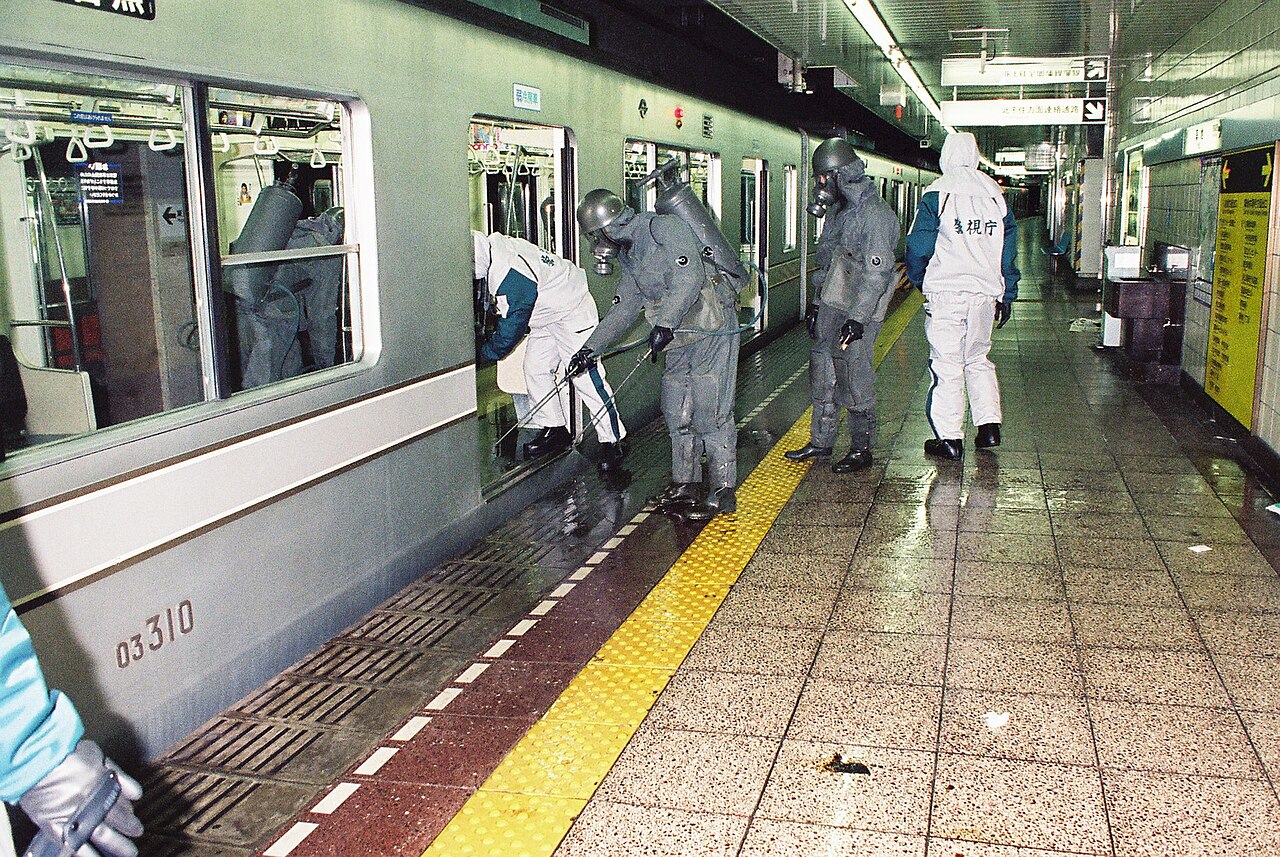
On 20 March 1995 members of Aum Shinrikyo released sarin on Tokyo subway trains, killing 13 people; the investigation and trials remade Japanese security law. On the morning of 20 March 1995, members of the new religious movement Aum Shinrikyo released the nerve agent sarin on five Tokyo subway trains converging on the Kasumigaseki government district.
Tokyo subway sarin attack · The attack was a criminal and terrorism investigation, not a w
The attack was a criminal and terrorism investigation, not a war. Police had already been moving toward Aum after the June 1994 Matsumoto sarin case (eight dead) and earlier crimes, including the 1989 murder of lawyer Tsutsumi Sakamoto and his family. Asahara Shoko, born Matsumoto Chizuo, was arrested on 16 May 1995. He was sentenced to death in 2004; the sentence became final in 2006.
Tokyo subway sarin attack · Legal aftermath included revocation of Aum’s religious-corpora
Legal aftermath included revocation of Aum’s religious-corporation status, a 1995 revision of the Religious Corporations Act, and the 1999 Act on the Control of Organizations Which Have Committed Acts of Indiscriminate Mass Murder. Successor groups remain under public-security watch. English-language memory framed Aum as a “doomsday cult” that ended Japan’s reputation for public safety.
Tokyo subway sarin attack · paras 1
Five coordinated releases occurred on Teito Rapid Transit Authority (now Tokyo Metro) lines during the Monday rush, aimed at trains passing Kasumigaseki, the ministry quarter. Station staff and passengers were among the dead. Hospitals treated thousands for exposure. The page stops at that public sequence.
This is a reading check for the atlas, not personal advice, a live price, or a booking. It does not replace the full topic page.
What is the next question after this?
Legal aftermath included revocation of Aum’s religious-corporation status, a 1995 revision of the Religious Corporations Act, and the 1999 Act on the Control of Organizations Which Have Committed Acts of Indiscriminate Mass Murder. Successor groups remain under public-security watch. English-language memory framed Aum as a “doomsday cult” that ended Japan’s reputation for public safety.
Does this page rank people or nations?
This is a reading check for the atlas, not personal advice, a live price, or a booking. It does not replace the full topic page.
Where is the longer entry?
Five coordinated releases occurred on Teito Rapid Transit Authority (now Tokyo Metro) lines during the Monday rush, aimed at trains passing Kasumigaseki, the ministry quarter. Station staff and passengers were among the dead. Hospitals treated thousands for exposure. The page stops at that public sequence.
Next question: Watergate scandal · Open the topic: Tokyo subway sarin attack