Score intensity Darker cells mean a higher score for this topic on that metric.
80
78
48
70
66
44
Less More
Score profile Each bar is a 0-100 atlas score for this topic, not a timeline.
Sillage 80
Longevity 78
Versatility 48
Complexity 70
Cultural impact 66
Approachability 44
Trail and hold Notes Notes: Black pepper / Pink pepper / Cinnamon / Cardamom Notes / Black pepper / Pink pepper / Cinnamon / Ca Heart: Carnation / Clove / Rose / Cumin Heart / Carnation / Clove / Rose / Cumin Base: Benzoin / Sandal / Tobacco / Amber Base / Benzoin / Sandal / Tobacco / Amber Timeline Milestones in order. This is history, not a weekly activity grid.
Trade centuries Spice routes Early extras Carnation hearts 1953 Youth Dew 1954 Poivre 1977 Opium 1978 Cinnabar 1990 Égoïste 2000s Comme des Garçons pepper 2006 Rose 31 cumin IFRA years Eugenol and cinnamal Trade centuries Spice routes Early extras Carnation hearts 1953 Youth Dew 1954 Poivre 1977 Opium 1978 Cinnabar 1990 Égoïste 2000s Comme des Garçons pepper 2006 Rose 31 cumin IFRA years Eugenol and cinnamal Explore Floral Floral White floral White floral Rose Rose Jasmine Jasmine Iris & powdery Iris & powdery Fruity Fruity Citrus Citrus Aromatic Aromatic Aquatic Aquatic Green Green Tea Tea Woody Woody Sandalwood Sandalwood Oud & incense Oud & incense Vetiver Vetiver Chypre Chypre Compare 13 min read
If you only read one thing
Pepper, clove, cinnamon bark — heat without a kitchen, from carnation spice to a winter afternoon on skin.
Key takeaways
Spice in perfume is heat without a kitchen — pepper, clove and a winter afternoon on skin. Pepper, clove, cinnamon bark — heat without a kitchen, from carnation spice to a winter afternoon on skin. Spicy sits in the Warmth group of this atlas. Resin and dessert — amber, spice, gourmand, vanilla, tobacco and leather.
Jump to section
Previous
Oriental amber
Next
Gourmand
Local systems
IFRA / allergens Annex and allergen labelling language on bottles.
Counter grades EDT/EDP/extrait as shop-floor words, not chemistry.
Duty-free / gift Travel retail and gift seasons for this language market. Local examples Gift-season wear notes for English counters. Duty-free EDT/EDP wording beside the pyramid. Local FAQ Is EDT stronger than EDP? Usually not — EDP is typically higher oil; check the bottle.
Do I need allergen lists? Retail labels follow IFRA/region rules; this atlas is educational.
Local terms
Pyramid Top / heart / base teaching layers.
Concentration EDT/EDP/extrait shop grades.
Accord A taught blend, not a legal formula. Local systems
IFRA / allergens Annex and allergen labelling language on bottles.
Counter grades EDT/EDP/extrait as shop-floor words, not chemistry.
Duty-free / gift Travel retail and gift seasons for this language market. Local examples Gift-season wear notes for English counters. Duty-free EDT/EDP wording beside the pyramid. Local FAQ Is EDT stronger than EDP? Usually not — EDP is typically higher oil; check the bottle.
Do I need allergen lists? Retail labels follow IFRA/region rules; this atlas is educational.
Local terms
Sillage
Longevity
Accord
IFRA Sources IFRA standards (industry) Osmothèque / historic formulae teaching House launch years (dated) Wikimedia Commons (CC/PD) Local institutions
IFRA standards Industry practice limits for many materials — still check your market’s rules.
Retail / duty-free calendars Launch seasons and gift peaks differ by region.
On-pack allergen labeling Legal disclosures live on the product you purchase. Myths vs facts Fragrance is strictly gendered → Marketing genders bottles; structures cross those lines constantly. Higher price guarantees longer wear → Concentration, materials, and skin/climate matter more than MSRP. Atlas notes equal full INCI → Notes are olfactory teaching language, not a complete ingredient disclosure. Deeper FAQ Is this medical or allergy advice? No. Follow clinicians and on-pack allergen labeling.
Do scores rank “best” perfumes? No. They are editorial browsing meters across families and craft dimensions.
Why include culture and market? Wear norms and retail calendars shape what people actually buy and gift.
Can I trust pyramid diagrams alone? Pyramids are teaching sketches; skin chemistry and dosage change the real wear.
Checklist
1 Name occasion and climate before picking a family.
2 Read wear + market, not only icons.
3 Check on-pack allergens for the SKU you buy.
4 Test on skin; paper strips lie about dry-down. Important caveat Not dermatology or allergy diagnosis. Patch-test guidance belongs with clinicians and product labels.
Editor depth Editorial meters compare browsing dimensions (history, craft presence, market noise) — not lab GC-MS rankings. On VS pages, weigh opening brightness against dry-down and wear context, not only top-note drama.
Deeper sources IFRA standards library (industry practice) On-pack labeling rules in your market Commons-licensed bottle / material imagery credits Important caveat Not dermatology or allergy diagnosis. Patch-test guidance belongs with clinicians and product labels.
Who this is for Pepper, clove, cinnamon bark — heat without a kitchen, from carnation spice to a winter afternoon on skin.
Print this page
Key scores Sillage 80 Longevity 78 Versatility 48 Complexity 70 Cultural impact 66 Approachability 44 Floral White floral Rose Jasmine Pin a wear occasion Pick an occasion already in this family’s wear chapter. Last pick stays beside this pick — two uses, no new family.
Teaching notes on skin and season. Not a medical, legal or workplace-scent rule.
Occasion already in wear Evening Winter office Dinner spice routes Not a bakery shift
Stored on this device. Change the pick to compare last against this.
Restore last occasion Keep this occasion Forget occasion
Warmth Amber, vanilla and tobacco-leather are warmth neighbors — not synonyms.
Name materials Prefer Grasse, Taif, Kannauj, IFRA and dated house launches over “a famous perfume”.
Perfume terms
Sillage Trail in air after the wearer passes — relative here.
Longevity How long a composition reads on skin/fabric — context dependent.
Accord A built chord of notes that reads as one idea.
IFRA Industry safety standards for fragrance materials — not medical advice. How to read a family Open the wheel — See where a family sits among neighbors.Read the pyramid — Top / heart / base are teaching chords, not a formula dump.Check wear — Seasons and occasions are editorial, not rules.Compare next — Related families and VS pages keep traffic looping.Practical tools Compare families
Next tool After notes/wear, open the Scent wheel or Compare.
Use this page Open the wheel — See where a family sits among neighbors. Read the pyramid — Top / heart / base are teaching chords, not a formula dump. Check wear — Seasons and occasions are editorial, not rules.
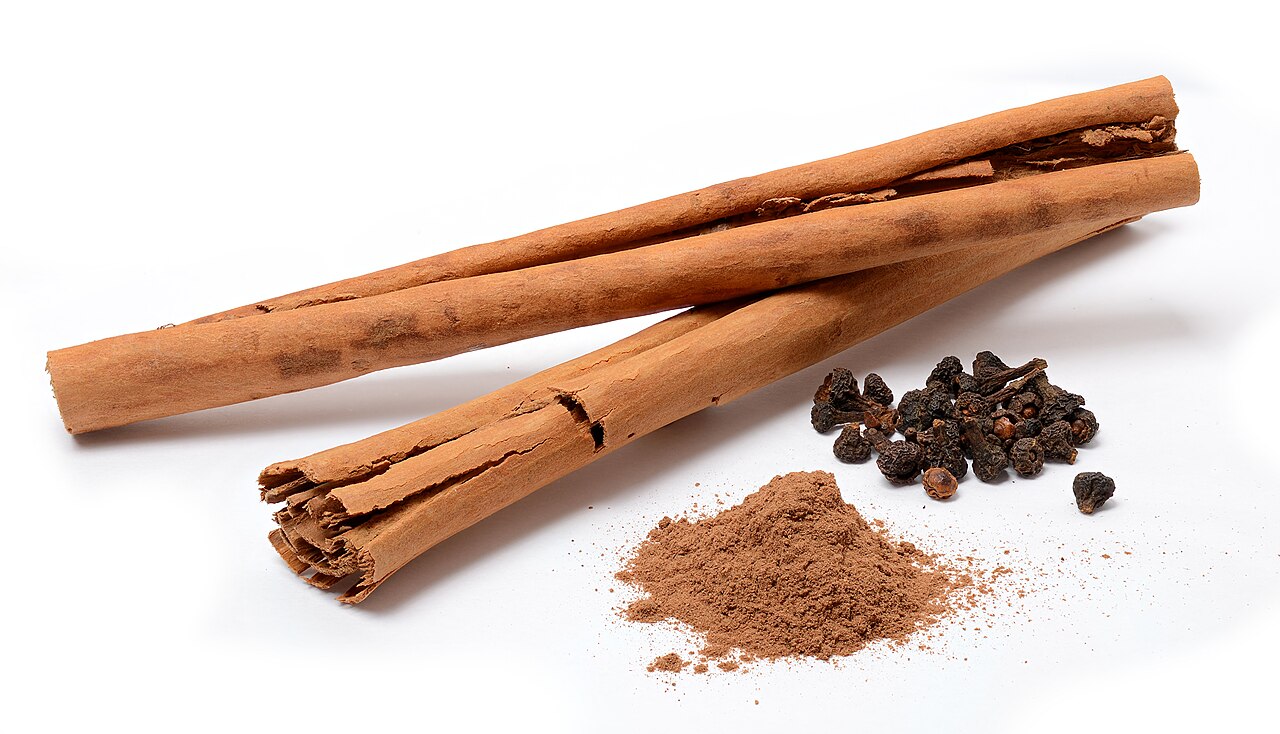
Simon A. Eugster · CC BY-SA 3.0 · Wikimedia Commons
Spice in perfume is heat without a kitchen — pepper, clove and a winter afternoon on skin.
Pepper, clove, cinnamon bark — heat without a kitchen, from carnation spice to a winter afternoon on skin.
Spicy sits in the Warmth group of this atlas. Resin and dessert — amber, spice, gourmand, vanilla, tobacco and leather.
Heat without a kitchen
Pepper, clove and cinnamon bark are spice as structure, not as baking. Carnation spice sits on the floral border; winter spice sits on amber.
IFRA watches eugenol. A spicy EDP in a closed room can read as potpourri. Between Grasse feedstock, IFRA limits and the split of niche counters versus designer malls, this family is read as a global grammar rather than a single bottle.
Coat weather. On hot skin clove becomes dentist.
Family Warm spice
Key notes Pepper, clove, cinnamon
Season Winter
Landmark Carnation heat
Wear Coat weather
Watch Eugenol limits
The scent pyramid
Top
Black pepper · Pink pepper · Cinnamon · Cardamom
Heart
Carnation · Clove · Rose · Cumin
Base
Benzoin · Sandal · Tobacco · Amber
Pin a wear occasion Pick an occasion already in this family’s wear chapter. Last pick stays beside this pick — two uses, no new family.
Teaching notes on skin and season. Not a medical, legal or workplace-scent rule.
Occasion already in wear Evening Winter office Dinner spice routes Not a bakery shift
Stored on this device. Change the pick to compare last against this.
Restore last occasion Keep this occasion Forget occasion
Seven chapters on this family Frequently asked questions What is Spicy? Pepper, clove and cinnamon as heat without a kitchen — structure, not baking.
EDP vs EDT — what changes? Concentration is oil in alcohol, not a quality score. EDT (about 5–15%) shows more top; EDP (about 15–20%) shows more heart and base. Houses vary; this is not a lab assay.
How should I wear Spicy? One or two sprays on skin or cloth — sternum or hair, not a cloud in a lift. Let it turn an hour before you add more.
Which season fits? Winter, coat weather. On hot skin clove becomes dentist.
Does skin chemistry change it? Yes. Warm, moist skin amplifies sweet and spice; dry or cool skin can turn the same juice woody, soapy or short. Test on your skin, not only a blotter.
What about IFRA and oakmoss? IFRA sets industry limits on some naturals and synthetics. A reformulation is usually a legal edit, not a betrayal. This atlas is not a safety sheet.
Any ethics or materials I should know? Read the materials chapter for the actual load. Niche and designer often share a family and disagree on dose.
Is this medical or allergy advice? No. This atlas is cultural and editorial. Fragrance can irritate; oakmoss, eugenol, citrus oils and musks are common triggers. See a clinician for reactions. Nothing here is a diagnosis, treatment or safety sheet.