At a glance
Research suggests the risk of a second ACL injury, either to the same or the opposite knee, is meaningfully elevated compared with individuals without a prior tear, which is part of why structured return-to-sport testing is emphasized.
Weigh it for yourself
Mark each measure High, Any or Low for what you want. The fit number moves with every mark, and your marks follow you to the next page in this app.
| Measure | ACL | Ankle & Foot | You want |
|---|---|---|---|
| Pain frequency | |||
| Recovery length | |||
| Exercise load | |||
| Clinician need | |||
| Self-care fit | |||
| Recurrence risk |
Mark at least one measure to see a fit number.
Scores are the atlas’s 0–100 teaching marks for each topic. They are not a diagnosis, a dose or a treatment choice.
Reading checklist
Tick a point once you could explain it in your own words. Ticks stay on this device.
0 of 4 points done
All points done. Next: Open the topic: ACL
ACL · What graft options are used for ACL reconstruction?
Common graft choices include the patient's own patellar tendon, hamstring tendon, or quadriceps tendon, or occasionally donor tissue, each with different considerations regarding strength, donor-site symptoms, and recovery.
ACL · What is the risk of re-tearing the ACL?
Research suggests the risk of a second ACL injury, either to the same or the opposite knee, is meaningfully elevated compared with individuals without a prior tear, which is part of why structured return-to-sport testing is emphasized.
ACL · Can the ACL heal on its own without surgery?
The ACL has limited capacity for biological healing compared with some other ligaments, so a torn ACL generally does not reliably heal back to its original structure without surgical repair, even though functional stability can sometimes be regained through rehabilitation alone.
ACL · The anterior cruciate ligament runs diagonally from the back of
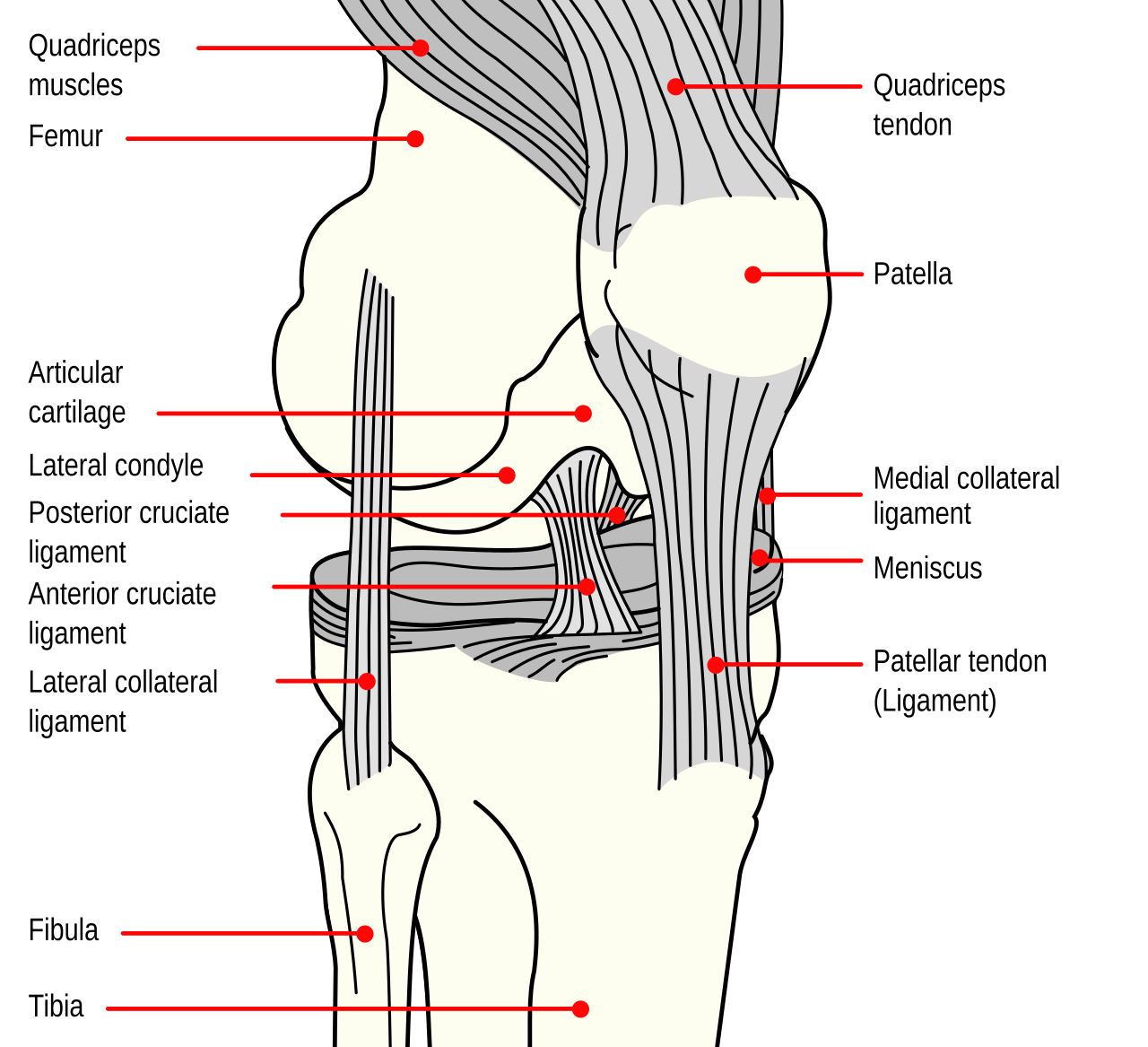
The anterior cruciate ligament runs diagonally from the back of the thigh bone to the front of the shin bone, crossing the posterior cruciate ligament in an X-shape at the center of the knee joint, which gives the pair their name.
This is education from the atlas. It does not diagnose and does not prescribe a dose. It does not replace the full topic page.
What is the next question after this?
The ACL has limited capacity for biological healing compared with some other ligaments, so a torn ACL generally does not reliably heal back to its original structure without surgical repair, even though functional stability can sometimes be regained through rehabilitation alone.
Does this page rank people or nations?
This is education from the atlas. It does not diagnose and does not prescribe a dose. It does not replace the full topic page.
Where is the longer entry?
The anterior cruciate ligament runs diagonally from the back of the thigh bone to the front of the shin bone, crossing the posterior cruciate ligament in an X-shape at the center of the knee joint, which gives the pair their name.