At a glance
Because core muscles are largely endurance-oriented postural muscles, many programs include some form of core activation several days a week, though adequate recovery still applies to higher-intensity strengthening work.
Weigh it for yourself
Mark each measure High, Any or Low for what you want. The fit number moves with every mark, and your marks follow you to the next page in this app.
| Measure | Core | Elbow | You want |
|---|---|---|---|
| Pain frequency | |||
| Recovery length | |||
| Exercise load | |||
| Clinician need | |||
| Self-care fit | |||
| Recurrence risk |
Mark at least one measure to see a fit number.
Scores are the atlas’s 0–100 teaching marks for each topic. They are not a diagnosis, a dose or a treatment choice.
Reading checklist
Tick a point once you could explain it in your own words. Ticks stay on this device.
0 of 4 points done
All points done. Next: Open the topic: Core
Core · How many sit-ups should someone do for a strong core?
Modern core training generally emphasizes anti-movement exercises like planks and dead bugs over high-repetition spinal flexion, since repeated sit-ups load the lumbar discs without necessarily improving functional stability.
Core · Can core exercises be done every day?
Because core muscles are largely endurance-oriented postural muscles, many programs include some form of core activation several days a week, though adequate recovery still applies to higher-intensity strengthening work.
Core · The core can be described as a cylinder: the diaphragm forms the
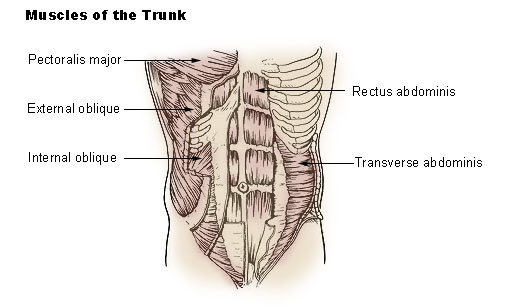
The core can be described as a cylinder: the diaphragm forms the top, the pelvic floor forms the bottom, the deep abdominal and spinal muscles form the walls, and coordinated activity among all of them regulates pressure and stability within the trunk.
Core · closing 1
This layered, cylinder-like arrangement explains why core training programs typically target endurance and coordinated activation across multiple muscles rather than isolated strength in any single one.
This is education from the atlas. It does not diagnose and does not prescribe a dose. It does not replace the full topic page.
What is the next question after this?
The core can be described as a cylinder: the diaphragm forms the top, the pelvic floor forms the bottom, the deep abdominal and spinal muscles form the walls, and coordinated activity among all of them regulates pressure and stability within the trunk.
Does this page rank people or nations?
This is education from the atlas. It does not diagnose and does not prescribe a dose. It does not replace the full topic page.
Where is the longer entry?
This layered, cylinder-like arrangement explains why core training programs typically target endurance and coordinated activation across multiple muscles rather than isolated strength in any single one.