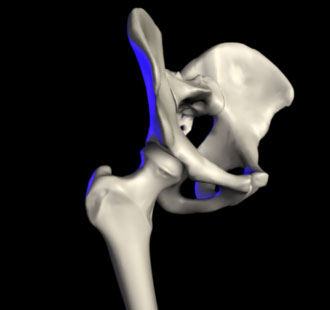
At a glance
As a major weight-bearing joint, the hip is subject to forces several times body weight during activities such as running or climbing stairs, which contributes to its vulnerability to both overuse injuries in active individuals and degenerative osteoarthritis with advancing age.
Weigh it for yourself
Mark each measure High, Any or Low for what you want. The fit number moves with every mark, and your marks follow you to the next page in this app.
| Measure | Hip | Knee | You want |
|---|---|---|---|
| Pain frequency | |||
| Recovery length | |||
| Exercise load | |||
| Clinician need | |||
| Self-care fit | |||
| Recurrence risk |
Mark at least one measure to see a fit number.
Scores are the atlas’s 0–100 teaching marks for each topic. They are not a diagnosis, a dose or a treatment choice.
Reading checklist
Tick a point once you could explain it in your own words. Ticks stay on this device.
0 of 4 points done
All points done. Next: Open the topic: Hip
Hip · tagline
The hip is a deep, stable ball-and-socket joint that bears several times body weight during walking and running, making it a common site of both overuse pain and degenerative change.
Hip · As a major weight-bearing joint, the hip is subject to forces se
As a major weight-bearing joint, the hip is subject to forces several times body weight during activities such as running or climbing stairs, which contributes to its vulnerability to both overuse injuries in active individuals and degenerative osteoarthritis with advancing age.
Hip · What causes hip pain in older adults?
Osteoarthritis is among the most common causes of hip pain after middle age, involving gradual breakdown of the joint's cartilage and associated changes in the surrounding bone and soft tissue. Greater trochanteric pain syndrome describes pain at the outer hip related to irritation of the gluteal tendons or the nearby bursa, often mistaken in the past for bursitis alone.
Hip · What is femoroacetabular impingement?
Femoroacetabular impingement describes abnormal contact between the femoral head and the hip socket during certain movements, related to subtle variations in bone shape, which can contribute to groin pain and reduced range of motion in some individuals.
This is education from the atlas. It does not diagnose and does not prescribe a dose. It does not replace the full topic page.
What is the next question after this?
Osteoarthritis is among the most common causes of hip pain after middle age, involving gradual breakdown of the joint's cartilage and associated changes in the surrounding bone and soft tissue. Greater trochanteric pain syndrome describes pain at the outer hip related to irritation of the gluteal tendons or the nearby bursa, often mistaken in the past for bursitis alone.
Does this page rank people or nations?
This is education from the atlas. It does not diagnose and does not prescribe a dose. It does not replace the full topic page.
Where is the longer entry?
Femoroacetabular impingement describes abnormal contact between the femoral head and the hip socket during certain movements, related to subtle variations in bone shape, which can contribute to groin pain and reduced range of motion in some individuals.