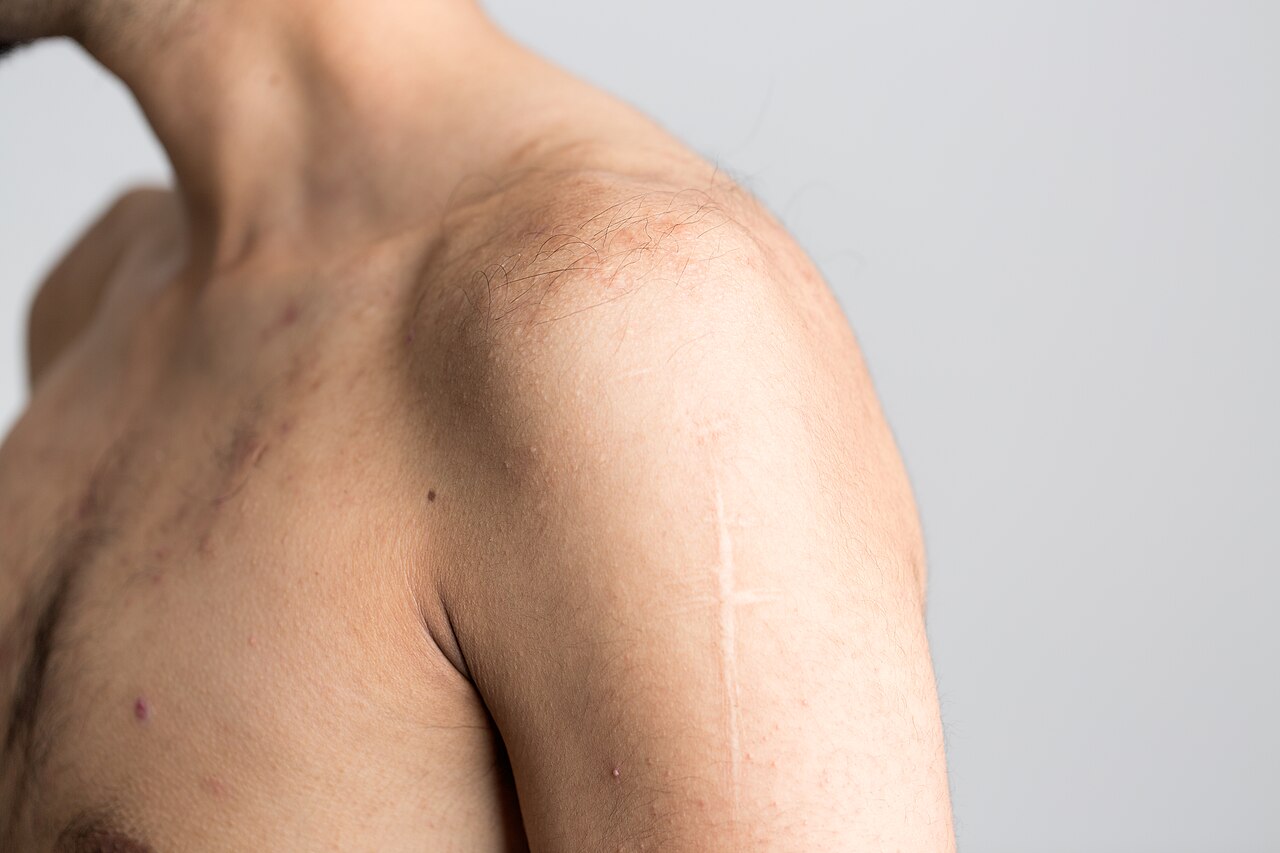
At a glance
The shoulder complex actually involves several joints working together, though the glenohumeral joint — where the humeral head meets the shallow glenoid socket of the scapula — is the primary ball-and-socket articulation responsible for most arm motion.
Weigh it for yourself
Mark each measure High, Any or Low for what you want. The fit number moves with every mark, and your marks follow you to the next page in this app.
| Measure | Shoulder | Wrist & Hand | You want |
|---|---|---|---|
| Pain frequency | |||
| Recovery length | |||
| Exercise load | |||
| Clinician need | |||
| Self-care fit | |||
| Recurrence risk |
Mark at least one measure to see a fit number.
Scores are the atlas’s 0–100 teaching marks for each topic. They are not a diagnosis, a dose or a treatment choice.
Reading checklist
Tick a point once you could explain it in your own words. Ticks stay on this device.
0 of 4 points done
All points done. Next: Open the topic: Shoulder
Shoulder · How common is shoulder pain?
Shoulder pain is one of the most frequently reported musculoskeletal complaints, with population studies suggesting a substantial share of adults experience an episode at some point, particularly with advancing age. Occasional painless clicking is common and often not concerning, but clicking accompanied by pain, catching, or a sense of the joint giving way warrants further evaluation.
Shoulder · The shoulder complex actually involves several joints working to
The shoulder complex actually involves several joints working together, though the glenohumeral joint — where the humeral head meets the shallow glenoid socket of the scapula — is the primary ball-and-socket articulation responsible for most arm motion.
Shoulder · closing 1
This trade-off between mobility and stability explains why shoulder rehabilitation places heavy emphasis on rotator cuff and scapular muscle control rather than joint mobility alone. Shoulder abduction, lifting the arm out to the side and overhead, represents the joint's largest range of motion and requires coordinated movement between the humerus and scapula to achieve its full arc.
Shoulder · Deltoid
This large, superficial muscle covering the shoulder provides the bulk of the force for lifting the arm, working together with the smaller rotator cuff muscles that fine-tune joint positioning. Shoulder conditions span a spectrum from tendon overuse and irritation to structural tears, joint stiffness, and instability, with several conditions often overlapping in presentation.
This is education from the atlas. It does not diagnose and does not prescribe a dose. It does not replace the full topic page.
What is the next question after this?
This trade-off between mobility and stability explains why shoulder rehabilitation places heavy emphasis on rotator cuff and scapular muscle control rather than joint mobility alone. Shoulder abduction, lifting the arm out to the side and overhead, represents the joint's largest range of motion and requires coordinated movement between the humerus and scapula to achieve its full arc.
Does this page rank people or nations?
This is education from the atlas. It does not diagnose and does not prescribe a dose. It does not replace the full topic page.
Where is the longer entry?
This large, superficial muscle covering the shoulder provides the bulk of the force for lifting the arm, working together with the smaller rotator cuff muscles that fine-tune joint positioning. Shoulder conditions span a spectrum from tendon overuse and irritation to structural tears, joint stiffness, and instability, with several conditions often overlapping in presentation.