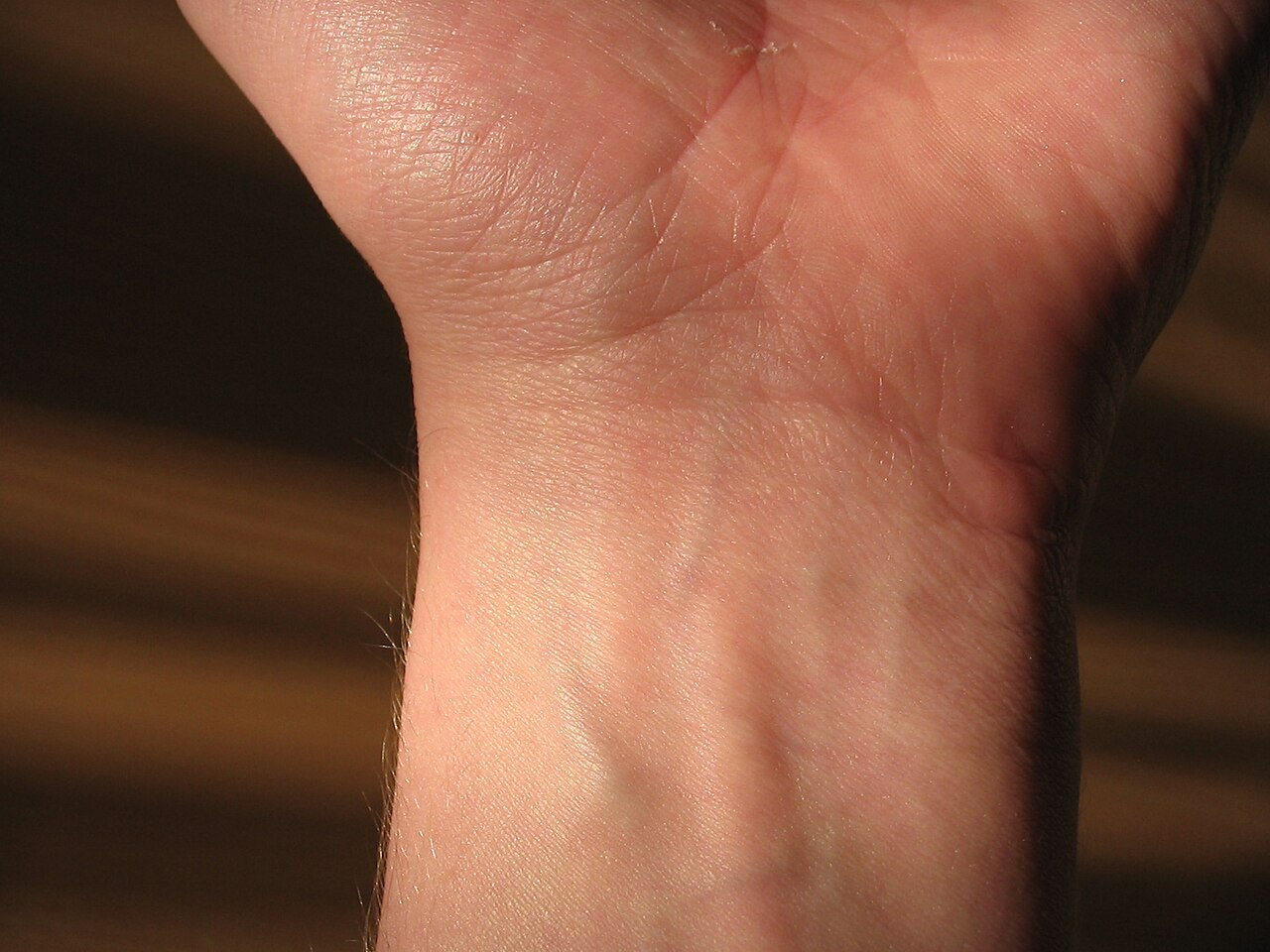
At a glance
Eight small bones arranged in two rows form the wrist's core, allowing a combination of gliding and rotating movements between the forearm and hand. This narrow tunnel on the palm side of the wrist, bounded by carpal bones and a tough ligament, is a common site of nerve compression when tissue swelling or thickening reduces the available space.
Weigh it for yourself
Mark each measure High, Any or Low for what you want. The fit number moves with every mark, and your marks follow you to the next page in this app.
| Measure | Wrist & Hand | ACL | You want |
|---|---|---|---|
| Pain frequency | |||
| Recovery length | |||
| Exercise load | |||
| Clinician need | |||
| Self-care fit | |||
| Recurrence risk |
Mark at least one measure to see a fit number.
Scores are the atlas’s 0–100 teaching marks for each topic. They are not a diagnosis, a dose or a treatment choice.
Reading checklist
Tick a point once you could explain it in your own words. Ticks stay on this device.
0 of 4 points done
All points done. Next: Open the topic: Wrist & Hand
Wrist & Hand · closing 1
This dense packing of bone, tendon, and nerve in a small space explains why wrist and hand conditions often involve a specific tunnel or tendon compartment rather than the joint as a whole. Combined wrist flexion (about 80°) and extension (about 70°) allow the hand to be positioned across a wide range for gripping and fine motor tasks, complemented by radial and ulnar deviation of roughly 20–35°.
Wrist & Hand · Carpal bones
Eight small bones arranged in two rows form the wrist's core, allowing a combination of gliding and rotating movements between the forearm and hand. This narrow tunnel on the palm side of the wrist, bounded by carpal bones and a tough ligament, is a common site of nerve compression when tissue swelling or thickening reduces the available space.
Wrist & Hand · Flexor digitorum tendons
These long tendons run from the forearm through the wrist and palm to bend the fingers, and are commonly involved in overuse conditions such as trigger finger. Tendons running across the back of the wrist and hand straighten the fingers and wrist, and can become irritated with repetitive use, as seen in De Quervain's tenosynovitis at the thumb side.
Wrist & Hand · Median nerve
This nerve travels through the carpal tunnel to supply sensation to the thumb, index, and middle fingers and motor control to some thumb muscles, making it the nerve most often affected by wrist compression. Passing through a separate tunnel at the wrist, the ulnar nerve supplies the ring and little fingers and many of the small muscles that control fine finger movements.
This is education from the atlas. It does not diagnose and does not prescribe a dose. It does not replace the full topic page.
What is the next question after this?
These long tendons run from the forearm through the wrist and palm to bend the fingers, and are commonly involved in overuse conditions such as trigger finger. Tendons running across the back of the wrist and hand straighten the fingers and wrist, and can become irritated with repetitive use, as seen in De Quervain's tenosynovitis at the thumb side.
Does this page rank people or nations?
This is education from the atlas. It does not diagnose and does not prescribe a dose. It does not replace the full topic page.
Where is the longer entry?
This nerve travels through the carpal tunnel to supply sensation to the thumb, index, and middle fingers and motor control to some thumb muscles, making it the nerve most often affected by wrist compression. Passing through a separate tunnel at the wrist, the ulnar nerve supplies the ring and little fingers and many of the small muscles that control fine finger movements.