Basketball was invented by Dr. James Naismith, a Canadian physical education instructor, in December 1891 at the International YMCA Training School in Springfield, Massachusetts. Assigned to occupy an unruly class through the New England winter, he designed an indoor game with 13 written rules built around a deliberately elevated goal — a peach basket nailed 10 feet up — so that scoring required skill and arc rather than force. Running with the ball and rough contact were banned from the start. The first game, played nine-a-side, ended 1–0 on a single basket by William Chase. The 10-foot rim height, an accident of the balcony railing's elevation, has never changed, and Naismith lived to see his invention become an Olympic sport at Berlin in 1936.
What are the main differences between NBA and FIBA rules?
The NBA plays four 12-minute quarters, FIBA four 10-minute quarters. The NBA three-point line reaches 23 feet 9 inches at the top (22 feet in the corners); FIBA's arc is a uniform 6.75 meters, about 22 feet 2 inches, which is one reason percentages rise in international play. FIBA allows players to touch the ball once it hits the rim — goaltending rules that produce legal tip-ins the NBA forbids — and has no defensive three-second rule, so shot-blockers may camp in the lane, making interior space far more congested. Players foul out on five fouls in FIBA rather than six, the court is slightly smaller, and coaches cannot call timeouts during live play. These differences explain why NBA stars often struggle initially in Olympic and World Cup basketball.
What is a triple-double, and who has the most?
A triple-double means reaching double figures in three statistical categories in one game — almost always points, rebounds and assists, though steals or blocks can qualify. It signals all-around dominance rather than specialist scoring. Russell Westbrook holds the career record with 200 regular-season triple-doubles, having passed Oscar Robertson's mark of 181 in 2021; Westbrook also averaged a triple-double across an entire season four times, a feat previously achieved only by Robertson in 1961–62. Nikola Jokić has made the triple-double a center's statistic, regularly producing them in the playoffs, while Wilt Chamberlain remains the only player with a double triple-double — 22 points, 25 rebounds and 21 assists in 1968. The statistic's prestige has grown with the modern game's emphasis on positionless, multi-skill play.
Who has won the most NBA championships?
Bill Russell won 11 championships in his 13 seasons with the Boston Celtics between 1957 and 1969 — the most by any player in NBA history, and a record considered effectively unbreakable given modern free agency and parity. His teammate Sam Jones is second with 10. Among modern players, Michael Jordan and Scottie Pippen won six together in Chicago, Kareem Abdul-Jabbar won six across Milwaukee and the Lakers, and Robert Horry won seven as a role player with three franchises. At franchise level, the Celtics lead with 18 titles after their 2024 championship, one ahead of the Lakers' 17. Notably, the years 2019 through 2025 produced seven different champions — the longest run without a repeat winner in league history.
Why do teams shoot so many three-pointers now?
Arithmetic. A three-pointer made at 36 percent yields 1.08 points per attempt — the same as shooting 54 percent on twos, a level almost no jump-shooter reaches from mid-range, where league accuracy sits near 42 percent. Once analytics departments quantified this in the late 2000s, the mid-range jumper was systematically replaced by shots at the rim, free throws, and threes — a shot diet nicknamed Moreyball after Houston executive Daryl Morey, whose 2017–18 Rockets became the first team to attempt more threes than twos. League-wide attempts rose from 18.0 per team per game in 2010–11 to 37.6 in 2024–25. Stephen Curry accelerated the shift by proving pull-up threes off the dribble could anchor a championship offense, forcing defenses to extend and opening the entire floor.
What is the shot clock and why was it introduced?
The shot clock gives the offense a fixed window — 24 seconds in the NBA, FIBA and WNBA — to attempt a shot that hits the rim, or possession is forfeited. It exists because early professional basketball had a stalling problem: with no time limit, leading teams simply held the ball, culminating in the Fort Wayne Pistons' notorious 19–18 win over the Minneapolis Lakers on November 22, 1950. Syracuse Nationals owner Danny Biasone championed the fix, calculating that teams averaged about 60 shots a game each — 24 seconds per possession across 48 minutes — and the league adopted it for 1954–55. Scoring immediately jumped by roughly 14 points per game. A later refinement resets the clock to only 14 seconds after an offensive rebound, adopted by FIBA in 2014 and the NBA in 2018 to further accelerate play.
Basketball's greatest-ever debate is the most contested in team sports because the sport individualizes greatness like no other: one player takes a third of his team's shots, guards the other team's best scorer, and touches the ball on nearly every possession. The resume categories are stable — championships, MVPs, Finals MVPs, scoring and efficiency, defensive impact, longevity — but their weighting is not, and that weighting is the entire argument. Prioritize rings above all and Bill Russell's 11 are untouchable. Prioritize peak dominance and the conversation is Jordan and prime Shaq. Prioritize career volume and LeBron James stands alone.
This ranking weighs peak level first, sustained excellence second, and team success third — titles matter enormously, but as evidence of impact rather than as a raw counting stat, because championships are won by rosters. Every number below is real: career figures are through the 2024–25 NBA season, and the percentage bars scale each stat against the strongest mark within this twelve-player list, not against the all-time record book.
All-time podium
🥈
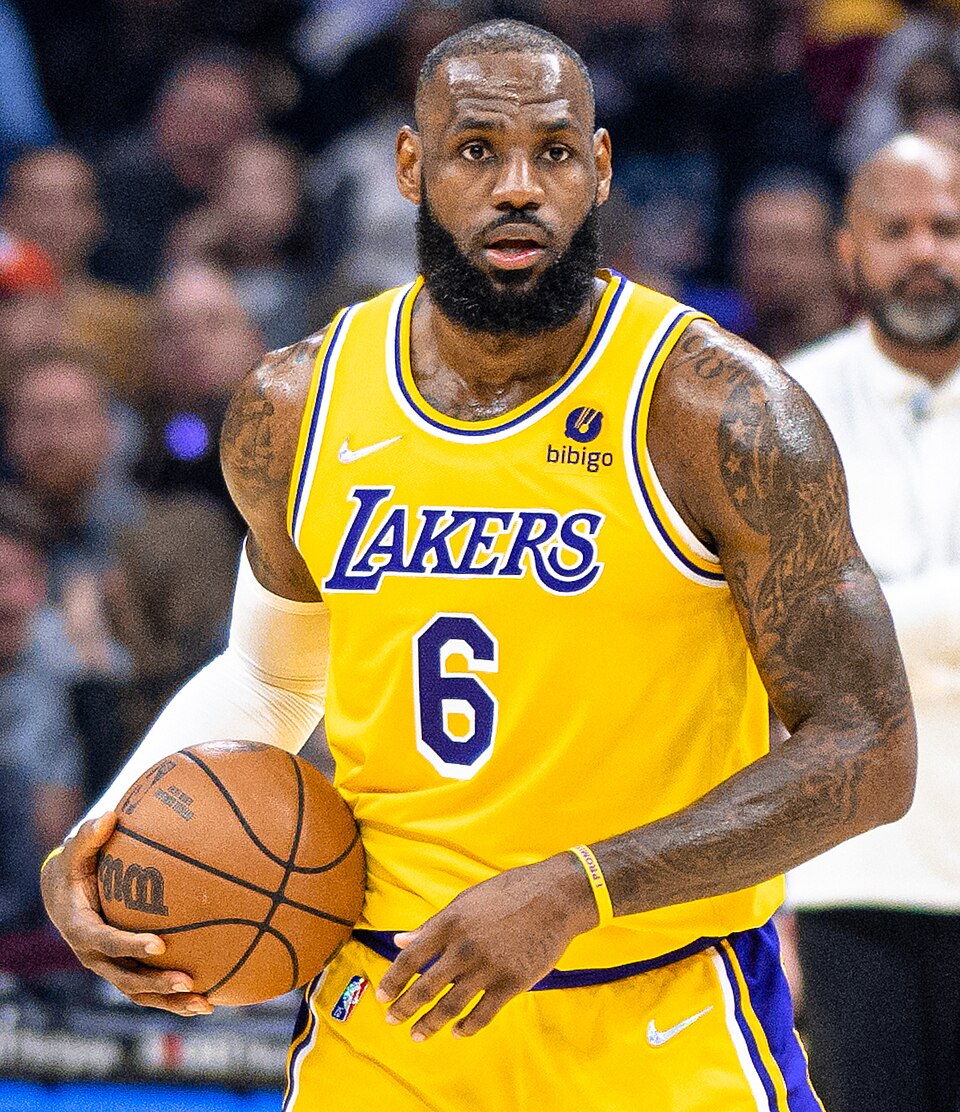
LeBron James
United States
2
🥇
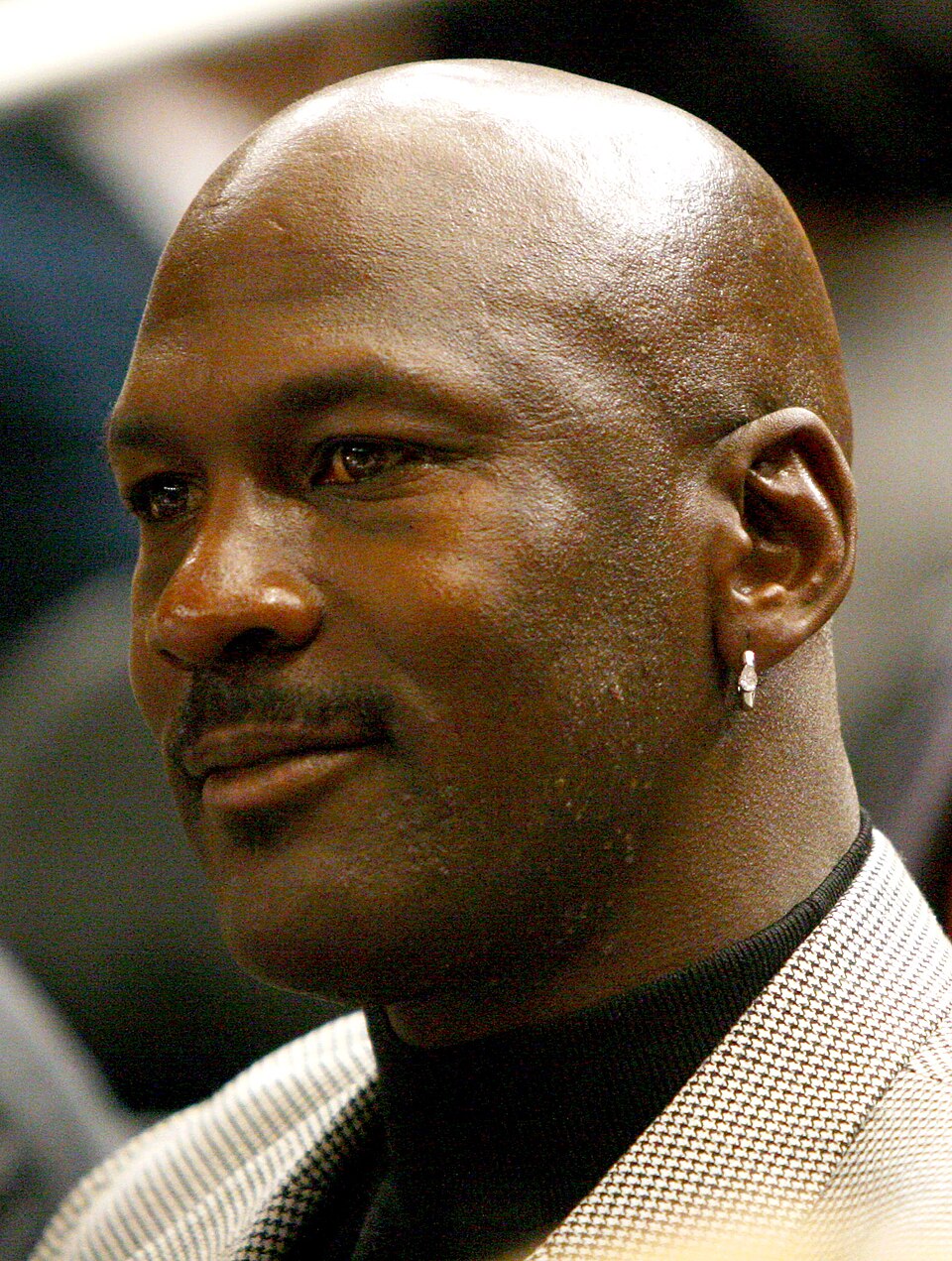
Michael Jordan
United States
1
🥉
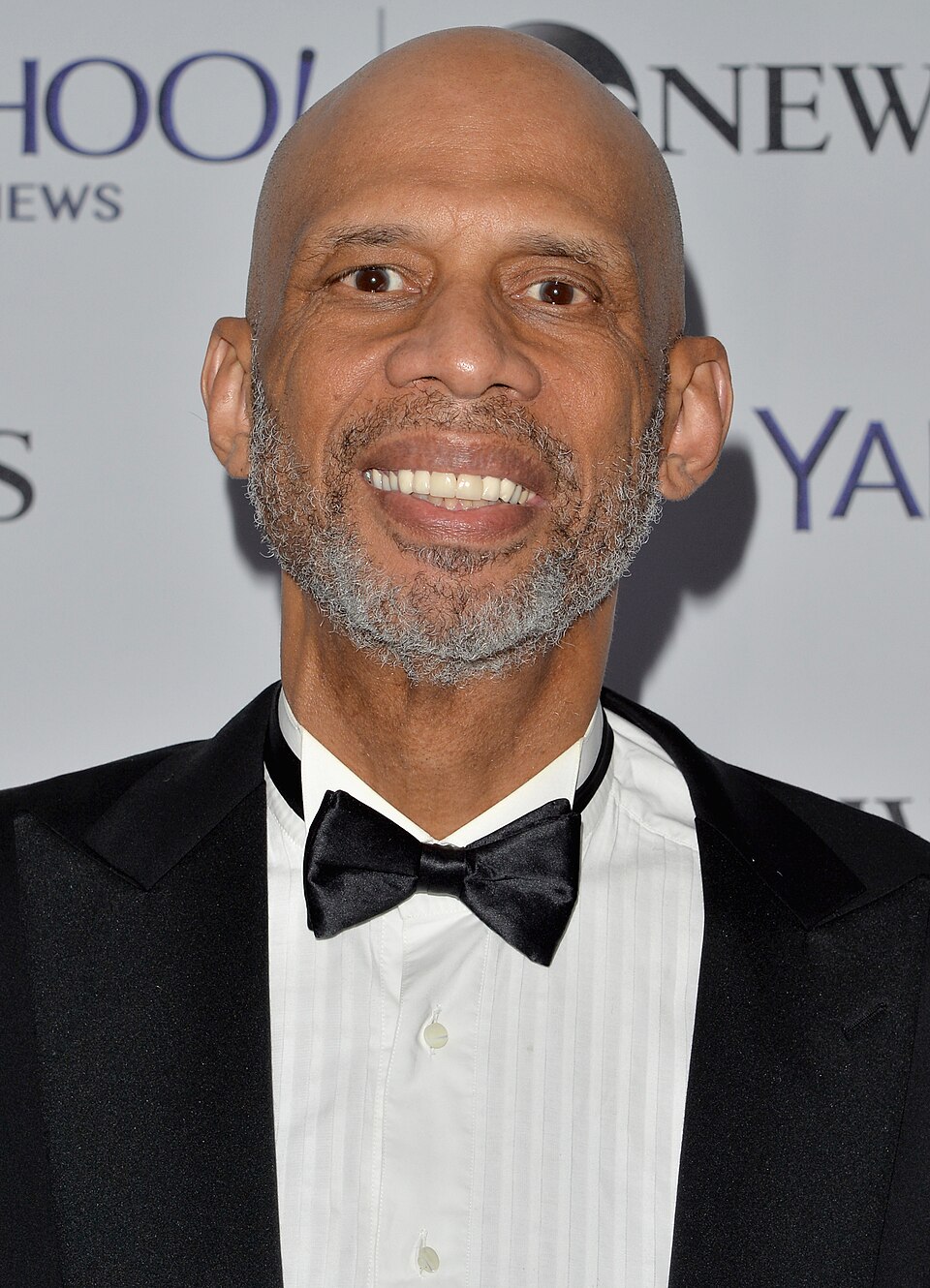
Kareem Abdul-Jabbar
United States
3
Comparison Lab
Toggle athletes on and off — every bar rescales to the leader of your selection.
Peak keeps each athlete’s strongest metrics; Career averages the full published set. Both stay editorial teaching marks.
5 / 12
Drag only reorders the cosmetic shortlist — it does not change teaching scores.
Default shortlist below works without JavaScript. Toggle chips after load to rebuild bars.
Compare · in selection · Career
1Michael Jordan88
2Bill Russell85
3Kareem Abdul-Jabbar84
4LeBron James74
5Magic Johnson62
Championships
Bill Russell11
Michael Jordan6
Kareem Abdul-Jabbar6
Magic Johnson5
LeBron James4
Regular-season MVPs
Kareem Abdul-Jabbar6
Michael Jordan5
Bill Russell5
LeBron James4
Magic Johnson3
Finals MVPs
Michael Jordan6
LeBron James4
Magic Johnson3
Career points per game
Michael Jordan30.1
Kareem Abdul-Jabbar24.6
Magic Johnson19.5
Scoring titles
Michael Jordan10
Career rebounds per game
Bill Russell22.5
All-Star selections
LeBron James21
Kareem Abdul-Jabbar19
Bill Russell12
Career points
LeBron James42,000+
Kareem Abdul-Jabbar38,387
Career assists per game
Magic Johnson11.2
Axis verdict on this selection
Pick one published scoring axis already on the GOAT lab. The leader is whoever is ahead among the athletes you keep selected — editorial teaching marks, not live stats.
Not a live box score, betting line, or a universal ranking. Bars stay scaled teaching marks from this sport’s published list.
The most complete resume at the highest peak. Jordan won six championships in six Finals appearances, took Finals MVP all six times, and never allowed a series to reach a Game 7. He won five regular-season MVPs, ten scoring titles — both records for a perimeter player — and retired with the highest career scoring average in NBA history at 30.1 points per game. The two-way case seals it: 1988 Defensive Player of the Year, nine All-Defensive First Team selections, and 2,514 career steals, third all-time. His 1990–91 through 1992–93 and 1995–96 through 1997–98 three-peats bracket a 6–0 decade in which his teams beat Hall of Fame opposition — Magic's Lakers, Barkley's Suns, Malone and Stockton's Jazz twice — and his 33.4 points per game across 179 playoff games remains the highest postseason average ever. The 72–10 season of 1995–96 and the 1998 title-winning shot in Utah are the era's defining monuments. No player has combined scoring supremacy, defensive excellence and flawless Finals results at his level.
All-time NBA scoring leader with four titles for three franchises — the longevity case that Peak/Career toggles were built to test. Against Kobe on this VS page, shared teaching axes (scoring volume, longevity, finals volume) rescale without inventing a live box score.
The most decorated player ever by individual hardware, and the owner of the most unstoppable single weapon in basketball history. Abdul-Jabbar's six regular-season MVPs remain the record, his 38,387 points stood as the scoring record for 39 years, and his six championships span an almost implausible arc — Finals MVP as a second-year player in Milwaukee in 1971, Finals MVP again at age 38 in 1985. The skyhook gave him a shot that was never solved: he shot 55.9 percent for his career and remained an elite scorer past age 40, retiring with 19 All-Star selections and 17,440 rebounds. His dominance predates the NBA: three straight NCAA titles and three tournament Most Outstanding Player awards at UCLA, where the NCAA banned dunking in 1967 largely because of him — he answered by perfecting the skyhook. The knock is that he was the clear second star on several 1980s title teams, but a career that runs from beating Wilt Chamberlain to feeding off Magic Johnson, spanning 20 elite seasons, has no parallel for sustained excellence at the center position.
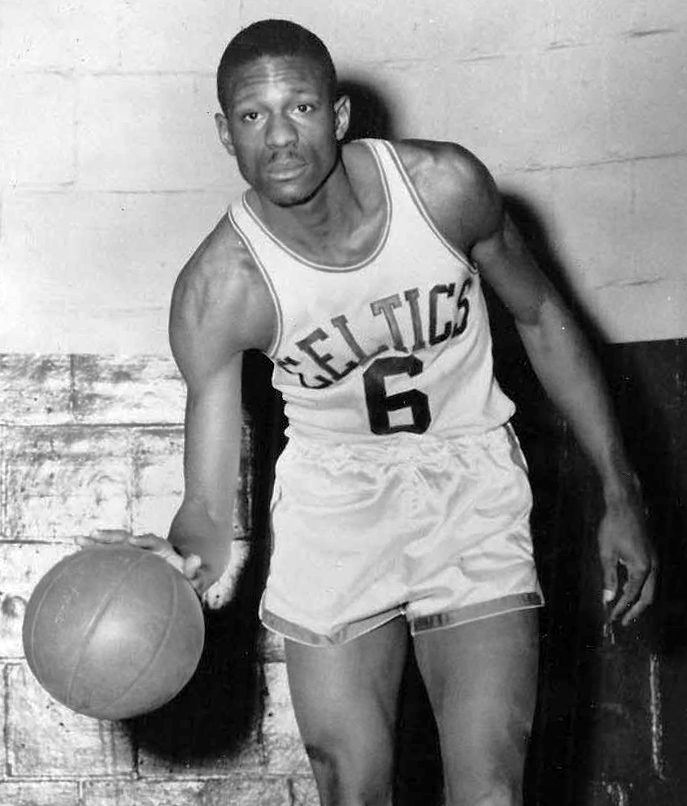
The greatest winner in the history of North American team sports, and the player who invented modern defense. Russell won 11 championships in 13 seasons, including eight straight from 1959 to 1966, and captured the last two, 1968 and 1969, as a player-coach — having become the first Black head coach in major US professional sports in 1966. His five MVPs trail only Kareem and tie Jordan, and his career averages of 22.5 rebounds against 15.1 points describe a superstar whose dominance ran entirely through defense, rebounding and outlet passing — shot-blocking as a tactical system rather than a highlight. In winner-take-all games, Game 5s and Game 7s combined, his record was a flawless 10–0. He arrived in Boston already a serial winner: back-to-back NCAA titles at San Francisco amid a 55-game winning streak, plus 1956 Olympic gold, meaning he won 13 championships in his final 15 seasons of organized basketball. His head-to-head playoff record against Wilt Chamberlain's teams, 7 series to 1, is the debate's ultimate trump card.
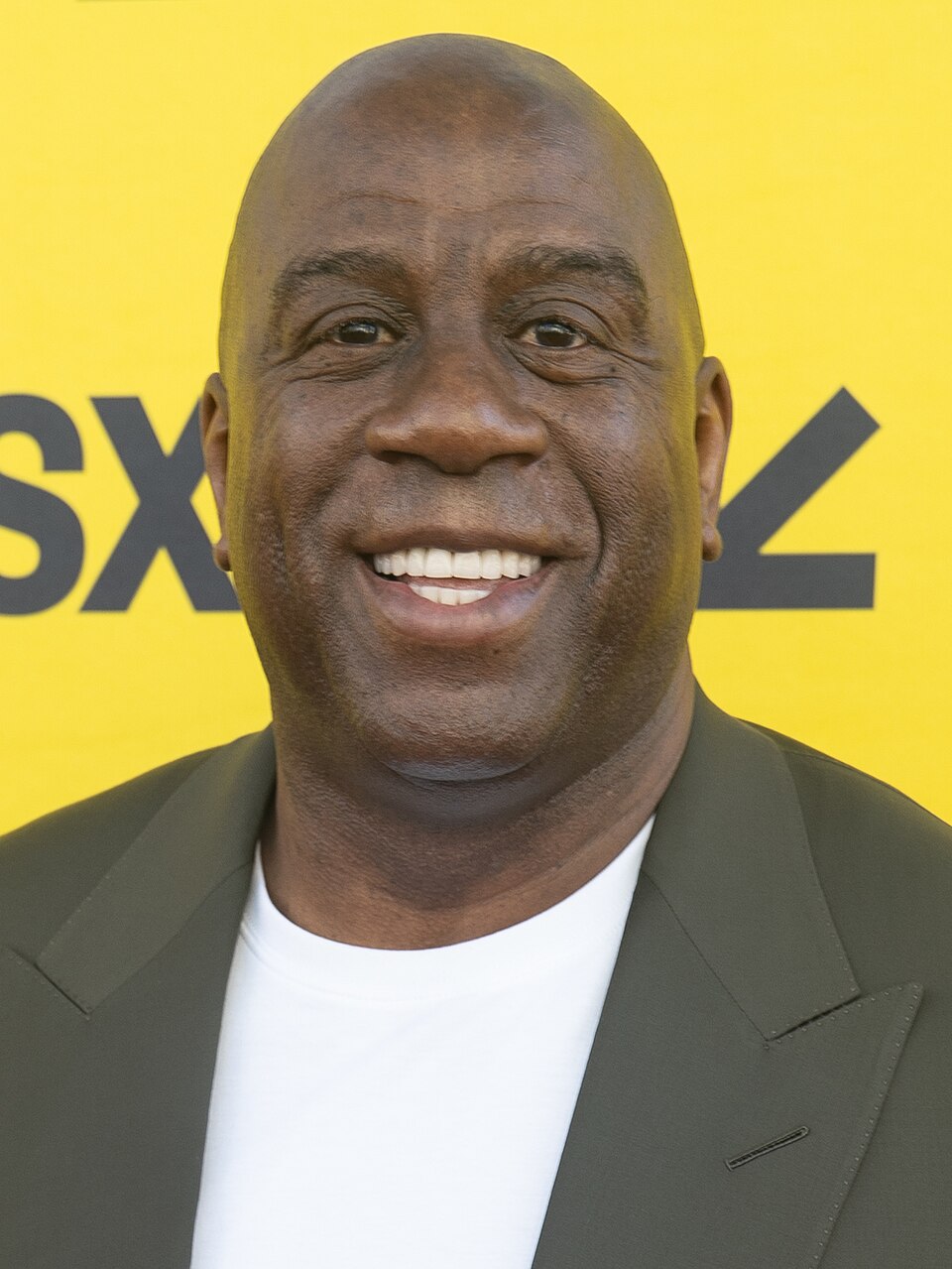
The greatest playmaker ever and the most instantly impactful rookie in league history. Johnson's career assist average of 11.2 per game remains the all-time record, and he attached it to five championships, three MVPs and three Finals MVPs in a 12-year prime shortened by his 1991 HIV announcement. The signature performance came first: in Game 6 of the 1980 Finals, the 20-year-old rookie started at center for the injured Kareem Abdul-Jabbar and produced 42 points, 15 rebounds and 7 assists to close out Philadelphia — still the most famous positional improvisation in Finals history. At 6-foot-9 he redefined what a point guard could be, running Showtime fast breaks that made the 1980s Lakers the league's glamour franchise and its best offense; nine Finals appearances in 12 seasons is a Russell-era number achieved in the modern league. He won his three MVPs from 1987 to 1990 while sharing the floor with Kareem and James Worthy, and his 1979 NCAA title over Larry Bird's Indiana State — the most-watched college game ever — launched the rivalry that saved the NBA.
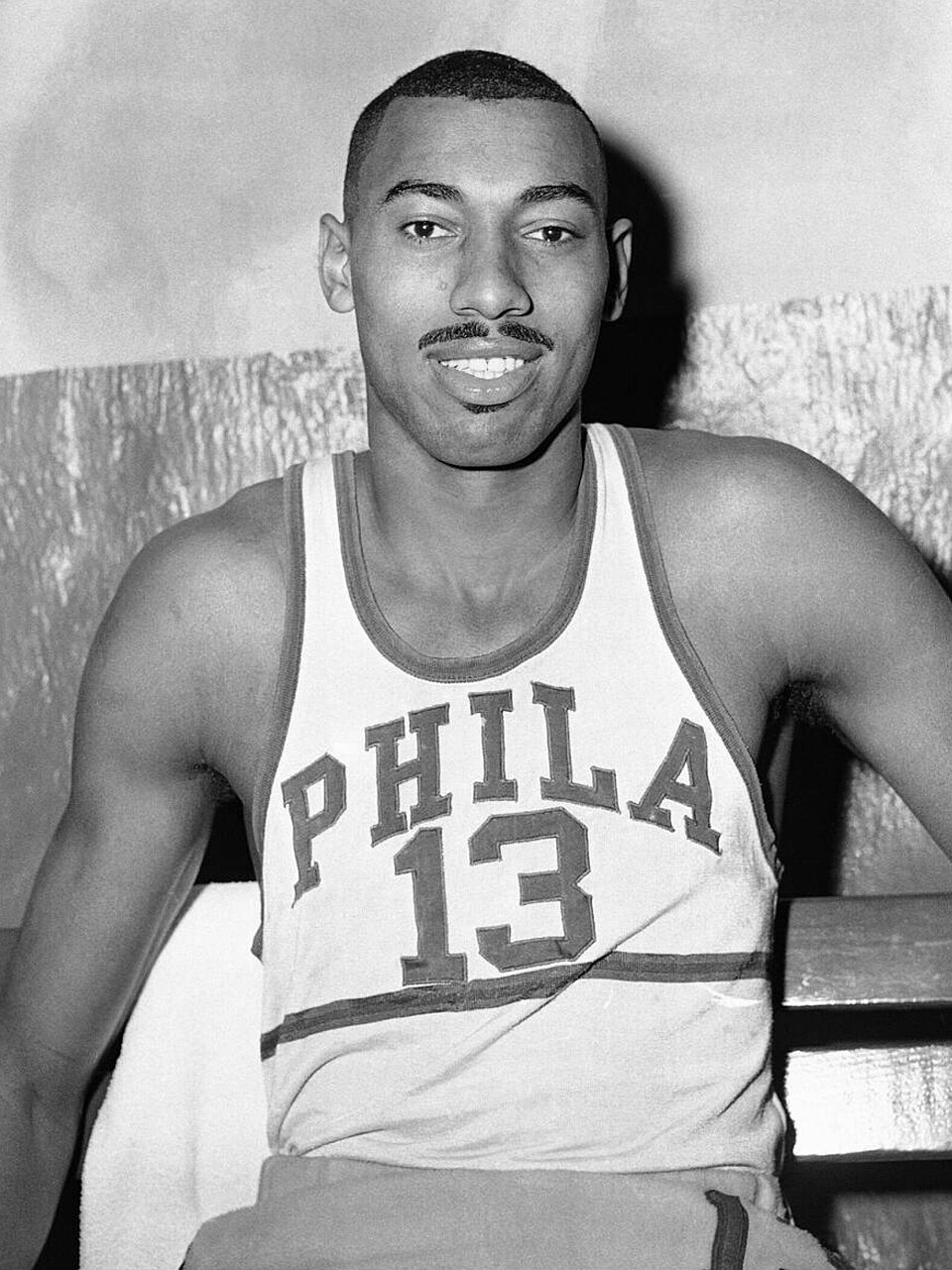
The most statistically dominant athlete any team sport has produced. Chamberlain's 1961–62 season — 50.4 points and 25.7 rebounds per game, including the 100-point game in Hershey on March 2, 1962 — will never be approached; he averaged 48.5 minutes that season by playing overtimes on top of full games. He led the NBA in scoring seven straight times, in rebounding 11 times, and, after being criticized as selfish, led the league in total assists in 1967–68 — the only center ever to do so. His career marks of 30.1 points and a record 22.9 rebounds per game came with four MVPs and, contrary to the empty-stats caricature, two of the most dominant championship teams ever: the 68–13 Philadelphia 76ers of 1967 and the 69–13 Lakers of 1972, both of which broke the Celtics' grip. The honest case against him is Russell — a 1–7 head-to-head playoff series record and repeated Game 7 defeats — plus chronic free-throw shooting near 51 percent. But as a force of nature, no one else comes close.
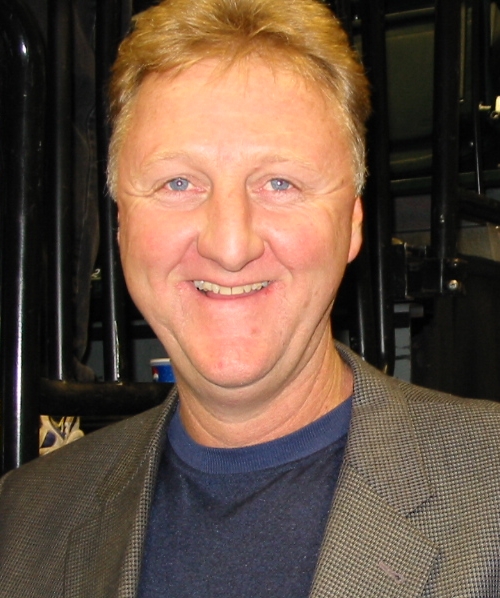
The greatest forward of his era and the most complete offensive skill set of the pre-analytics age. Bird won three straight MVPs from 1984 to 1986 — a feat otherwise achieved only by Russell and Chamberlain — and three championships with two Finals MVPs, anchoring Celtics teams that won 60-plus games five times. His career line of 24.3 points, 10.0 rebounds and 6.3 assists is the classic all-around forward profile, and he was decades ahead of the sport as a shooter: two 50-40-90 seasons, in 1986–87 and 1987–88, when the feat was nearly unheard of, plus the first three Three-Point Contest titles. The 1985–86 Celtics, with Bird at his apex, went 67–15 and are routinely listed among the half-dozen best teams ever assembled. His trash-talking clutch resume — the 1981 comeback against Philadelphia, the steal of Isiah Thomas's inbound pass in the 1987 Eastern finals — and his rivalry with Magic Johnson, meeting in three Finals, carried the league's renaissance. Chronic back injuries ended his prime early; at his best, only Jordan was clearly better.
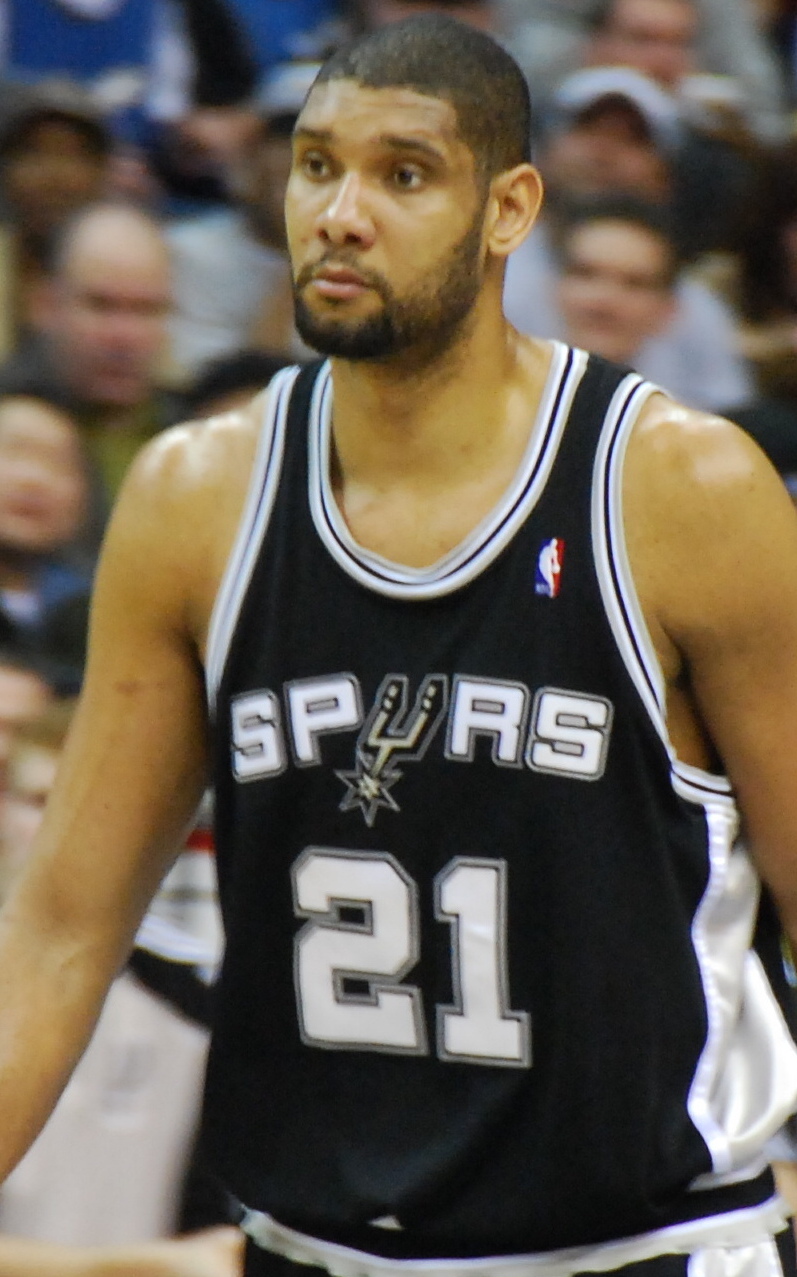
The most reliable great player in NBA history and the anchor of the modern era's longest-running excellence. Duncan won five championships spread across three different decades of Finals — 1999, 2003, 2005, 2007 and 2014 — with three Finals MVPs and back-to-back regular-season MVPs in 2002 and 2003. His 15 All-Defensive selections are the most ever, the statistical spine of a two-way case built on flawless positioning rather than highlights. The team record is the argument: San Antonio never missed the playoffs in his 19 seasons and won 71 percent of its regular-season games across his career — the best sustained run of any franchise in the four major American leagues over that span. His peak was higher than the humble reputation suggests: in the 2003 title run he averaged 24.7 points, 15.4 rebounds, 5.3 assists and 3.3 blocks in the Finals, closing with a near quadruple-double in the clincher. Career averages of 19.0 points, 10.8 rebounds and 2.2 blocks, delivered with identical temperament in November and June, made him the standard for winning without noise.
The most physically overwhelming player of the modern era, with a three-year peak that belongs in any conversation about the best basketball ever played. From 2000 to 2002, O'Neal won three consecutive Finals MVPs — a feat matched only by Jordan — as the Lakers three-peated, opening with a 2000 Finals against Indiana in which he averaged 38.0 points and 16.7 rebounds. His 2000 MVP was one first-place vote short of unanimous, and that season he led the league at 29.7 points per game while shooting 57.4 percent. He added a fourth ring as the co-star of Miami's 2006 title. The career totals — 28,596 points, 23.7 points and 10.9 rebounds per game, 58.2 percent from the field, the best mark of any 28,000-point scorer — undersell a player whose true effect was strategic: opponents built rosters, defensive schemes and the intentional Hack-a-Shaq foul strategy specifically for him, and the NBA's zone-defense legalization in 2001 was widely understood as a response to his unguardability. Conditioning lapses and 52.7 percent free-throw shooting are the asterisks; the peak is untouchable.
Five titles, 18 All-Star nods, and the closest stylistic heir to Jordan in the shot-creation lab. He never stacked LeBron's counting-career length; this VS keeps both on the same published axes so Peak and Career can disagree honestly.
The most influential player of the modern era and the man who repriced the sport. Curry has won four championships with Golden State (2015, 2017, 2018, 2022), two regular-season MVPs — including the first unanimous MVP in league history in 2016 — and the 2022 Finals MVP that answered the last question about his resume. He is the greatest shooter who has ever lived by a wide margin: the all-time leader in three-pointers made, past 4,000 and climbing, having broken Ray Allen's career record in December 2021 with hundreds of games in hand. His 2015–16 season paired 30.1 points per game with a then-record 402 threes and powered a 73–9 team that broke the 1996 Bulls' win record. The deeper case is systemic — his off-ball movement and 30-foot range force defenses to guard the entire halfcourt, warping coverages without the ball and accelerating the three-point revolution more than any player since the shot clock. Rankings that omitted him a decade ago now routinely seat him among the ten greatest ever.
The most skilled defensive center ever and the owner of one of the sport's great individual peaks. In 1993–94 Olajuwon became the only player in NBA history to win regular-season MVP, Defensive Player of the Year and Finals MVP in the same season, then defended the title in 1995 as a sixth seed by beating four consecutive teams that had won at least 55 games, out-dueling David Robinson, Karl Malone and a young Shaquille O'Neal along the way. He is the all-time leader in blocked shots with 3,830, added a second Defensive Player of the Year award and nine All-Defensive selections, and paired that rim protection with the Dream Shake — the most refined post footwork the game has seen, so coveted that Kobe Bryant and LeBron James later sought his tutelage. Career figures of 21.8 points, 11.1 rebounds, 3.1 blocks and 1.7 steals describe a two-way completeness no center has matched. A Nigerian who did not play organized basketball until age 15, he stands as both a global pioneer and, at his 1994–95 apex, briefly the best player alive.
Championships
2
Regular-season MVPs
1
Finals MVPs
2
Career blocks
3,830
Career points per game
21.8
Bars are scaled to the leader in this list.
The debate
Honest era adjustment cuts in both directions. Russell and Chamberlain played in an eight-to-fourteen-team league before full integration and against far shallower talent pools — but also without private chefs, sports science, charter flights or the spacing that makes modern scoring easier, and at a pace that inflated their counting stats far less than commonly assumed once possessions are normalized. Jordan faced hand-checking and legal physicality that today's rules prohibit; LeBron and Curry face defenses armed with tracking data, synergy scouting and athletes drawn from a genuinely global pool of 450 million players. The three-point line alone makes cross-era scoring comparisons treacherous: Jordan's 30.1 per game came with the arc as an afterthought, while modern stars inherit a geometry built to maximize efficiency. The only defensible method is to rate players against their own context — how far above their league's baseline they stood, and how their skills would translate given modern training — rather than transplanting raw stat lines across decades.
The players just outside define the list as much as those on it. Kevin Durant owns two championships, two Finals MVPs and perhaps the purest scoring skill the game has seen at 7 feet; Oscar Robertson averaged a triple-double across the entire 1961–62 season and reinvented the point guard; Jerry West was so emblematic that his silhouette became the NBA logo; and Nikola Jokić — three MVPs and a title by age 30, and still active — already holds a top-five peak argument as the greatest offensive hub ever measured. Kevin Garnett, Julius Erving and a fast-rising Luka Dončić crowd the same tier. Jokić in particular illustrates the debate's instability: rankings made in 2015 seated no Curry near the top ten, and rankings made in 2035 may need to place a Serbian center among the very greatest. The GOAT question has no final answer because the sport keeps changing what greatness looks like — which is precisely why the argument endures.
Walk through this GOAT ranking once
A static pass over the published Basketball list on this page — teaching marks, not live stats.
Open the ranking block — Scroll to the numbered GOAT table below the lab. Order is editorial; bars are teaching percentages tied to each athlete card.
Read Peak vs Career as labels — The Career / Peak toggle reshapes which bars the comparison lab shows. It does not fetch new statistics — it switches published teaching marks.
Compare Michael Jordan and LeBron James on Championships — Find both names in the table and read the first published axis (Championships). Note who leads on that axis only; other axes can disagree.
Use the axis-verdict picker second — After you have read the table, the axis-verdict block is a second pass on the same published stats — a teaching check, not a trophy ceremony.
On Basketball, Michael Jordan vs LeBron James on Championships is the smallest honest comparison the page offers before you open VS links.
Editorial teaching ranks only. Not betting advice, fantasy scoring or a live leaderboard.
Second pass: Peak toggle and another axis
After the first-axis walk on Basketball, use Peak vs Career and a second published axis already on this page.
Flip Career to Peak once — On the comparison lab, switch from Career to Peak. Bars reshape from published peak marks — no live fetch.
Read Michael Jordan and LeBron James on Regular-season MVPs — In the GOAT table, leave the first axis behind and read the second published axis (Regular-season MVPs) for both names.
Note if the leader flips — If Peak or Regular-season MVPs reverses Michael Jordan vs LeBron James from the first-axis pass, keep both results as teaching marks, not a trophy.
Axis-verdict as a check — Optionally set the axis-verdict picker to Regular-season MVPs and confirm the same published numbers.
On Basketball, Peak plus Regular-season MVPs for Michael Jordan vs LeBron James is a second honest decision using only marks already printed here.
Editorial teaching only. Not betting, fantasy scoring or a live board.
Pick the published mark
Teaching read only. Not a trophy, a bet, or a live board.
How to read this GOAT list
Are these live rankings or betting odds?
No. The bars are editorial teaching marks scaled to the leader already published on this sport’s GOAT page. They are not live box scores, transfer values, or a betting line.
What is the difference between Peak and Career?
Peak keeps each athlete’s strongest published metrics. Career averages the full published set on this page. Both stay teaching marks — switch the era buttons on the lab to rescale the same list.
How do I see who leads on one published axis?
Open the axis verdict on this page, pick one scoring axis already in the lab, and keep the athletes you want selected. The line names whoever is ahead on that axis among that selection.
How do VS pages relate to this list?
A VS page uses the same published numbers as this ranking. It does not invent a new score. Open Compare if you want to rescale a custom subset.