How is artistic gymnastics scored, and what happened to the perfect 10?
Since 2006 every routine receives two scores that are added together. The difficulty score, or D-score, has no upper limit and is calculated from the values of the counting elements plus credit for required element groups and for connections performed without a pause. The execution score, or E-score, starts at 10.00 and only falls, with judges deducting 0.1 for a small fault, 0.3 for a medium one, 0.5 for a large one and 1.00 for a fall. The perfect 10 was abolished after the 2004 Athens Games, where a start-value error decided the men's all-around and a crowd protest over Alexei Nemov's high bar score halted competition. The old system could no longer separate gymnasts whose difficulty had outgrown its ceiling.
Why do men and women compete on different apparatus?
The two programs developed separately and were standardised at different times. The men's six apparatus — floor, pommel horse, rings, vault, parallel bars and high bar — descend directly from the nineteenth-century German Turnen movement and were essentially fixed by the 1930s, with a strong emphasis on upper-body strength. The women's program entered the Olympics in 1928 and was built around vault, uneven bars, balance beam and floor, emphasising acrobatic tumbling, flexibility and, on beam and floor, an explicit artistry component judged within the execution score. The result is that men contest eight Olympic medal events and women six, an imbalance FIG has been repeatedly asked to address. The apparatus themselves have not changed in principle for roughly a century.
Who is the greatest gymnast of all time?
Simone Biles has the strongest case by almost every measure. Through Paris 2024 she holds 41 Olympic and World Championship medals with 30 golds, including a record 23 world titles and six world all-around crowns, plus Olympic all-around golds in 2016 and 2024. Five elements in the Code of Points carry her name, and FIG has deliberately valued her hardest skills below what she argued they were worth in order to discourage imitation. The historical alternatives are serious: Larisa Latynina's 18 Olympic medals remain the gymnastics record, Kohei Uchimura went unbeaten in all-around competition from 2009 to 2016 on six apparatus, and Vitaly Scherbo won six golds at a single Games. The answer usually depends on whether you value accumulation, dominance or difficulty of the task.
How old do you have to be to compete at the Olympics?
Women must turn 16 during the calendar year of the competition and men must turn 18. The women's minimum was raised from 15 to 16 in 1997, after decades in which teenagers as young as 14 won Olympic titles — Nadia Comaneci was 14 when she won the 1976 all-around, a record now permanently unbreakable. The rule was introduced partly on health grounds, since very young gymnasts training elite volumes face growth-plate injuries and disordered eating risks, and partly because minors cannot meaningfully advocate for themselves inside coaching systems. Age falsification has been alleged repeatedly, most publicly against members of the Chinese team at Beijing 2008, and FIG now requires documentary verification through national federations.
What does it mean when a skill is named after a gymnast?
The Code of Points catalogues every recognised element, and a gymnast who invents a genuinely new one can have it entered under their own name permanently. The requirements are strict: the element must be submitted to the FIG technical committee in advance, and it must be performed successfully in qualification at a World Championships or Olympic Games, without a fall or a major error. Natalia Yurchenko's round-off vault entry, Yelena Produnova's front handspring double front, Aliya Mustafina's bar transition and Epke Zonderland's release combinations all carry their inventors' names. Simone Biles has five named elements across vault, beam and floor, the most of any woman, including the Yurchenko double pike named Biles II in 2023.
What are the twisties?
The twisties are a sudden loss of air awareness in which a gymnast cannot sense where their body is during rotation. Twisting skills are performed almost entirely on proprioceptive memory built through thousands of repetitions, and when that mapping breaks down the athlete may over-rotate, under-rotate or freeze mid-air. This is not stage fright: landing a double somersault without knowing which way is down is a realistic route to a spinal or head injury, which is why gymnasts stop competing rather than push through. Simone Biles withdrew from the Tokyo Olympic team final in July 2021 for exactly this reason. The episode changed how the sport treats the condition, which is now managed as an injury requiring graded rehabilitation rather than as a lapse of nerve.
Comparing gymnasts across eras is harder than in almost any other sport, because the rulebook itself has changed. Larisa Latynina competed for a maximum of 10.00 on apparatus with no sprung floor and no foam pit; Simone Biles competes for an open-ended difficulty score on equipment engineered to absorb impact. Latynina also had far more chances to medal, since Olympic programs of her era awarded medals on every apparatus to a small field with no two-per-country cap on entries. Any honest ranking has to weigh raw medal counts against the conditions that produced them.
This list balances four things: total championship output, dominance relative to contemporaries, technical influence on the sport, and longevity at the top. That combination puts Biles first — she is the most decorated gymnast in history and forced the Code of Points to react to her — but the ordering below her is genuinely arguable, and the cases for Latynina's 18 Olympic medals, Kohei Uchimura's unbeaten all-around decade and Vitaly Scherbo's six golds in a single week are made here at full strength.
All-time podium
🥈
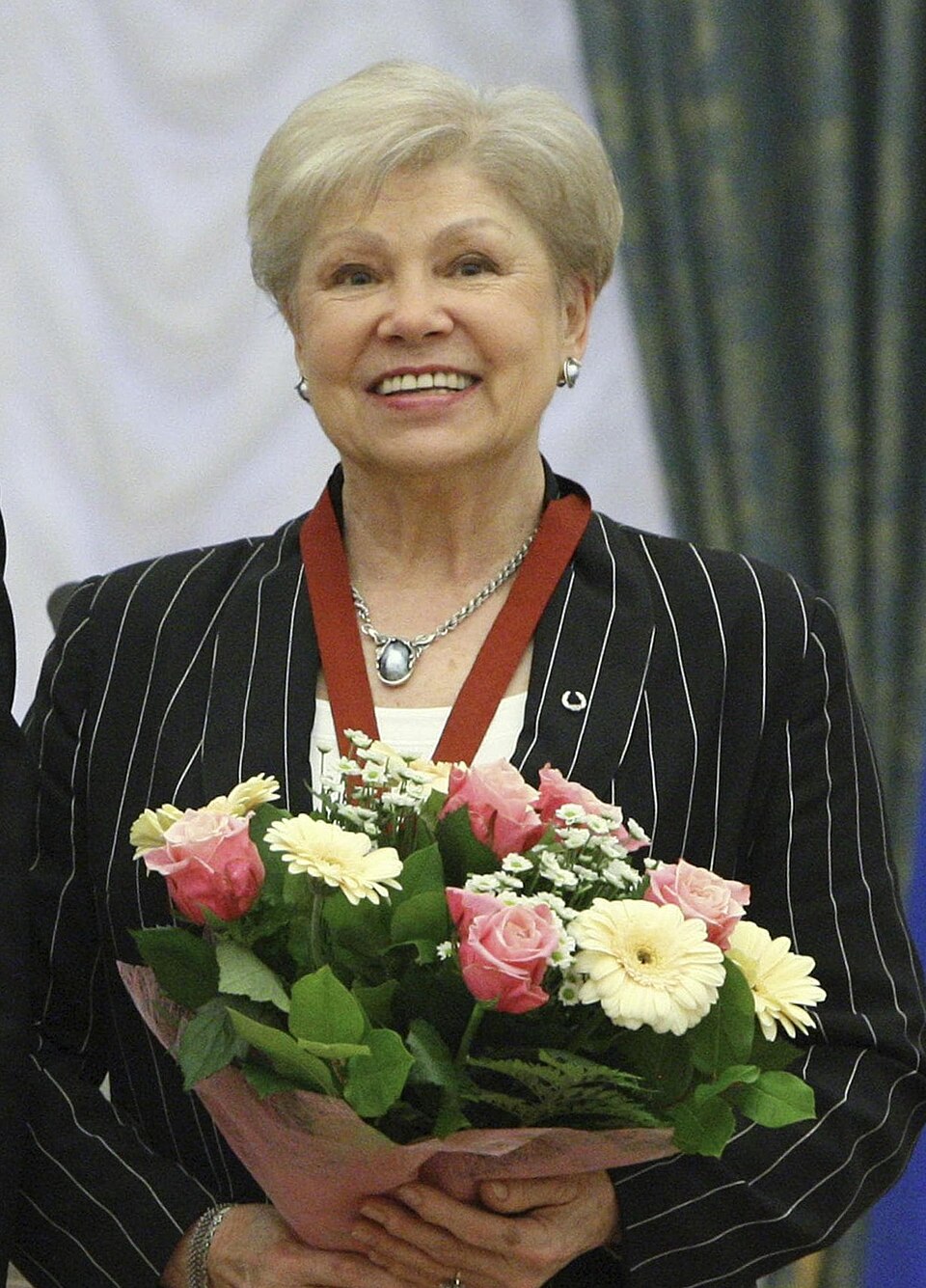
Larisa Latynina
Soviet Union
2
🥇
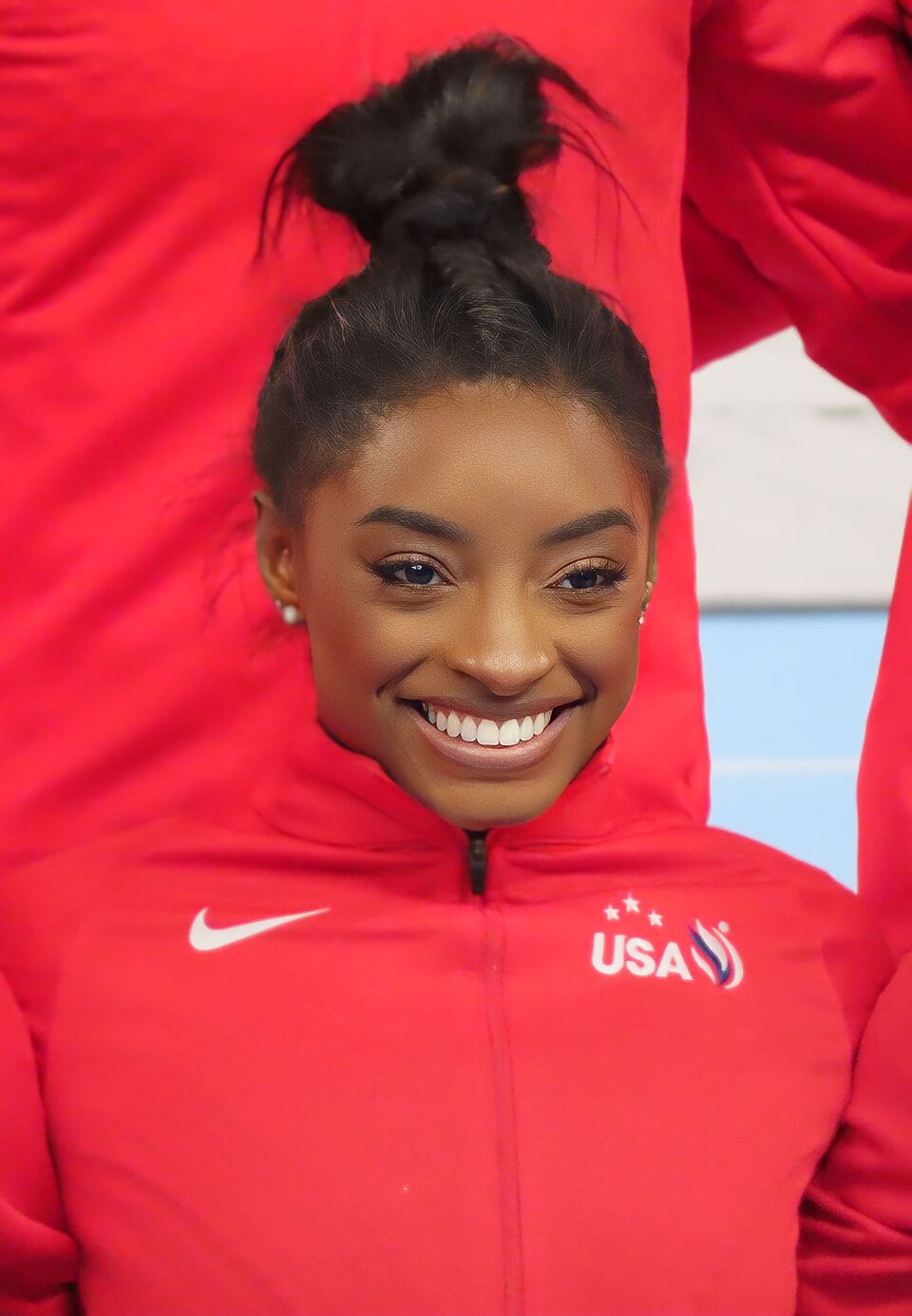
Simone Biles
United States
1
🥉
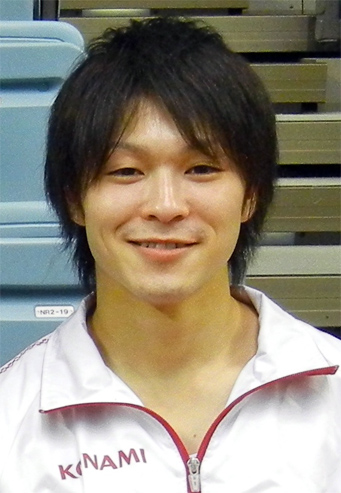
Kohei Uchimura
Japan
3
Comparison Lab
Toggle athletes on and off — every bar rescales to the leader of your selection.
Peak keeps each athlete’s strongest metrics; Career averages the full published set. Both stay editorial teaching marks.
5 / 12
Drag only reorders the cosmetic shortlist — it does not change teaching scores.
Default shortlist below works without JavaScript. Toggle chips after load to rebuild bars.
Compare · in selection · Career
1Simone Biles88
2Larisa Latynina67
3Kohei Uchimura57
4Nikolai Andrianov57
5Vera Caslavska52
Olympic gold medals
Larisa Latynina9
Simone Biles7
Nikolai Andrianov7
Vera Caslavska7
Kohei Uchimura3
Olympic medals
Larisa Latynina18
Nikolai Andrianov15
Simone Biles11
Vera Caslavska11
Kohei Uchimura7
World titles
Simone Biles23
Kohei Uchimura10
Larisa Latynina9
Vera Caslavska4+
World Championship medals
Simone Biles30
Kohei Uchimura21
Larisa Latynina14
Nikolai Andrianov12
All-around titles (Olympic + World)
Simone Biles8
Kohei Uchimura8
Larisa Latynina4
Vera Caslavska4
Nikolai Andrianov2
Axis verdict on this selection
Pick one published scoring axis already on the GOAT lab. The leader is whoever is ahead among the athletes you keep selected — editorial teaching marks, not live stats.
Not a live box score, betting line, or a universal ranking. Bars stay scaled teaching marks from this sport’s published list.
The most decorated gymnast in the sport's history and the only one whose skills forced the rulebook to respond to her. Through Paris 2024 Biles holds 41 Olympic and World Championship medals, 30 of them gold: 11 Olympic medals including seven titles, and a record 30 world medals with a record 23 golds. She won six world all-around titles between 2013 and 2023 plus Olympic all-around golds in 2016 and 2024, and did not lose an all-around competition she completed for over a decade. Five elements bear her name across vault, beam and floor, including the triple-twisting double somersault on floor and the Yurchenko double pike vault, valued at 6.4 and never performed in competition by another woman. Her 2024 return, three years after withdrawing from the Tokyo team final with the twisties, added team, all-around and vault golds at 27 — an age at which almost every predecessor had retired.
For 48 years she held the record for the most Olympic medals won by any athlete in any sport. Latynina took 18 across three Games — nine gold, five silver and four bronze in 1956, 1960 and 1964 — a total not surpassed until Michael Phelps in 2012, and still the record for a gymnast. She won the Olympic all-around in Melbourne in 1956 and again in Rome in 1960, added world all-around titles in 1958 and 1962, and finished with 14 World Championship medals including nine golds. She competed the entire 1958 World Championships while several months pregnant and won the all-around. Her era offered more medal opportunities than today's, but she also faced the strongest gymnastics nation on earth in her own selection trials, and after retiring she coached the Soviet women's team to three consecutive Olympic team titles from 1968 to 1976.
King Kohei won every all-around competition he entered from 2009 to 2016 — six consecutive world titles from 2009 to 2015 and Olympic golds in London and Rio — the longest unbroken run of all-around dominance in the sport's history, on the six-apparatus men's program where a single weak event ends a campaign. He finished with seven Olympic medals, three of them gold, and 21 World Championship medals including ten titles, and he did it in the open-ended era against fields deliberately built to attack his difficulty. His signature was the opposite of the arms race: he carried competitive but not extreme D-scores and won on execution, routinely posting the highest execution marks in the field on high bar and floor. In Rio 2016 he anchored Japan's first men's team gold in 12 years and won the all-around by 0.099 after Oleg Verniaiev led going into the final rotation.
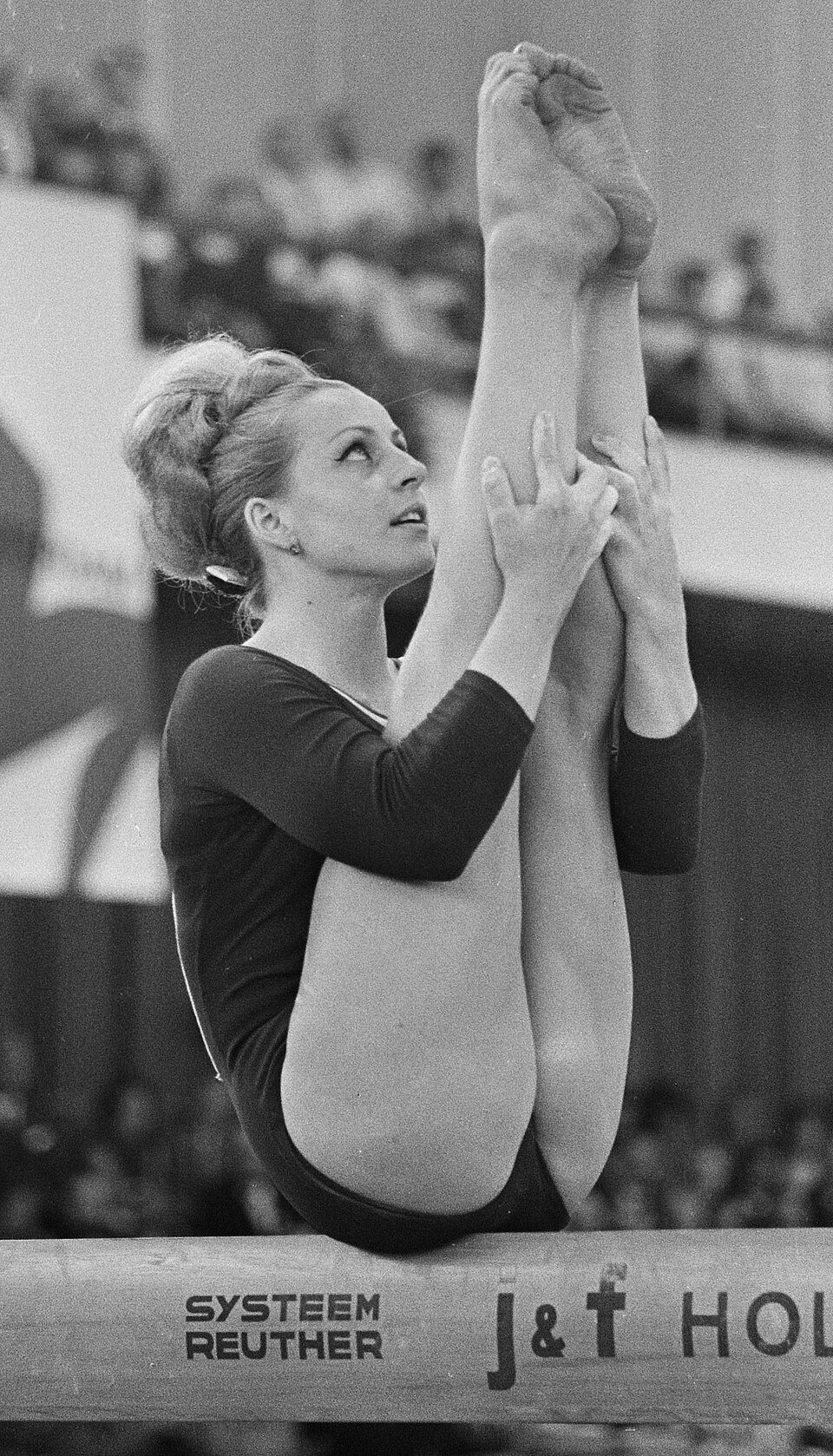
The only woman to win the Olympic all-around title twice in the modern era before Simone Biles, taking it in Tokyo in 1964 and again in Mexico City in 1968, and the only gymnast to win an individual Olympic gold on every apparatus of her time. She finished with 11 Olympic medals — seven gold and four silver — and world all-around titles in 1962 and 1966, breaking a Soviet monopoly almost single-handedly. Her 1968 campaign is the most extraordinary in the sport's history: she had signed the Two Thousand Words manifesto, fled to the mountains of Moravia after the Warsaw Pact invasion of Czechoslovakia and trained by swinging on tree branches and doing floor work in a meadow, then arrived in Mexico City and won four golds. On the podium for the shared beam and floor titles she turned her head down and away during the Soviet anthem, a protest that cost her the right to travel and compete for years afterwards.
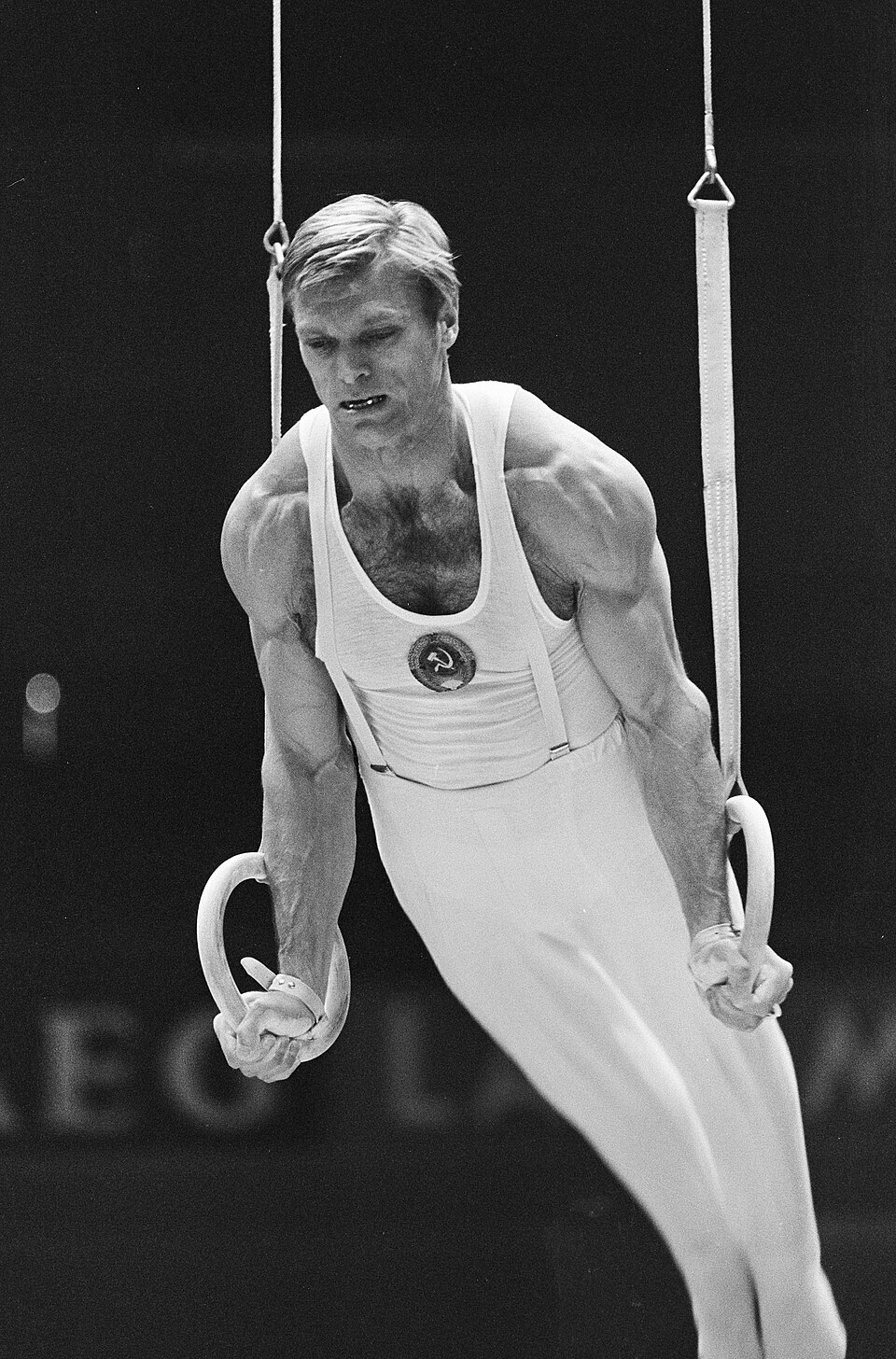
The most decorated male gymnast in Olympic history, with 15 medals across three Games — seven gold, five silver and three bronze between 1972, 1976 and 1980 — a total that stood as the record for any male Olympian in any sport until Michael Phelps. Montreal 1976 was his masterpiece: he won the all-around, floor, rings and vault, taking four golds at a single Games in an era when Japan owned the men's team title. He added the world all-around crown in Strasbourg in 1978 and finished with 12 World Championship medals. Andrianov was the first great male all-arounder of the television age, technically complete across all six apparatus at a time when the Soviet system generally produced specialists, and he combined the vaulting power of a tumbler with the shoulder strength required for rings — a combination that remains rare. He later coached in Japan, where his influence fed directly into the country's subsequent revival.
In eight days in Barcelona in 1992 he won six Olympic gold medals — team, all-around, pommel horse, rings, vault and parallel bars — the most ever won by a gymnast at a single Games and a haul no athlete in any sport had matched at a Summer Olympics since Mark Spitz. Competing for the Unified Team as the Soviet Union dissolved around him, he was so far ahead of the field that he won four apparatus finals on a single day. He added the world all-around title in Birmingham in 1993 and finished with a record 12 World Championship golds among 23 world medals. Atlanta 1996 came after a car accident that seriously injured his wife and derailed his training; he still returned to win four bronze medals, taking his Olympic total to 10. His peak was short and his consistency never matched Uchimura's, but no male gymnast has ever compressed so much dominance into so little time.
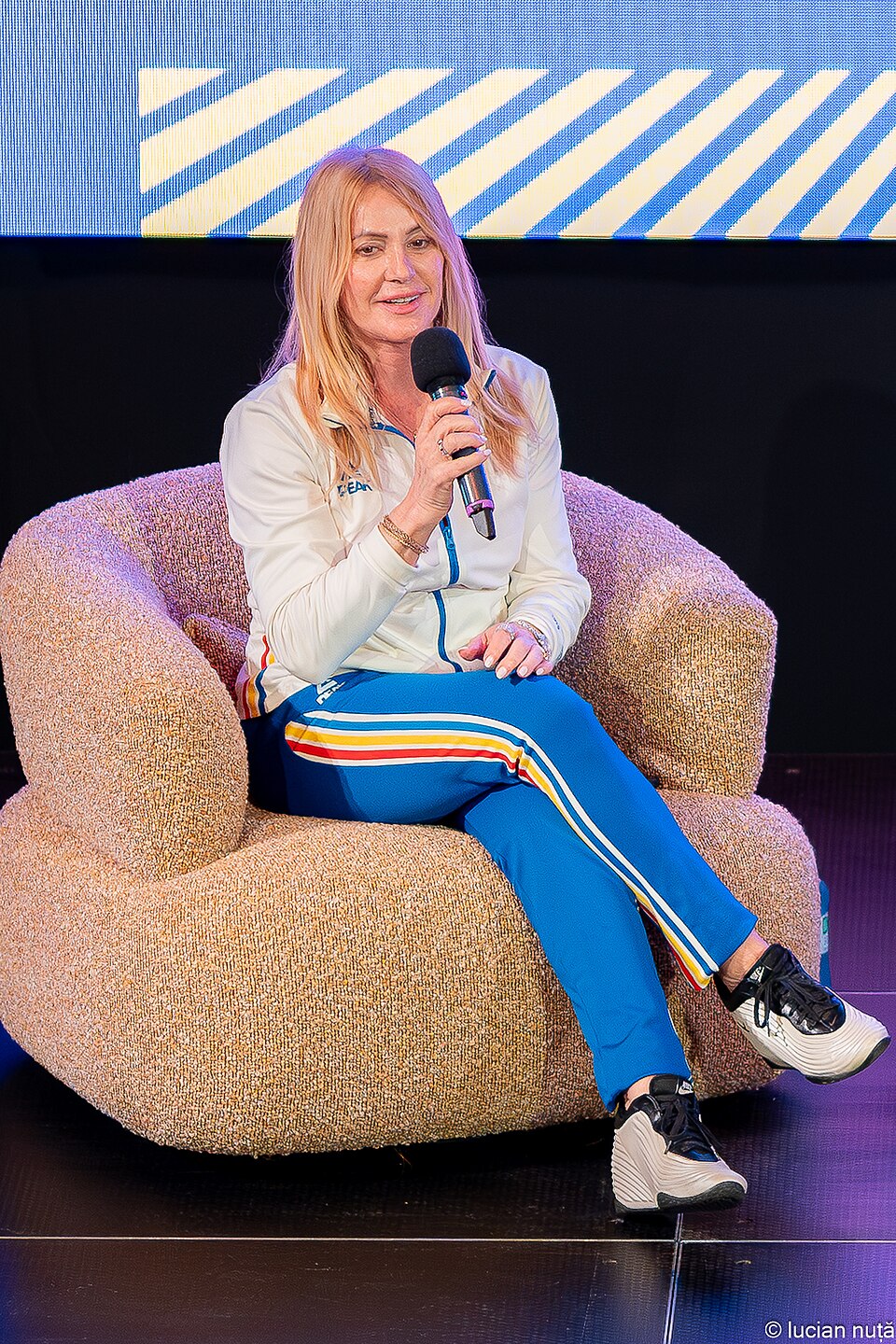
The most famous single moment in gymnastics belongs to her. On 18 July 1976 in Montreal, aged 14, she scored the first perfect 10.00 in Olympic gymnastics history on the uneven bars; the scoreboard, built to display three digits, showed 1.00 because nobody had programmed it for the possibility. She recorded seven perfect tens at those Games and won the all-around, beam and uneven bars, becoming the youngest Olympic all-around champion ever — a record permanently protected by the age minimum introduced in 1997. In Moscow in 1980 she added beam and floor golds and a disputed all-around silver, finishing with nine Olympic medals, five of them gold. She also won the world beam title in 1978 and a world team gold with Romania in 1979, competing the beam final from a hospital bed with an infected hand. Her Montreal routines redefined what precision on the apparatus looked like.
No male gymnast has won more Olympic gold medals. Kato took eight golds and 12 medals in total across Mexico City 1968, Munich 1972 and Montreal 1976, and he is one of only two men to win the Olympic all-around title twice in the modern era, taking it in 1968 and 1972. He was the central figure in the most durable dynasty the men's sport has produced: Japan won five consecutive Olympic team titles from 1960 to 1976, and Kato was on the last three of them. His strength was parallel bars, where he won gold in both 1972 and 1976, but his reputation rested on a technical purity that Japanese coaching has pursued ever since — the priority on line, amplitude and stuck landings that Kohei Uchimura would inherit two generations later. He competed the 1972 Games with a shoulder injury that would have ended most careers and still won three golds.
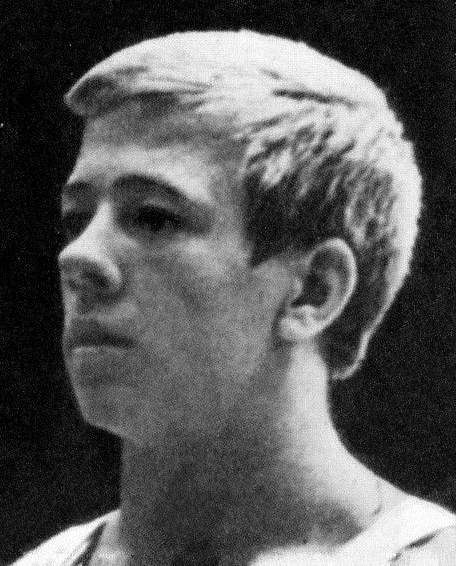
Known as the Man of Iron for a competitive composure that never visibly broke, Shakhlin won 13 Olympic medals across 1956, 1960 and 1964 — seven gold, four silver and two bronze — the second-highest total by any male gymnast. Rome 1960 was his defining Games: he won the all-around, pommel horse, vault and parallel bars, four golds in a single Olympics, and he added the world all-around title in Moscow in 1958 to complete the set. He also collected ten World Championship medals in an era when the Soviet men's team was so deep that selection was harder than the competition itself. Shakhlin's specialism was the apparatus that punish nerve rather than power — pommel horse above all, where he won Olympic gold in 1960 and again in 1964 at the age of 32. His duel with Japan's rising generation defined men's gymnastics through the late 1950s and early 1960s.
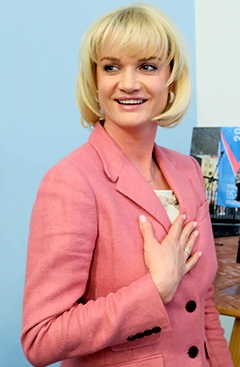
The most successful uneven bars gymnast in history and the last great stylist of the 10.0 era. Khorkina won three world all-around titles — 1997, 2001 and 2003 — a record for a woman until Biles, and took 20 World Championship medals including nine golds. Her two Olympic titles both came on uneven bars, in Atlanta in 1996 and Sydney in 2000, and she finished with seven Olympic medals. At 1.65 metres she was far taller than the sport's template, which made her a liability on vault and beam but gave her uneven bars work an amplitude nobody could copy; several elements in the Code of Points carry her name. Her career also captured the era's controversies, from the miscalibrated vaulting horse that wrecked the 2000 Olympic all-around final to her outspoken and often bitter public criticism of the judging that denied her the one title she wanted most.
The Prince of Gymnasts, and the athlete who announced China as a gymnastics superpower. At the 1982 World Cup in Zagreb he won six of the seven gold medals on offer, a haul with no parallel in the sport, and at the Los Angeles Olympics in 1984 he took six medals from a single Games — gold on floor, pommel horse and rings, silver in the team event and on vault, and bronze in the all-around. He was a specialist rather than an all-around champion, and his floor and rings work in particular set the technical template that Chinese coaching would refine for the next four decades into Olympic sweeps in Beijing. His second act was as consequential as his first: he founded the Li-Ning sportswear company in 1990, built it into one of China's largest brands, and in 2008 was hoisted into the air to run around the rim of the Bird's Nest and light the Olympic cauldron in front of his own country.
The best gymnast Latin America has produced and the only woman to beat Simone Biles in a major all-around final in a decade, taking the world title in Liverpool in 2022 while Biles was on hiatus. Andrade won Brazil's first Olympic gymnastics gold on vault in Tokyo in 2021 along with all-around silver, then returned in Paris in 2024 to win floor exercise ahead of Biles, with silver in the all-around and on vault and bronze with the Brazilian team — six Olympic medals in total, making her the most decorated Olympian in Brazilian history across all sports. She did it after three separate anterior cruciate ligament reconstructions, an injury history that ended most careers before hers began. Her Paris floor gold produced the image of the Games, with Biles and Jordan Chiles bowing to her on the podium, and she has become the single biggest driver of gymnastics participation in South America.
Olympic gold medals
2
Olympic medals
6
World titles
3
All-around titles (Olympic + World)
1
Bars are scaled to the leader in this list.
The debate
The strongest objection to any cross-era ranking is that Olympic medal counts are not comparable. Latynina competed when the women's program awarded medals on every apparatus to a field with far fewer nations capable of contesting them, and when the same gymnast could enter every final without a two-per-country cap. Andrianov and Shakhlin benefited from similar structural abundance on the men's side. Conversely, Biles has been repeatedly boxed in by the two-per-country rule, by an Olympic program of only six women's events, and by a code that has deliberately under-valued her hardest skills. Adjusting for opportunity narrows the gap between the twentieth-century accumulators and the modern champions considerably.
What is not disputable is dominance relative to contemporaries, and on that measure Biles and Uchimura stand apart. Biles won every all-around final she completed from 2013 to 2024 and usually by margins larger than the gap between silver and eighth place; Uchimura went eight consecutive major all-around competitions unbeaten on six apparatus. Scherbo's Barcelona week is the greatest single Games by a gymnast, Caslavska's 1968 the greatest under adversity, and Comaneci's Montreal the most culturally significant. Choose accumulation and Latynina leads; choose margin of superiority and it is Biles; choose difficulty of the task and the men's all-around kings have the strongest claim. The order above weights all three and only the top place feels settled.
Walk through this GOAT ranking once
A static pass over the published Gymnastics list on this page — teaching marks, not live stats.
Open the ranking block — Scroll to the numbered GOAT table below the lab. Order is editorial; bars are teaching percentages tied to each athlete card.
Read Peak vs Career as labels — The Career / Peak toggle reshapes which bars the comparison lab shows. It does not fetch new statistics — it switches published teaching marks.
Compare Simone Biles and Larisa Latynina on Olympic gold medals — Find both names in the table and read the first published axis (Olympic gold medals). Note who leads on that axis only; other axes can disagree.
Use the axis-verdict picker second — After you have read the table, the axis-verdict block is a second pass on the same published stats — a teaching check, not a trophy ceremony.
On Gymnastics, Simone Biles vs Larisa Latynina on Olympic gold medals is the smallest honest comparison the page offers before you open VS links.
Editorial teaching ranks only. Not betting advice, fantasy scoring or a live leaderboard.
Second pass: Peak toggle and another axis
After the first-axis walk on Gymnastics, use Peak vs Career and a second published axis already on this page.
Flip Career to Peak once — On the comparison lab, switch from Career to Peak. Bars reshape from published peak marks — no live fetch.
Read Simone Biles and Larisa Latynina on Olympic medals — In the GOAT table, leave the first axis behind and read the second published axis (Olympic medals) for both names.
Note if the leader flips — If Peak or Olympic medals reverses Simone Biles vs Larisa Latynina from the first-axis pass, keep both results as teaching marks, not a trophy.
Axis-verdict as a check — Optionally set the axis-verdict picker to Olympic medals and confirm the same published numbers.
On Gymnastics, Peak plus Olympic medals for Simone Biles vs Larisa Latynina is a second honest decision using only marks already printed here.
Editorial teaching only. Not betting, fantasy scoring or a live board.
Pick the published mark
Teaching read only. Not a trophy, a bet, or a live board.
How to read this GOAT list
Are these live rankings or betting odds?
No. The bars are editorial teaching marks scaled to the leader already published on this sport’s GOAT page. They are not live box scores, transfer values, or a betting line.
What is the difference between Peak and Career?
Peak keeps each athlete’s strongest published metrics. Career averages the full published set on this page. Both stay teaching marks — switch the era buttons on the lab to rescale the same list.
How do I see who leads on one published axis?
Open the axis verdict on this page, pick one scoring axis already in the lab, and keep the athletes you want selected. The line names whoever is ahead on that axis among that selection.
How do VS pages relate to this list?
A VS page uses the same published numbers as this ranking. It does not invent a new score. Open Compare if you want to rescale a custom subset.