At a glance
Cricket · A contest is a duel between bat and ball repeated over after oveA contest is a duel between bat and ball repeated over after over. The bowler…
Cricket · The pitch, stumps and creasesThe pitch is a twenty-two-yard strip of prepared clay with a wicket at each…
Cricket · Scoring runsRuns are the currency of cricket. Batters score by hitting the ball and…
Cricket · The over and bowlingAn over consists of six legal deliveries bowled from one end by a single…
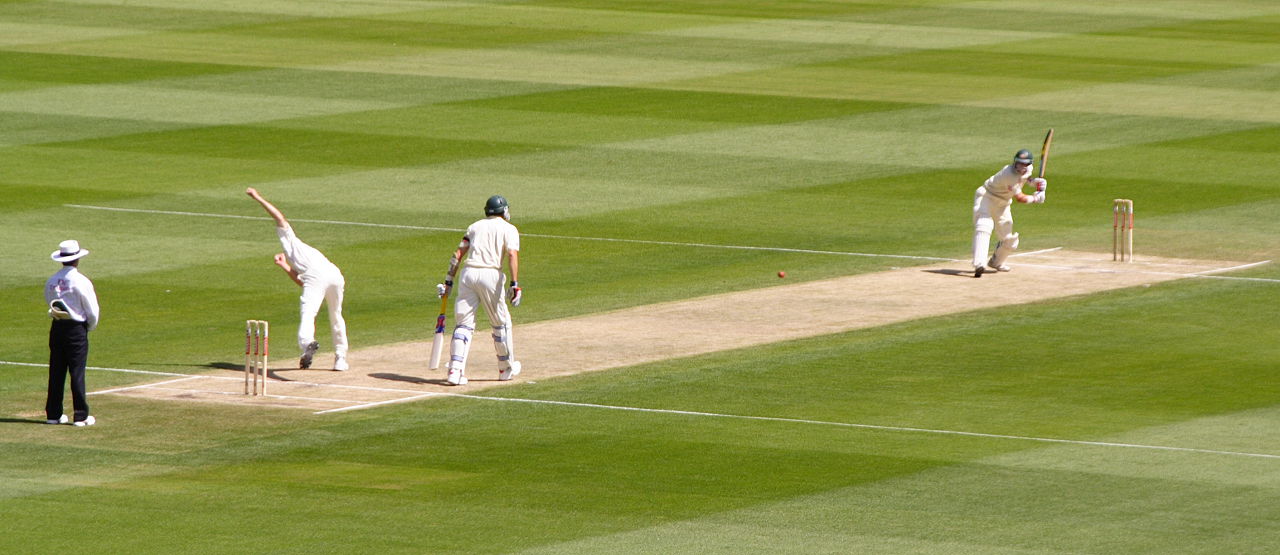
The pitch is a twenty-two-yard strip of prepared clay with a wicket at each end. A wicket is three vertical stumps topped by two small bails. Painted lines called creases mark the batter's and bowler's ground: the popping crease defines where a batter is safe and where a bowler must land his front foot. The bowler runs in and delivers from one wicket toward a batter defending the other.
Cricket · A contest is a duel between bat and ball repeated over after ove
A contest is a duel between bat and ball repeated over after over. The bowler delivers six legal balls from one end, then a different bowler sends down the next over from the other end, and so the attack rotates while the batters try to score off every delivery. Runs come from running between the wickets or from boundaries; wickets fall by bowled, caught, leg before, run out, stumped, and rarer methods.
Cricket · The pitch, stumps and creases
The pitch is a twenty-two-yard strip of prepared clay with a wicket at each end. A wicket is three vertical stumps topped by two small bails. Painted lines called creases mark the batter's and bowler's ground: the popping crease defines where a batter is safe and where a bowler must land his front foot. The bowler runs in and delivers from one wicket toward a batter defending the other.
Cricket · Scoring runs
Runs are the currency of cricket. Batters score by hitting the ball and running to the opposite crease before the fielders can break the wicket; each completed length of the pitch is one run, and they may run several. A ball that reaches the boundary along the ground is worth four; one cleared on the full is worth six. Batters need not run and will often defend or leave deliveries, waiting for a scoring chance.
Cricket · The over and bowling
An over consists of six legal deliveries bowled from one end by a single bowler, after which play switches to the other end and a different bowler takes over. No bowler may bowl two overs in succession. In limited-overs cricket each bowler is capped, ten overs in a fifty-over ODI, four in a T20.
This is a reading check for the atlas, not personal advice, a live price, or a booking. It does not replace the full topic page.
Questions
- What is the next question after this?
- Runs are the currency of cricket. Batters score by hitting the ball and running to the opposite crease before the fielders can break the wicket; each completed length of the pitch is one run, and they may run several. A ball that reaches the boundary along the ground is worth four; one cleared on the full is worth six. Batters need not run and will often defend or leave deliveries, waiting for a scoring chance.
- Does this page rank people or nations?
- This is a reading check for the atlas, not personal advice, a live price, or a booking. It does not replace the full topic page.
- Where is the longer entry?
- An over consists of six legal deliveries bowled from one end by a single bowler, after which play switches to the other end and a different bowler takes over. No bowler may bowl two overs in succession. In limited-overs cricket each bowler is capped, ten overs in a fifty-over ODI, four in a T20.
Next question: Curling · Open the topic: Cricket
⚽ How to read the GOAT score — Soccer (2022) · 🏀 When peak versus career changes the order — Basketball (1946) · 🎾 What a fair head-to-head holds constant — Tennis (1968) · ⚾ How a rules card differs from a record — Baseball (1903) · 🏎️ Which years the era window includes — F1 (1950) · ⛳ A shared prize versus one name — Golf (1860) · How to read a sports comparison