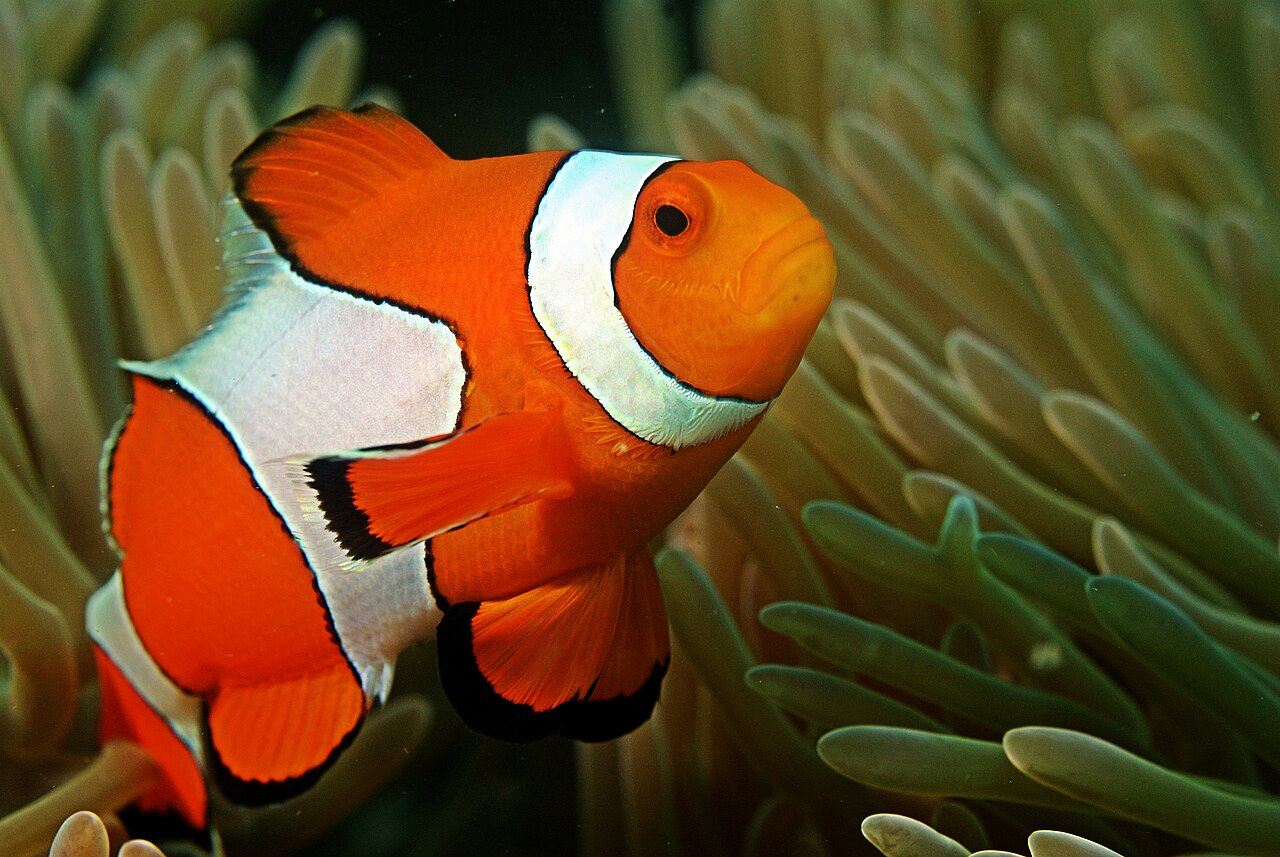
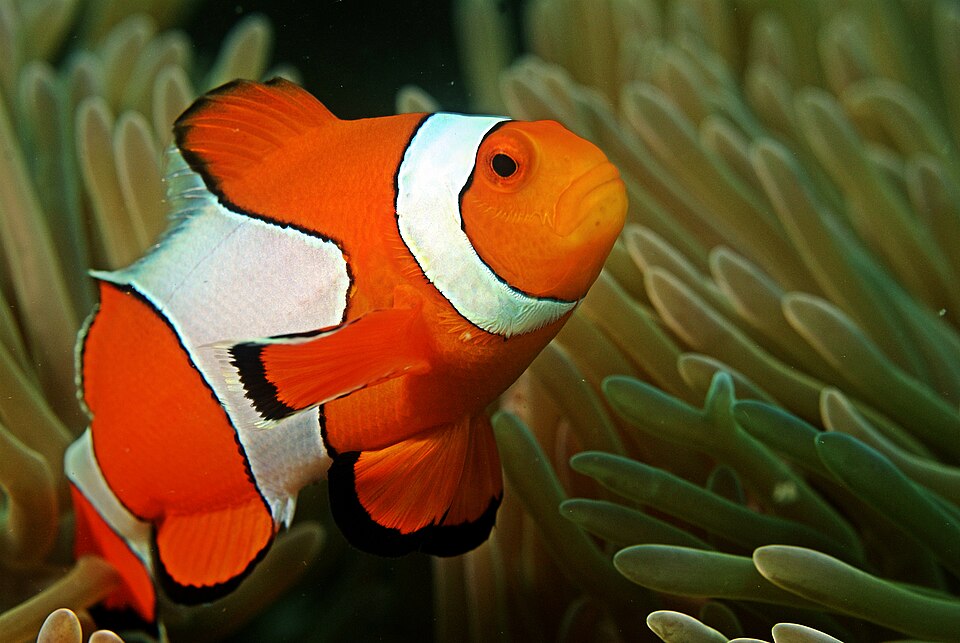
Clownfisch ist eine der 24 Arten in diesem Atlas. Kein Katalog: Evolution, Anatomie, Verhalten, Kultur, Ikonen, Schutz und Areal sind ein System.
Scores vergleichen Tempo, Intelligenz, Areal, Resilienz, kulturellen Einfluss und ökologische Rolle. Redaktionelle Relativwerte, kein Laborranking.
Sieben Kapitel graben nach: Ursprünge, Körper und Sinne, Leben und Verhalten, Kultur, Ikonen, Schutzdruck und das mit Menschen geteilte Areal.
Tiefe Einführung
Tiefgang: Clownfisch
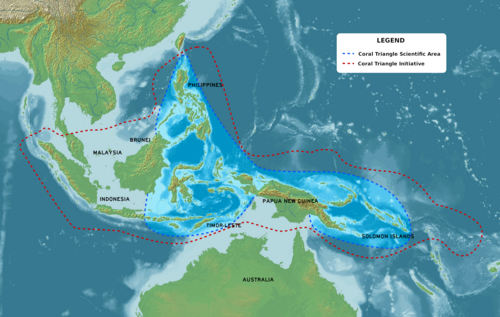
Clownfisch ist kein Postkarten-Tier. Es ist ein Satz von Populationen, Unterarten und menschlichen Regeln in der Familie Fische dieses Atlas.
Vielfalt, Körper, Kultur und Areale — plus eine Linse für diese Sprachregion.
Vielfalt im Typ
Feldführer falten viele Linien in das Wort Clownfisch. Unterarten, Zugwege und Haltungslinien teilen nicht ein Schicksal.
Dieser Atlas wählt einen Wikipedia-Titel als Heldenbild und lässt den Rest der Stufe sichtbar, damit ein erholter Bestand keine vom Aussterben bedrohte Cousine wäscht.
Life in the landscape
A small pomacentrid with a mucus coat and a body plan for hovering in tentacles. The swim bladder and pectorals are built for a tiny territory, not a gyre.
Algae, zooplankton and anemone scraps inside a few cubic metres. The expensive trick is immunity, not speed.
Kultur und Bedeutung
Film, Recht, Heraldik, Zoos und lokale Geschichte trafen Clownfisch. Diese Bilder bewegen Geld; sie sind keine Feldzählung.
Das Kulturkapitel datiert Plakate und Gesetze, damit ein Film von 1975 oder ein Logo von 1961 nicht als Rote Liste der 2020er auftreten.
Conservation and money
Ocellaris is not the most threatened reef fish; binding risks are anemone bleaching, aquarium take and the Nemo effect.
Tourism, conflict payments, quotas and captive loans are dated economic bands in the market chapter -- not live prices and not a best-species prize.
Lebenswissenschaftlicher Tiefgang
Biologie im Tiefgang: Clownfisch
Die Biologie von Clownfisch stapelt Struktur, Energie, Sinne und harte Grenzen. Die vier Abschnitte nutzen dieselben Atlas-Überschriften, damit Typen ohne Best-Species-Rahmen vergleichbar bleiben.
Anatomie, Sinne, Verhalten und Grenzen — plus Feldsprach dieser Region.
Structure
A small pomacentrid with a mucus coat and a body plan for hovering in tentacles. The swim bladder and pectorals are built for a tiny territory, not a gyre.
Load paths and tissues (not metals) are expanded in the anatomy chapter.
Energy and foraging
Algae, zooplankton and anemone scraps inside a few cubic metres. The expensive trick is immunity, not speed.
The how-it-works diagrams reduce that budget to a six-node loop.
Senses and control
Chemical cues from the host and social rank by size. Vision is tuned to a bright, shallow reef, not to open water.
Control here means the animal steering itself -- not a vehicle ECU.
Limits
No anemone, no species behaviour. Heat and trade both remove the house or the household.
Resilience scores encode those limits relative to the other 23 types.