Tai kingdoms
Rice and fish
Early Tai tables on the river plain.
Thai cuisine · Hot, sour, salty, sweet: nam prik, fish sauce and the regional map from Bangkok street to Isan grilled chicken.
Milestones in order. This is history, not a weekly activity grid.
Darker cells mean a higher score for this topic on that metric.
LessMore
Last reviewed Sources & creditsMedia creditsMethodology
Thai cuisine (ไทย) fused Tai, Chinese, Mon and Indian techniques with New World chili. Nam pla and nam prik are older than the tourist pad Thai of the 20th century.
Thai cuisine sits at spice 92 in this atlas. Pad Thai and Tom yum show the range better than a single heat number.
Pad Thai plus one regional plate — not only the export icon.
Thai fish sauce.
Bangkok street food — boat noodles, boat noodles, boat noodles, som tum carts, late-night rice porridge — is not a sideshow. Pad Thai is a 20th-century national-noodle project, not an ancient royal plate.
The home pantry around Nam pla and the labour behind Tom yum rarely fit a takeaway box.
Thai cuisine did not arrive as a single national plate. Its older structure is visible in Pad Thai, Nam pla and the regional kitchens that still disagree.
Court, village and street cooked on different clocks. The ten-point timeline below keeps those clocks in view rather than flattening them into a brand story.
Thai cuisine (ไทย) fused Tai, Chinese, Mon and Indian techniques with New World chili. Nam pla and nam prik are older than the tourist pad Thai of the 20th century.
Tai kingdoms cooked rice and fish in the Chao Phraya world.
A trading capital mixed Persian, Chinese and European ingredients.
New World capsicum remade nam prik and the heat map.
The new capital concentrated Chinese-Thai street cooking.
Palace texts began to freeze a "Thai" repertoire.
State nation-building pushed a stir-fried noodle as national food.
Bangkok restaurants standardised the export curry-and-pad-Thai set.
Western cities gained a Thai restaurant on every high street.
A state export campaign pushed Thai restaurants abroad.
Som tum and grilled chicken gained prestige beyond "spicy rural".
Early Tai tables on the river plain.
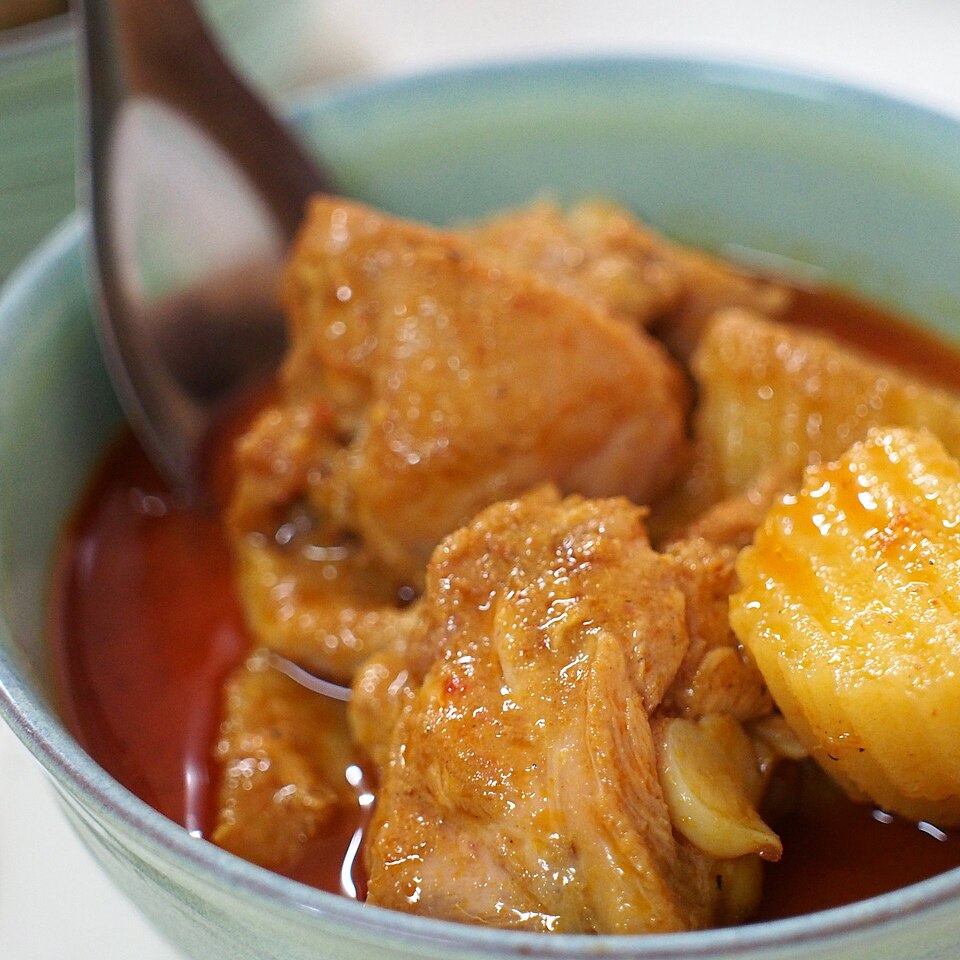
Persian and Chinese ingredients entered the court.
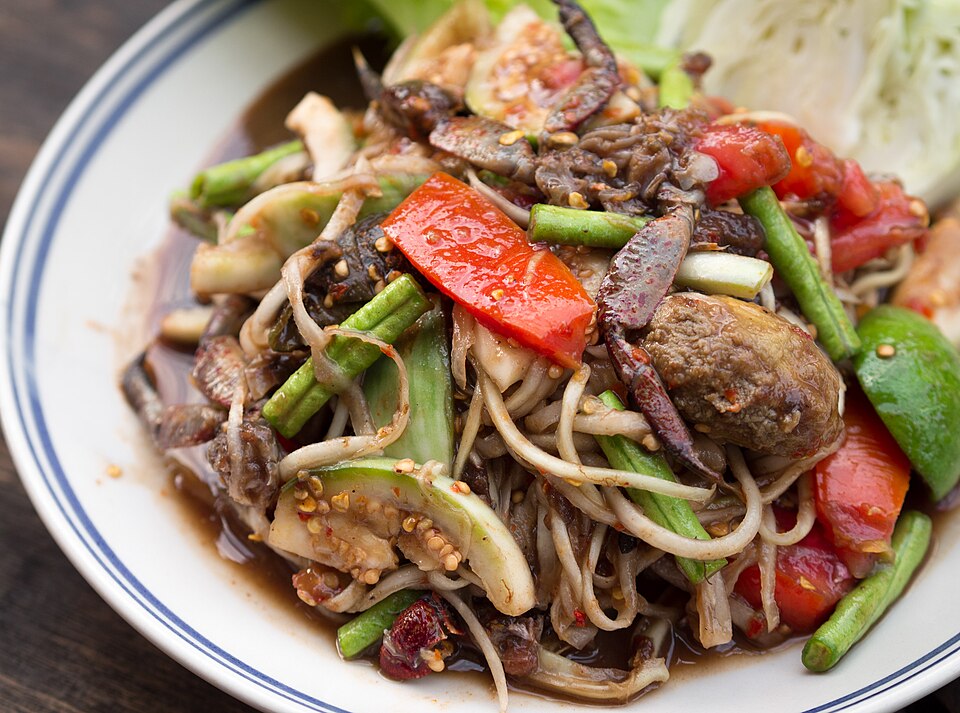
Capsicum became the heat of the kingdom.
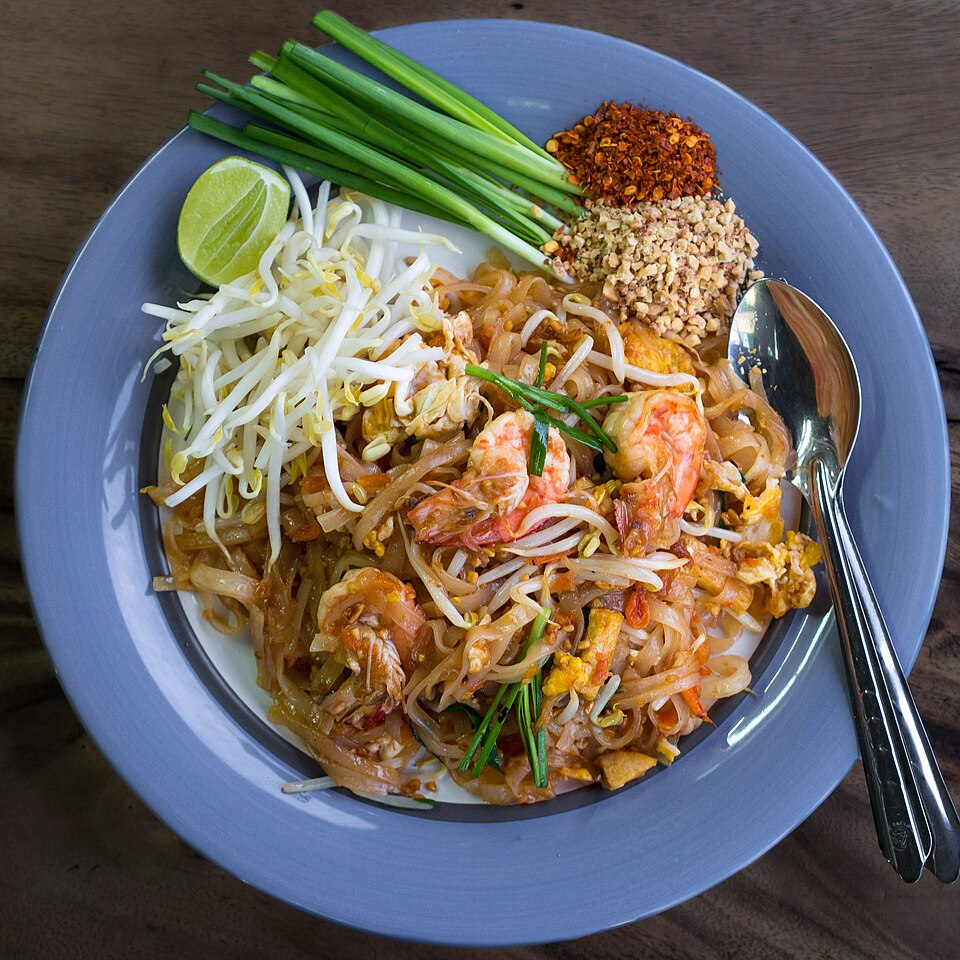
A noodle was asked to stand for a country.
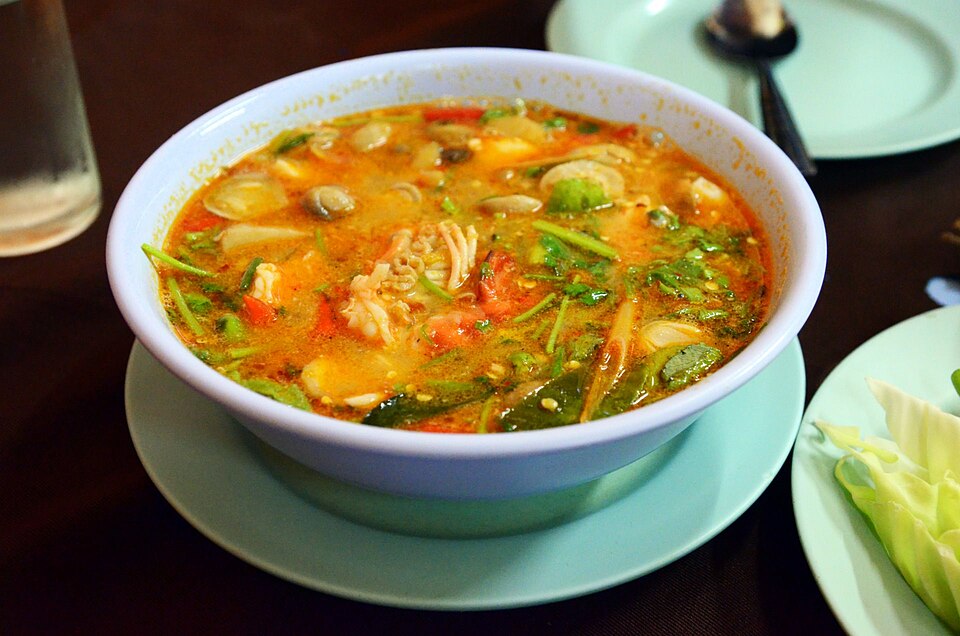
High-street curries and a later Isan correction.
Capsicum rewrote Thai heat.
A street noodle became national policy.
Thai food became an English-speaking default casual cuisine.
A history of Thai cuisine that starts at the airport restaurant will miss the ferments, markets and labour that actually built the table.
Fermented heat and shared grills: kimchi, gochujang and banchan from the Korean Peninsula.
Overall 76 🍣Dashi, rice and seasonal restraint: washoku from sushi counters to home miso soup.
Overall 72 🥟Eight great traditions, one wok logic: soy, rice, wheat and the regional map behind "Chinese food".
Overall 80 🍲Herbs, nuoc mam and a French-colonial overlay: pho, banh mi and the regional split from Hanoi to the Mekong.
Overall 68