Pho
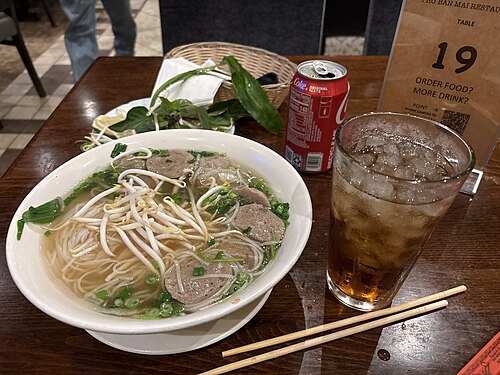
Rice noodles in beef or chicken broth with herbs.
Hanoi claims the origin; Saigon sweetened and garnished it into the export bowl.
“Broth clarity is the northern test; herb volume is the southern one.”
Vietnamese cuisine · Herbs, nuoc mam and a French-colonial overlay: pho, banh mi and the regional split from Hanoi to the Mekong.
Darker cells mean a higher score for this topic on that metric.
LessMore
Last reviewed Sources & creditsMedia creditsMethodology
Vietnamese cooking sits on rice, fish sauce and herbs. Chinese domination, Cham and Khmer neighbours, and French colonialism left baguette, coffee and pate inside a Southeast Asian table.
Vietnamese cuisine sits at spice 58 in this atlas. Pho and Banh mi show the range better than a single heat number.
Pho plus one regional plate — not only the export icon.
Vietnamese fish sauce; the primary salt.
Street Vietnam is the cuisine. Plastic stools, pho at dawn, banh mi from a cart, bun cha at lunch. The French overlay is not a tourist add-on — the baguette is Vietnamese now.
The home pantry around Nuoc mam and the labour behind Banh mi rarely fit a takeaway box.
The dishes that carry Vietnamese cuisine are the ones a market cook and a home kitchen would both recognise.
Eight signatures below explain the table to a first-time diner and to a grocer stocking the aisle.
Rice noodles in beef or chicken broth with herbs.
Hanoi claims the origin; Saigon sweetened and garnished it into the export bowl.
“Broth clarity is the northern test; herb volume is the southern one.”
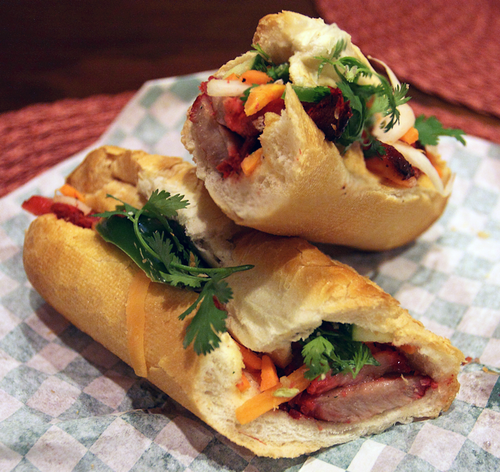
Baguette with pickle, cilantro, chili, protein and often pate.
A French loaf remade with Vietnamese pickle and fish-sauce logic.
“Crust shatter plus sour pickle is the whole thesis.”
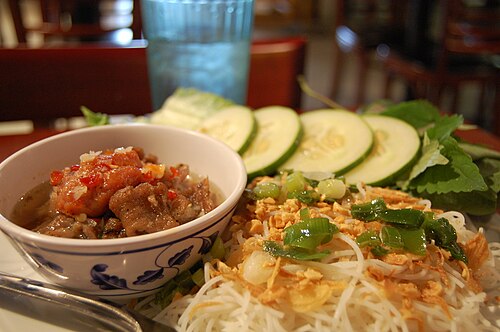
Grilled pork with rice noodles, herbs and a sweet-sour dip.
Obama's 2016 bun cha lunch froze it as the Hanoi postcard.
“Smoke on the pork, acid in the bowl.”
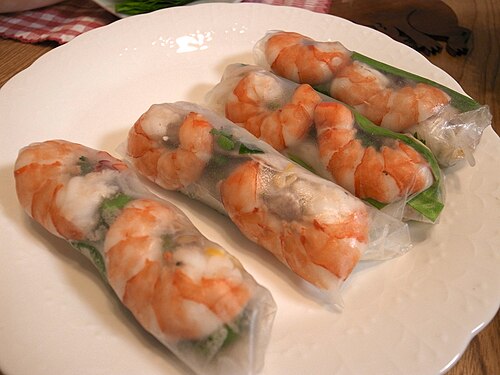
Fresh rice-paper rolls with shrimp, pork, herbs and peanut or nuoc cham.
The unfried spring roll that overseas menus call "summer roll".
“Cool herbs, not oil, do the talking.”
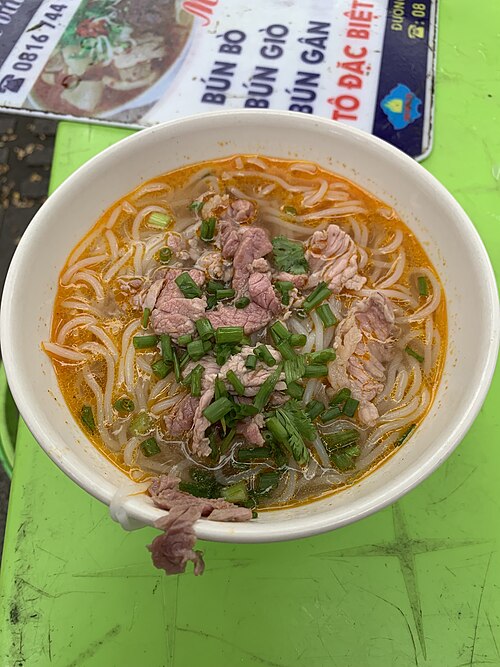
Spicy beef-and-lemongrass noodle soup from Hue.
Imperial-city heat in a country that otherwise treats chili as optional.
“Lemongrass and annatto, not just chili oil.”
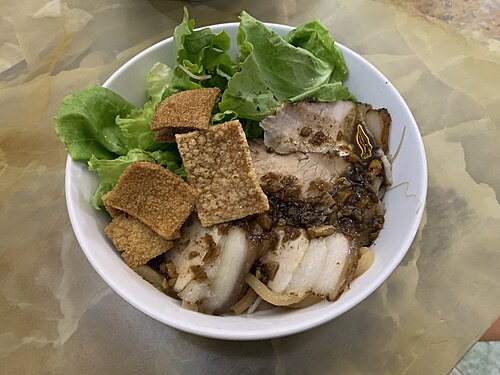
Chewy noodles with pork and herbs, tied to Hoi An's well water in local lore.
A town dish that tourism turned into a pilgrimage.
“Texture of the noodle is the argument.”
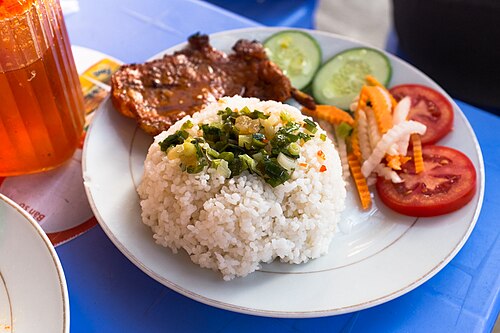
Broken rice with grilled pork, egg and pickle.
A leftover-grain dish that became the Saigon lunch.
“Broken rice is a feature, not a defect.”
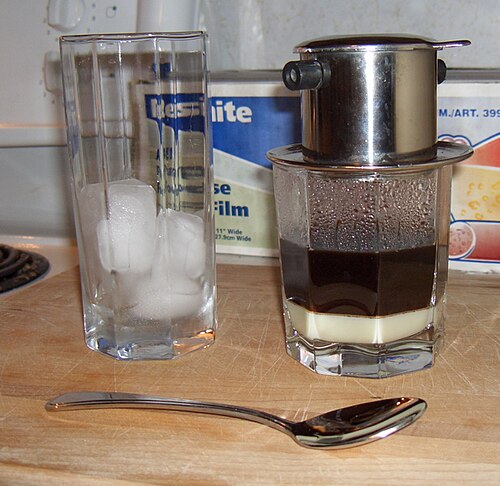
Robusta coffee dripped over sweetened condensed milk, iced.
Colonial coffee plus canned milk became a national drink.
“A cuisine that treats coffee as a course.”
Stats are relative 0–100 marks within this cuisine, for comparison only.
Toggle dishes on and off — every bar rescales to the leader of your selection.
Does Pho abroad still count as Vietnamese cuisine when the pantry is rewritten?
Capitals claim Banh mi; provinces disagree, loudly.
Fermented heat and shared grills: kimchi, gochujang and banchan from the Korean Peninsula.
Overall 76 🍣Dashi, rice and seasonal restraint: washoku from sushi counters to home miso soup.
Overall 72 🥟Eight great traditions, one wok logic: soy, rice, wheat and the regional map behind "Chinese food".
Overall 80 🌶️Hot, sour, salty, sweet: nam prik, fish sauce and the regional map from Bangkok street to Isan grilled chicken.
Overall 77