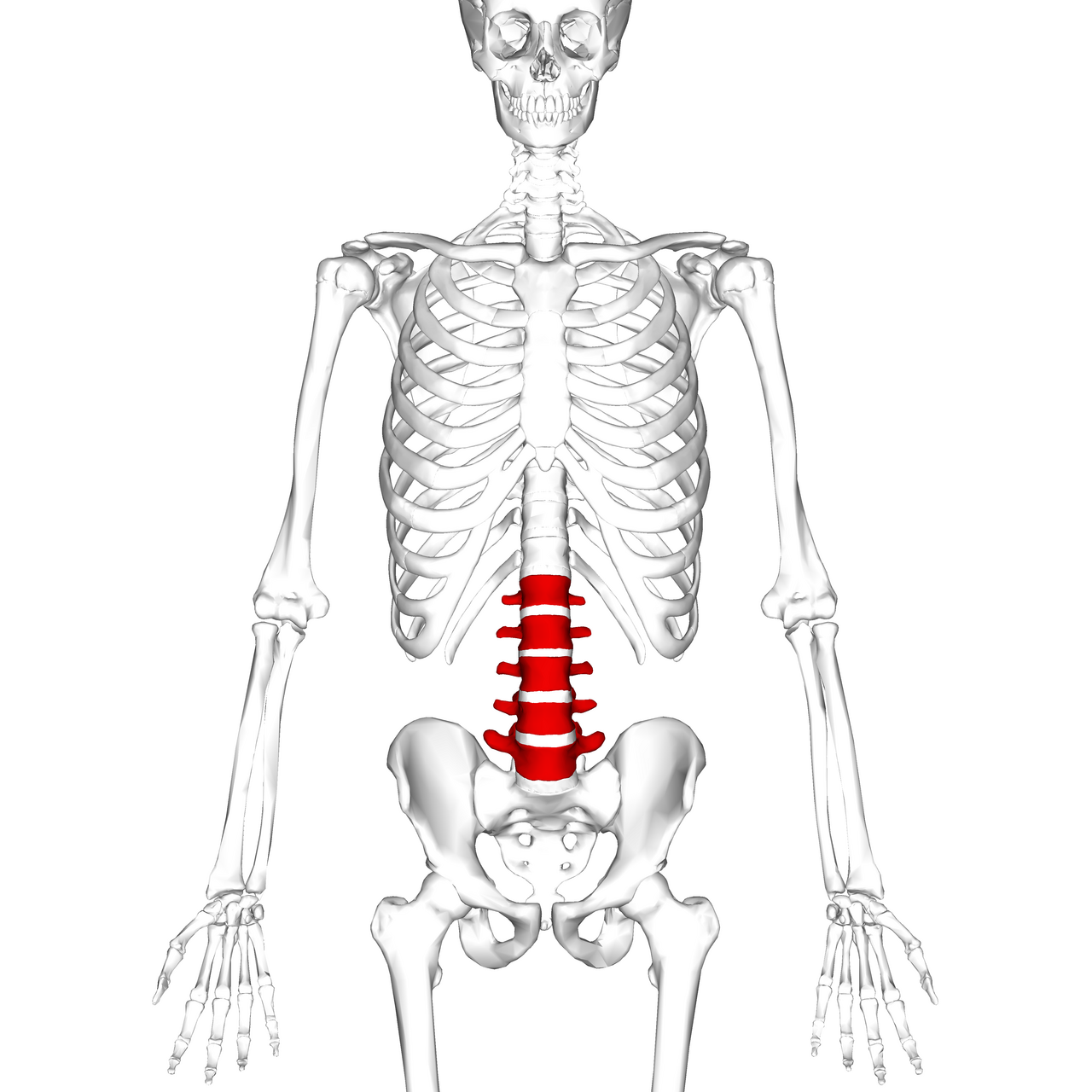
The lumbar spine bears more compressive load than any other spinal region, making low back pain the single most common musculoskeletal complaint worldwide.
Which printed signs on this page mean refer, not continue the kit?
The published refer lines are saddle numbness or bladder changes; progressive leg weakness; history of cancer, fever, or unexplained weight loss; and significant trauma or osteoporosis with new pain. Those are reasons to seek urgent clinical care. This page is not a diagnosis or clearance.
When do I stop a lower-back session?
Stop that movement if you get new leg pain, numbness, or weakness; if pain intensifies rather than settles during the session; if saddle numbness or bladder symptoms appear (seek care immediately); or if soreness that should fade in hours lingers or worsens overnight. That last sign usually means the load was too advanced for the current phase.
When does this page say continue the kit?
Only when none of the printed refer flags are present and none of the stop-session lines are yes. Continue then means stay with the published starter moves and load management — not a personal treatment plan and not permission to ignore new symptoms.
Is prolonged bed rest the first step for low back pain here?
No. The precautions list names prolonged bed rest as a don’t beyond the first day or two. Guidelines on this page favour staying as active as tolerated over lying down. That is teaching text from published don’ts, not a diagnosis of why your back hurts.
Does a disc herniation on this page always mean surgery?
No. The page states most disc herniations improve with conservative management such as exercise and time; surgery is typically reserved for significant, persistent nerve compression or red-flag features. Naming that pattern is not a personal diagnosis.
Walk today's kit in order
For Lower Back, read refer flags, stop rules, then a starter move — teaching order, not a diagnosis.
Read the first refer flag — Check Saddle numbness or bladder changes against what you feel today.
Read the first stop rule — If New leg pain, numbness, or weakness matches during movement, pause that session.
If neither fires, try the starter move — Pelvic tilt is the first teaching move on this hub, not a prescription dose.
Today-gate is yes/no on these lines — The gate records answers on published lines, not a medical label.
Red-flag symptoms need a clinician — this section does not replace that call.
Second kit pass: progression then precaution
After refer → stop → starter on Lower Back, read one published progression mark beside one precaution already on this page — teaching only, not diagnosis.
Keep the starter move — Leave the first published starter move from the earlier pass on Lower Back.
Read one progression label — Open the first published progression item as a teaching next step, not a prescription.
Pair a precaution — Read one published precaution beside that progression. Stop rules still win over ambition.
No diagnosis stamp — This page teaches order. It does not clear you to train through pain.
On Lower Back, progression beside precaution is the honest second kit decision after flag → stop → move.
Educational rehab literacy only. Not medical diagnosis or clearance.
Stop or one move
If a stop line fits, seek a clinician. Not a diagnosis.
Quick facts
5 (L1–L5)Vertebrae
Most adults experience an episodeLifetime prevalence
Muscular strain, disc irritation, deconditioningCommon cause
4–6 weeks for acute non-specific painTypical recovery
Erector spinae, multifidus, glutealsKey muscles
Saddle numbness, leg weakness, bladder changeRed-flag signs
The lower back, or lumbar spine, consists of five large vertebrae that support most of the body's weight while allowing bending, twisting, and lifting. Because it sits at the junction between the mobile spine above and the relatively fixed pelvis below, the region absorbs substantial mechanical stress during everyday movement.
Low back pain is one of the leading causes of disability and missed work globally, with the World Health Organization identifying it as a top contributor to years lived with disability. The large majority of cases are classified as non-specific, meaning no single structural abnormality fully explains the pain, and most episodes improve within weeks with continued activity.
A minority of cases involve identifiable causes such as disc herniation, spinal stenosis, or spondylolisthesis, and a very small proportion present with red-flag features suggesting infection, fracture, or cauda equina syndrome that require urgent medical attention. This page covers the region's anatomy, common conditions, assessment approaches, and general rehabilitation patterns.
The profile
Pain frequency80
Recovery length40
Exercise load50
Clinician need55
Self-care fit60
Recurrence risk75
Clinician need
The lumbar spine bears more compressive load than any other spinal region, making low back pain the single most common musculoskeletal complaint worldwide.
The lower back, or lumbar spine, consists of five large vertebrae that support most of the body's weight while allowing bending, twisting, and lifting. Because it sits at the junction between the mobile spine above and the relatively fixed pelvis below, the region absorbs substantial mechanical stress during everyday movement.
When should I stop and seek care for Lower Back?
Saddle numbness or bladder changes — Numbness in the groin or inner thighs alongside new bladder or bowel difficulty can indicate cauda equina syndrome, a surgical emergency.
What is a starter exercise for Lower Back?
Pelvic tilt — 2 × 12 — Lying on the back with knees bent, gently flatten and then arch the low back by tilting the pelvis, keeping the motion small.
How does Lower Back load progression usually start?
Acute symptom management — 0–2 weeks — Emphasis on staying as active as tolerated, avoiding prolonged bed rest, and using direction-specific movements that ease symptoms.
What should I avoid with Lower Back?
Prolonged bed rest — Extended time spent lying down is generally discouraged beyond the first day or two, since guidelines consistently favor staying active over prolonged rest.
How common is low back pain?
Population studies suggest that a large majority of adults will experience at least one episode of low back pain during their lifetime, making it one of the most frequent reasons for clinic visits.
Is bed rest recommended for low back pain?
Current guidelines, including those from the American College of Physicians, generally advise against prolonged bed rest and instead recommend staying as active as tolerated.
Does a disc herniation always require surgery?
Most disc herniations improve with conservative management such as exercise and time; surgery is typically reserved for cases with significant, persistent nerve compression or red-flag features.