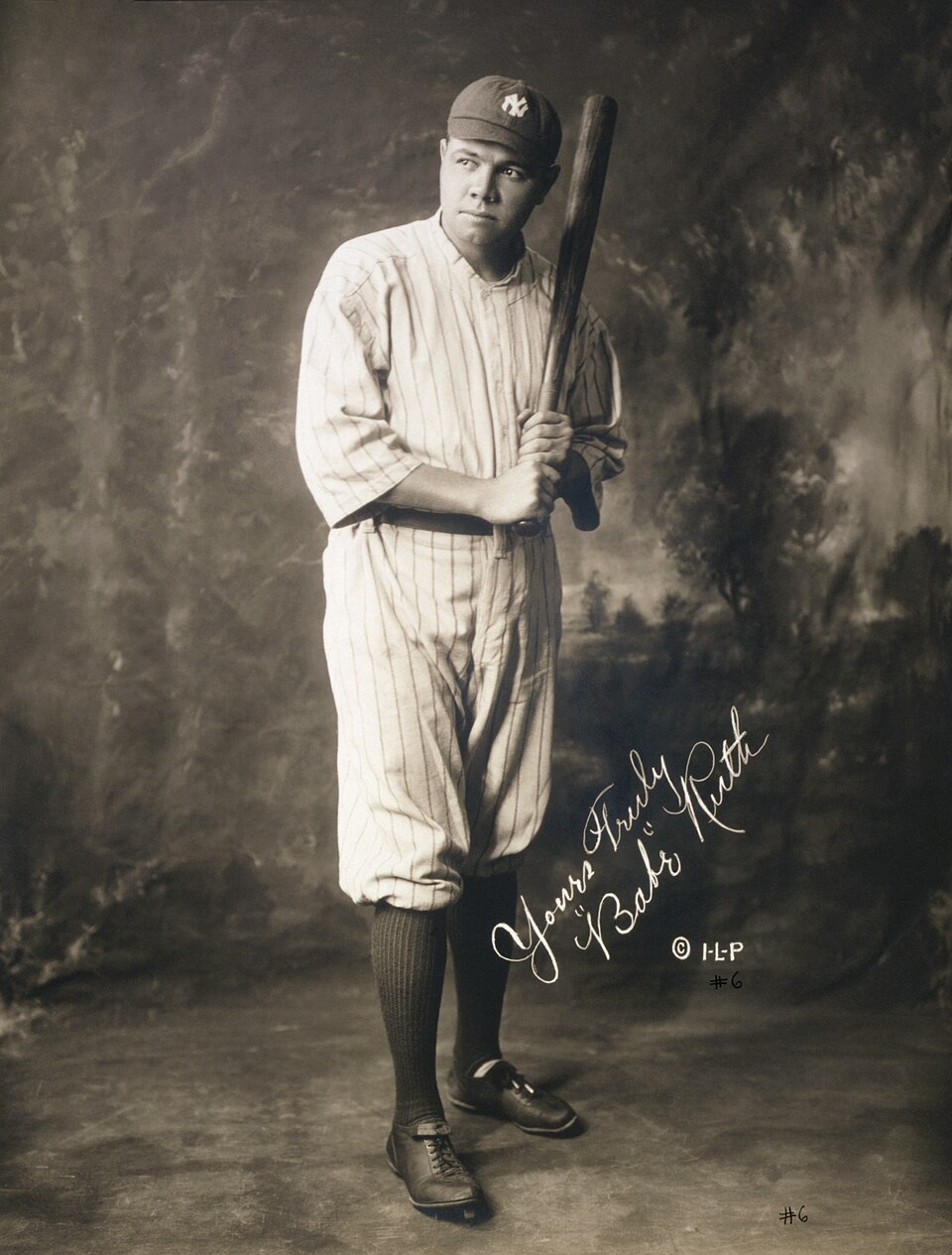
Babe Ruth
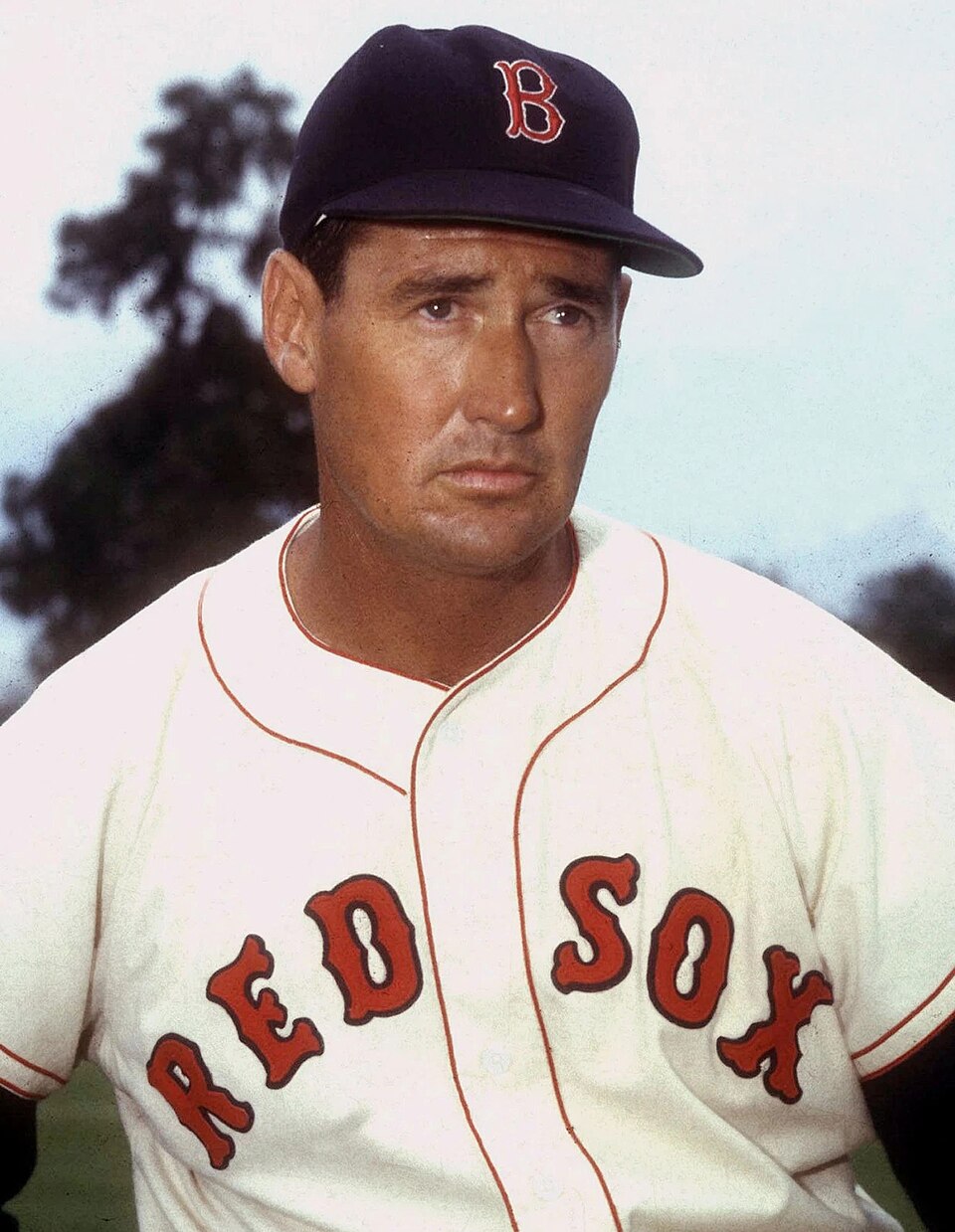
Ted Williams
Stat by stat
Bars are scaled to the leader in this list.
The verdict
Babe Ruth leads 3 of 4 categories. Our all-time ranking places Babe Ruth at #1 and Ted Williams at #5.
Head-to-head FAQ
Who leads more shared metrics?
How do the published ranks compare?
Are these live stats?
The case for Babe Ruth
The gap between Ruth and his contemporaries remains the largest any team-sport athlete has opened. His 182.6 career WAR leads all players, and the shape of it is absurd: before becoming a full-time hitter he went 94-46 as a pitcher with a 2.28 ERA, led the AL with a 1.75 ERA in 1916, and threw nearly 30 consecutive scoreless World Series innings. Then he invented modern offense. His 54 home runs in 1920 exceeded the total of every other American League team; his 60 in 1927 out-homered each AL rival again. His career .342 average, .474 on-base percentage, and 1.164 OPS — still the all-time record — came with a slugging percentage (.690) no qualified career has matched. He faced a segregated talent pool, which the debate must acknowledge, but dominance relative to environment is the fairest cross-era test, and by that test Ruth has no peer.
The case for Ted Williams
The purest hitter in history by nearly any rate measure. Williams's career .482 on-base percentage is the all-time record, his 1.116 OPS trails only Ruth, and his .344 average came with 521 home runs — power and discipline fused as no one has fused them since. He hit .406 in 1941, the last .400 season, famously refusing to sit on the final day and going 6-for-8 in a doubleheader to finish there. He won two Triple Crowns (1942, 1947) and somehow lost the MVP vote both times. The counterfactual defines him: he missed all of 1943-45 training as a naval aviator during World War II and most of 1952-53 flying combat missions as a Marine pilot in Korea, costing him roughly five prime years. Conservative projections put his career at 650-plus homers and near 3,300 hits. He hit .388 at age 38 and homered in his final at-bat in 1960.