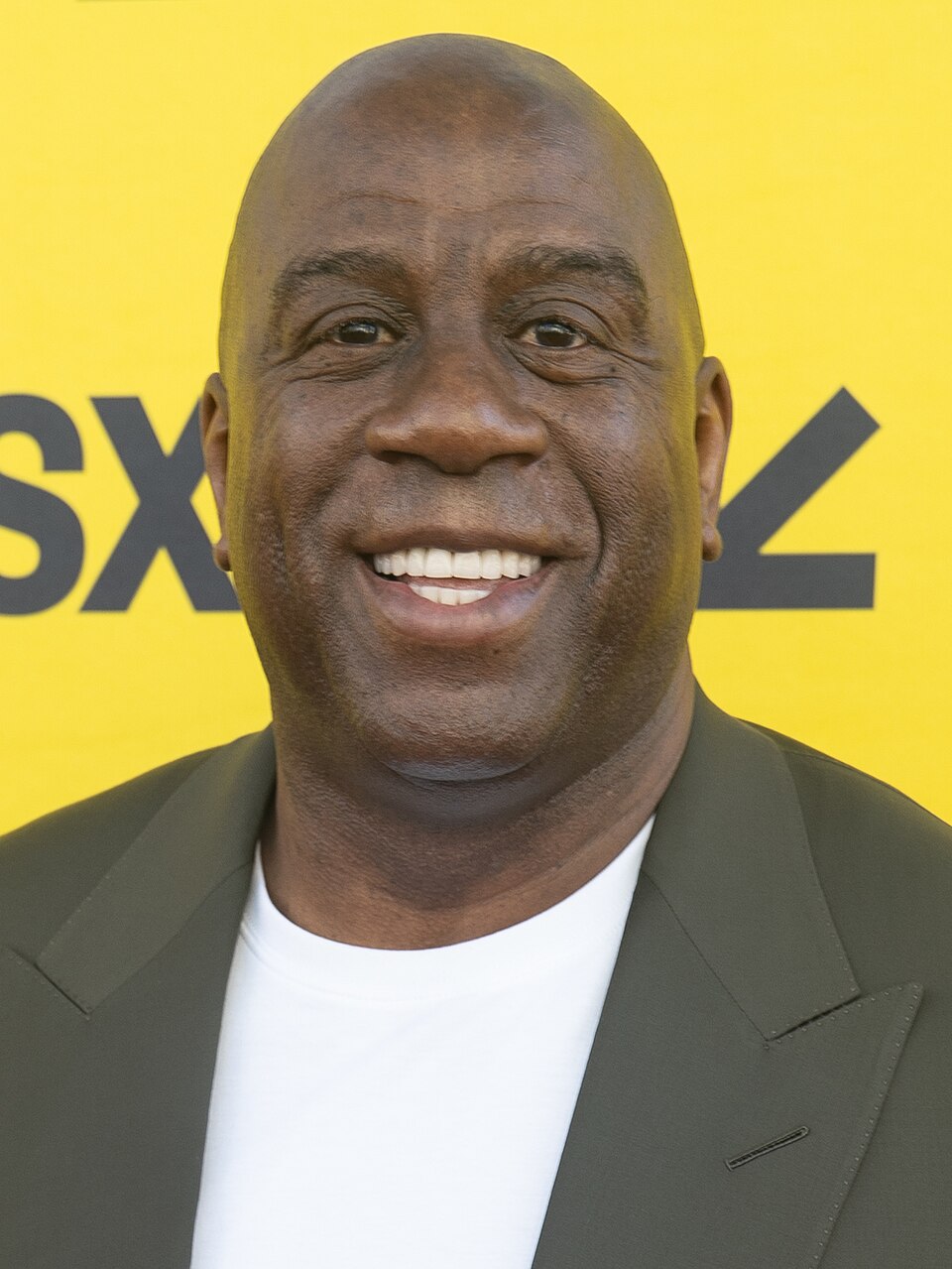
Magic Johnson
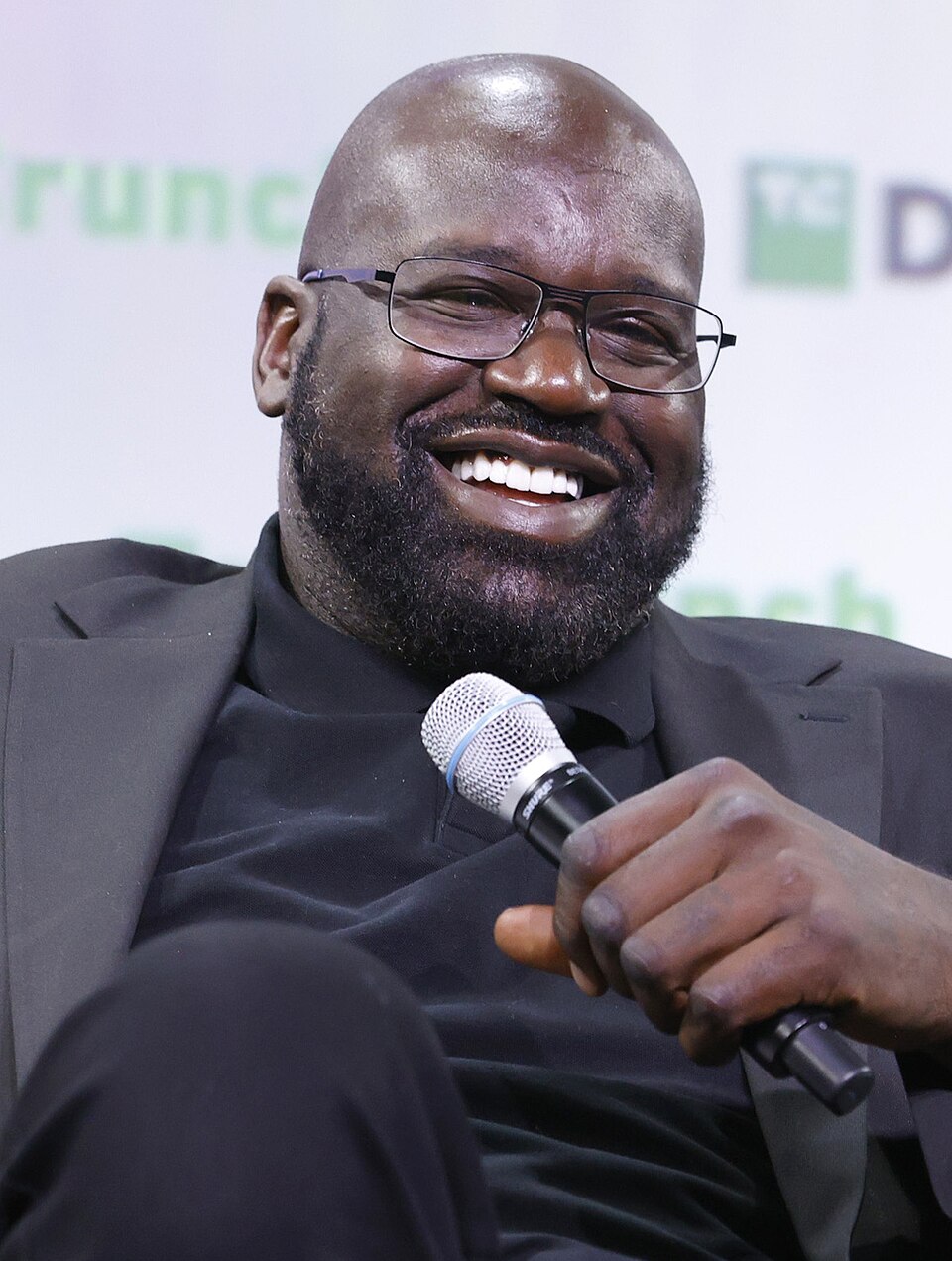
Shaquille O'Neal
Stat by stat
Bars are scaled to the leader in this list.
The verdict
Magic Johnson leads 2 of 4 categories. Our all-time ranking places Magic Johnson at #5 and Shaquille O'Neal at #9.
Head-to-head FAQ
Who leads more shared metrics?
How do the published ranks compare?
Are these live stats?
The case for Magic Johnson
The greatest playmaker ever and the most instantly impactful rookie in league history. Johnson's career assist average of 11.2 per game remains the all-time record, and he attached it to five championships, three MVPs and three Finals MVPs in a 12-year prime shortened by his 1991 HIV announcement. The signature performance came first: in Game 6 of the 1980 Finals, the 20-year-old rookie started at center for the injured Kareem Abdul-Jabbar and produced 42 points, 15 rebounds and 7 assists to close out Philadelphia — still the most famous positional improvisation in Finals history. At 6-foot-9 he redefined what a point guard could be, running Showtime fast breaks that made the 1980s Lakers the league's glamour franchise and its best offense; nine Finals appearances in 12 seasons is a Russell-era number achieved in the modern league. He won his three MVPs from 1987 to 1990 while sharing the floor with Kareem and James Worthy, and his 1979 NCAA title over Larry Bird's Indiana State — the most-watched college game ever — launched the rivalry that saved the NBA.
The case for Shaquille O'Neal
The most physically overwhelming player of the modern era, with a three-year peak that belongs in any conversation about the best basketball ever played. From 2000 to 2002, O'Neal won three consecutive Finals MVPs — a feat matched only by Jordan — as the Lakers three-peated, opening with a 2000 Finals against Indiana in which he averaged 38.0 points and 16.7 rebounds. His 2000 MVP was one first-place vote short of unanimous, and that season he led the league at 29.7 points per game while shooting 57.4 percent. He added a fourth ring as the co-star of Miami's 2006 title. The career totals — 28,596 points, 23.7 points and 10.9 rebounds per game, 58.2 percent from the field, the best mark of any 28,000-point scorer — undersell a player whose true effect was strategic: opponents built rosters, defensive schemes and the intentional Hack-a-Shaq foul strategy specifically for him, and the NBA's zone-defense legalization in 2001 was widely understood as a response to his unguardability. Conditioning lapses and 52.7 percent free-throw shooting are the asterisks; the peak is untouchable.