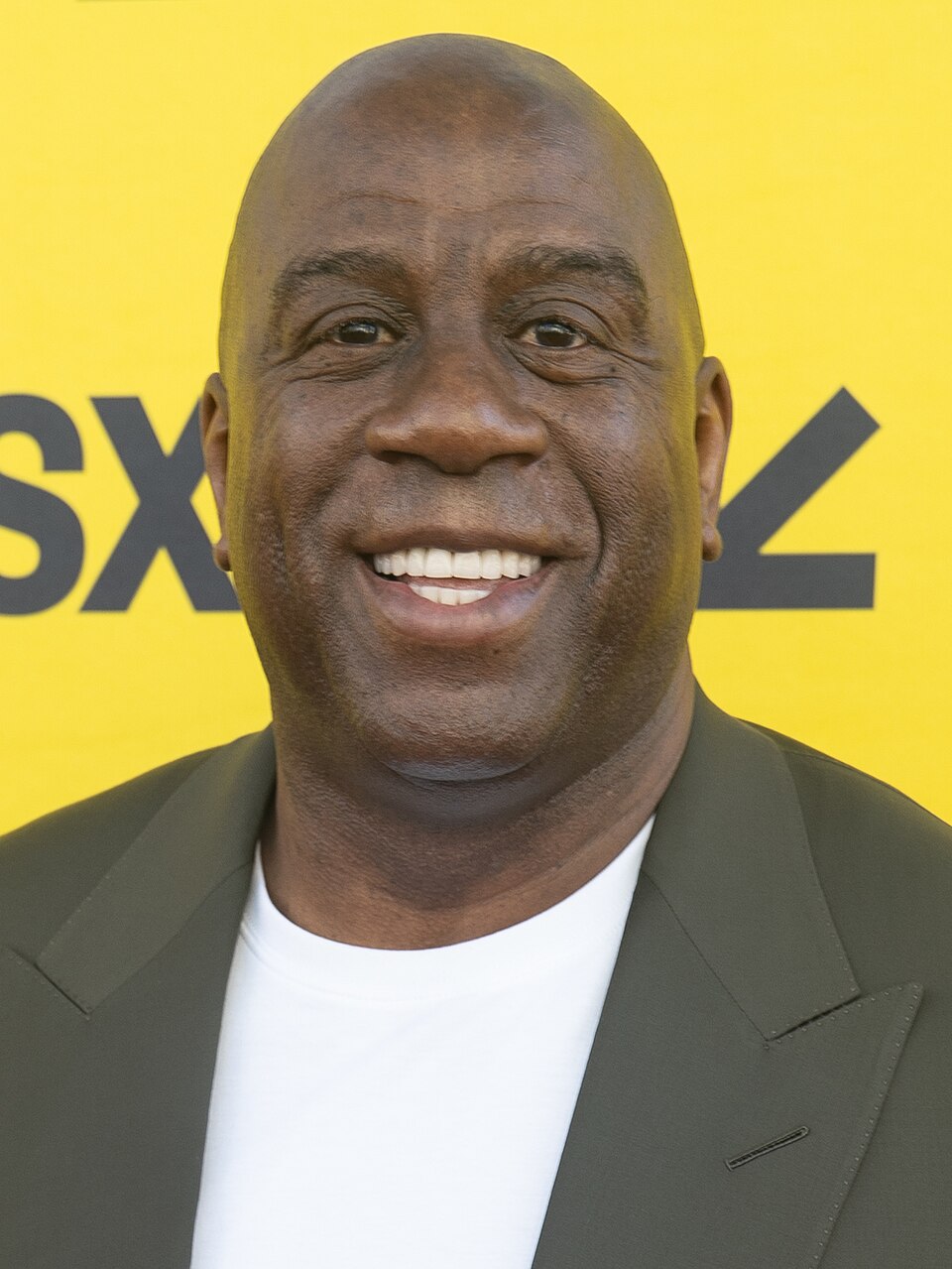
Magic Johnson
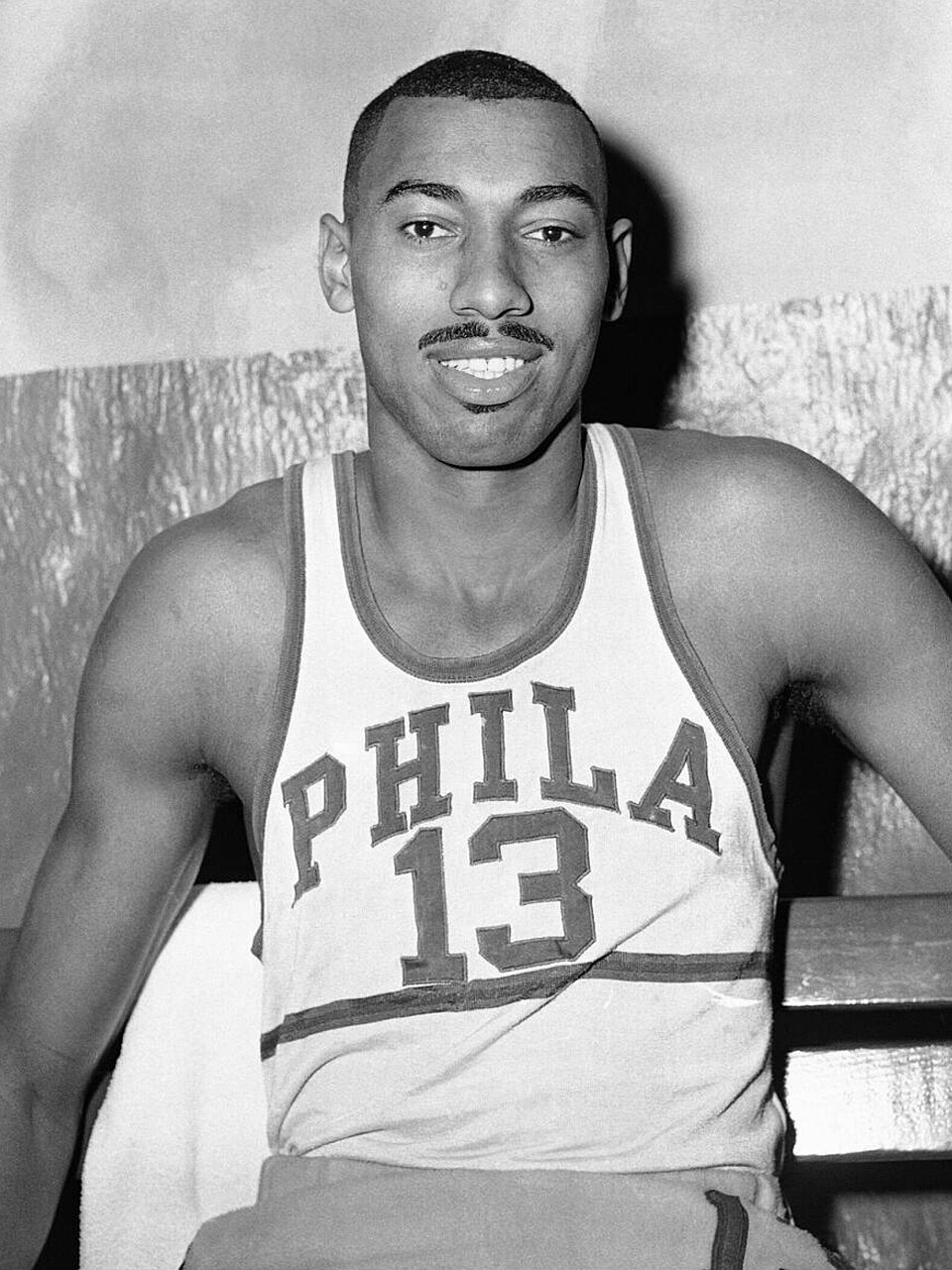
Wilt Chamberlain
Stat by stat
Bars are scaled to the leader in this list.
The verdict
Wilt Chamberlain leads 2 of 3 categories. Our all-time ranking places Magic Johnson at #5 and Wilt Chamberlain at #6.
Head-to-head FAQ
Who leads more shared metrics?
How do the published ranks compare?
Are these live stats?
The case for Magic Johnson
The greatest playmaker ever and the most instantly impactful rookie in league history. Johnson's career assist average of 11.2 per game remains the all-time record, and he attached it to five championships, three MVPs and three Finals MVPs in a 12-year prime shortened by his 1991 HIV announcement. The signature performance came first: in Game 6 of the 1980 Finals, the 20-year-old rookie started at center for the injured Kareem Abdul-Jabbar and produced 42 points, 15 rebounds and 7 assists to close out Philadelphia — still the most famous positional improvisation in Finals history. At 6-foot-9 he redefined what a point guard could be, running Showtime fast breaks that made the 1980s Lakers the league's glamour franchise and its best offense; nine Finals appearances in 12 seasons is a Russell-era number achieved in the modern league. He won his three MVPs from 1987 to 1990 while sharing the floor with Kareem and James Worthy, and his 1979 NCAA title over Larry Bird's Indiana State — the most-watched college game ever — launched the rivalry that saved the NBA.
The case for Wilt Chamberlain
The most statistically dominant athlete any team sport has produced. Chamberlain's 1961–62 season — 50.4 points and 25.7 rebounds per game, including the 100-point game in Hershey on March 2, 1962 — will never be approached; he averaged 48.5 minutes that season by playing overtimes on top of full games. He led the NBA in scoring seven straight times, in rebounding 11 times, and, after being criticized as selfish, led the league in total assists in 1967–68 — the only center ever to do so. His career marks of 30.1 points and a record 22.9 rebounds per game came with four MVPs and, contrary to the empty-stats caricature, two of the most dominant championship teams ever: the 68–13 Philadelphia 76ers of 1967 and the 69–13 Lakers of 1972, both of which broke the Celtics' grip. The honest case against him is Russell — a 1–7 head-to-head playoff series record and repeated Game 7 defeats — plus chronic free-throw shooting near 51 percent. But as a force of nature, no one else comes close.