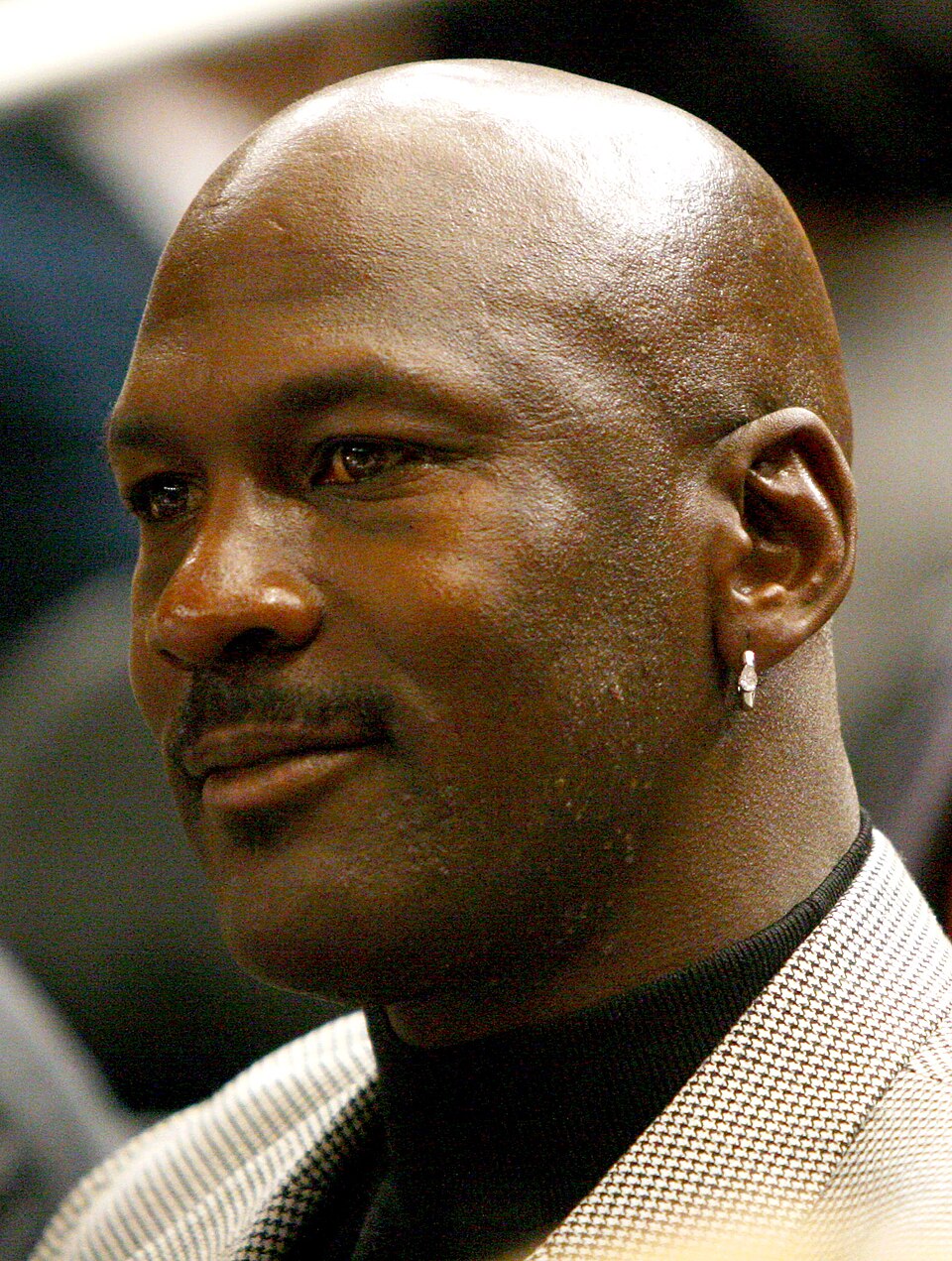
Michael Jordan
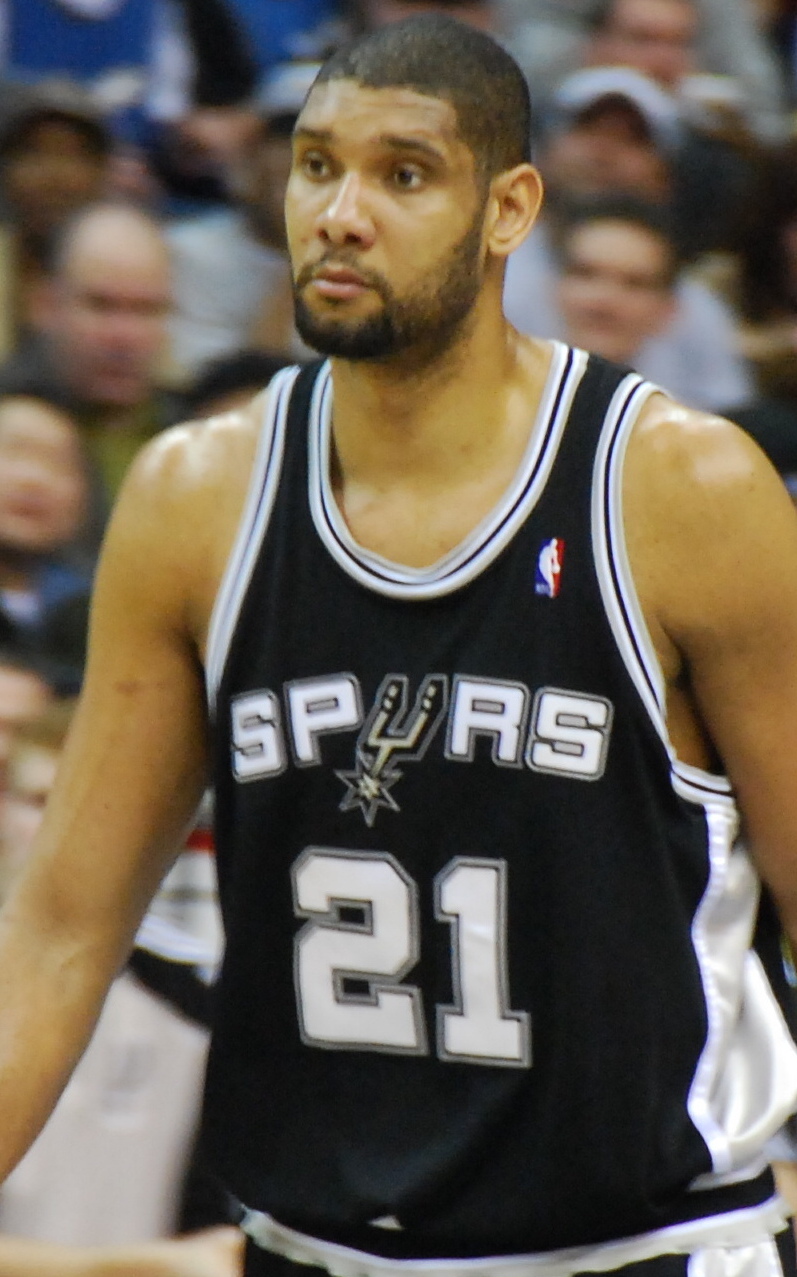
Tim Duncan
Stat by stat
Bars are scaled to the leader in this list.
The verdict
Michael Jordan leads 3 of 3 categories. Our all-time ranking places Michael Jordan at #1 and Tim Duncan at #8.
Head-to-head FAQ
Who leads more shared metrics?
How do the published ranks compare?
Are these live stats?
The case for Michael Jordan
The most complete resume at the highest peak. Jordan won six championships in six Finals appearances, took Finals MVP all six times, and never allowed a series to reach a Game 7. He won five regular-season MVPs, ten scoring titles — both records for a perimeter player — and retired with the highest career scoring average in NBA history at 30.1 points per game. The two-way case seals it: 1988 Defensive Player of the Year, nine All-Defensive First Team selections, and 2,514 career steals, third all-time. His 1990–91 through 1992–93 and 1995–96 through 1997–98 three-peats bracket a 6–0 decade in which his teams beat Hall of Fame opposition — Magic's Lakers, Barkley's Suns, Malone and Stockton's Jazz twice — and his 33.4 points per game across 179 playoff games remains the highest postseason average ever. The 72–10 season of 1995–96 and the 1998 title-winning shot in Utah are the era's defining monuments. No player has combined scoring supremacy, defensive excellence and flawless Finals results at his level.
The case for Tim Duncan
The most reliable great player in NBA history and the anchor of the modern era's longest-running excellence. Duncan won five championships spread across three different decades of Finals — 1999, 2003, 2005, 2007 and 2014 — with three Finals MVPs and back-to-back regular-season MVPs in 2002 and 2003. His 15 All-Defensive selections are the most ever, the statistical spine of a two-way case built on flawless positioning rather than highlights. The team record is the argument: San Antonio never missed the playoffs in his 19 seasons and won 71 percent of its regular-season games across his career — the best sustained run of any franchise in the four major American leagues over that span. His peak was higher than the humble reputation suggests: in the 2003 title run he averaged 24.7 points, 15.4 rebounds, 5.3 assists and 3.3 blocks in the Finals, closing with a near quadruple-double in the clincher. Career averages of 19.0 points, 10.8 rebounds and 2.2 blocks, delivered with identical temperament in November and June, made him the standard for winning without noise.