Milestones in order. This is history, not a weekly activity grid.
- The FA writes the Laws
- First international match
- The Football League begins
- FIFA founded in Paris
- First World Cup, Uruguay
- The Maracanazo
- Hungary 6, England 3
- Pelé arrives at 17
- Real Madrid's fifth straight European Cup
- Brazil perfect the game in Mexico
- Total Football's finest hour falls short
- Maradona's four minutes at the Azteca
- The triple revolution
- The Bosman ruling
Last reviewed Sources & creditsMedia creditsMethodology
Quick answers
Why do Americans call it soccer when everyone else says football?
Soccer is a British word. In 1880s England, university slang shortened Association football — the game of the Football Association — to assoc and then soccer, distinguishing it from rugby football, shortened to rugger. The term was common in Britain for decades and only fell from favor there in the later twentieth century. Countries with a competing domestic code of football kept the word out of necessity: the United States (gridiron football), Canada, Australia (Australian rules), Ireland (Gaelic football). So American usage is not an invention but a preservation — the sport's full legal name remains association football, and FIFA's own name is the Fédération Internationale de Football Association.
What is the offside rule in simple terms?
A player is in an offside position if, at the moment a teammate plays the ball forward, any part of their head, body or feet is nearer the opponents' goal line than both the ball and the second-last opponent (usually the last defender, since the goalkeeper is normally the other). Being in the position is not itself an offence — the flag comes only if the player then becomes involved in play: touching the ball, obstructing an opponent, or gaining an advantage from a rebound. There is no offside from a goal kick, corner or throw-in, and none in your own half. The rule exists to prevent permanent goal-hanging and is what makes the defensive line, the offside trap and the timed run central arts of the game.
Which country has won the most World Cups?
Brazil leads the men's tournament with five titles — 1958, 1962, 1970, 1994 and 2002 — and remains the only nation to have played in every World Cup since the first in 1930. Germany and Italy follow with four each, Argentina has three (1978, 1986, 2022), and Uruguay and France have two apiece; England and Spain have one each. In the Women's World Cup, the United States lead with four titles (1991, 1999, 2015, 2019), followed by Germany with two; Norway, Japan and Spain have one each, Spain's coming in 2023. Brazil's five, combined with producing Pelé, Ronaldo and the 1970 team, anchors its identity as the tournament's reference nation.
Who is the greatest soccer player of all time?
There is no objective answer, but the modern consensus has narrowed to Lionel Messi, particularly since Argentina's 2022 World Cup win removed the last major gap in his record. His case rests on the broadest statistical dominance ever recorded: 8 Ballons d'Or, 850+ goals plus 380+ assists, and 45+ trophies including four Champions Leagues and the 2022 World Cup, where he won an unprecedented second Golden Ball. The traditional alternatives remain serious: Pelé is the only three-time World Cup winner, Maradona's 1986 tournament is the greatest individual campaign on record, and Cristiano Ronaldo leads all-time in career goals (900+) and Champions League goals. The answer usually reveals which you value most: peak, trophies, longevity or influence.
How long is a soccer match, and why is stoppage time added?
A match lasts 90 minutes in two 45-minute halves, but the clock never stops, so referees add stoppage time to compensate for interruptions: substitutions, injuries, goal celebrations, VAR reviews and time-wasting. The fourth official displays the minimum added minutes at the end of each half. Since the 2022 World Cup, where FIFA instructed referees to account fully for lost time and first halves ran ten-plus added minutes, stoppage allowances have grown across most leagues. In knockout competitions, a draw after 90 minutes usually leads to two 15-minute periods of extra time and then a penalty shoot-out. Effective playing time — the ball is typically in play for only 55 to 60 of the 90 minutes — remains a live debate, with periodic proposals for a stopped clock.
What is VAR and what can it actually review?
VAR — the video assistant referee — is a qualified official watching camera feeds who can intervene only for clear and obvious errors in four match-changing situations: goals (including offsides and fouls in the build-up), penalty decisions, straight red cards, and mistaken identity. The on-field referee retains final authority and can consult a pitchside monitor before deciding. Introduced experimentally in the mid-2010s and at the World Cup in 2018, VAR was joined at Qatar 2022 by semi-automated offside technology, which uses limb-tracking cameras and a sensor in the ball to generate offside calls in seconds. It cannot review second yellow cards, corner awards or general fouls. Accuracy has measurably improved; the ongoing controversy is about delay, the erosion of spontaneous celebration, and millimetric offside decisions.
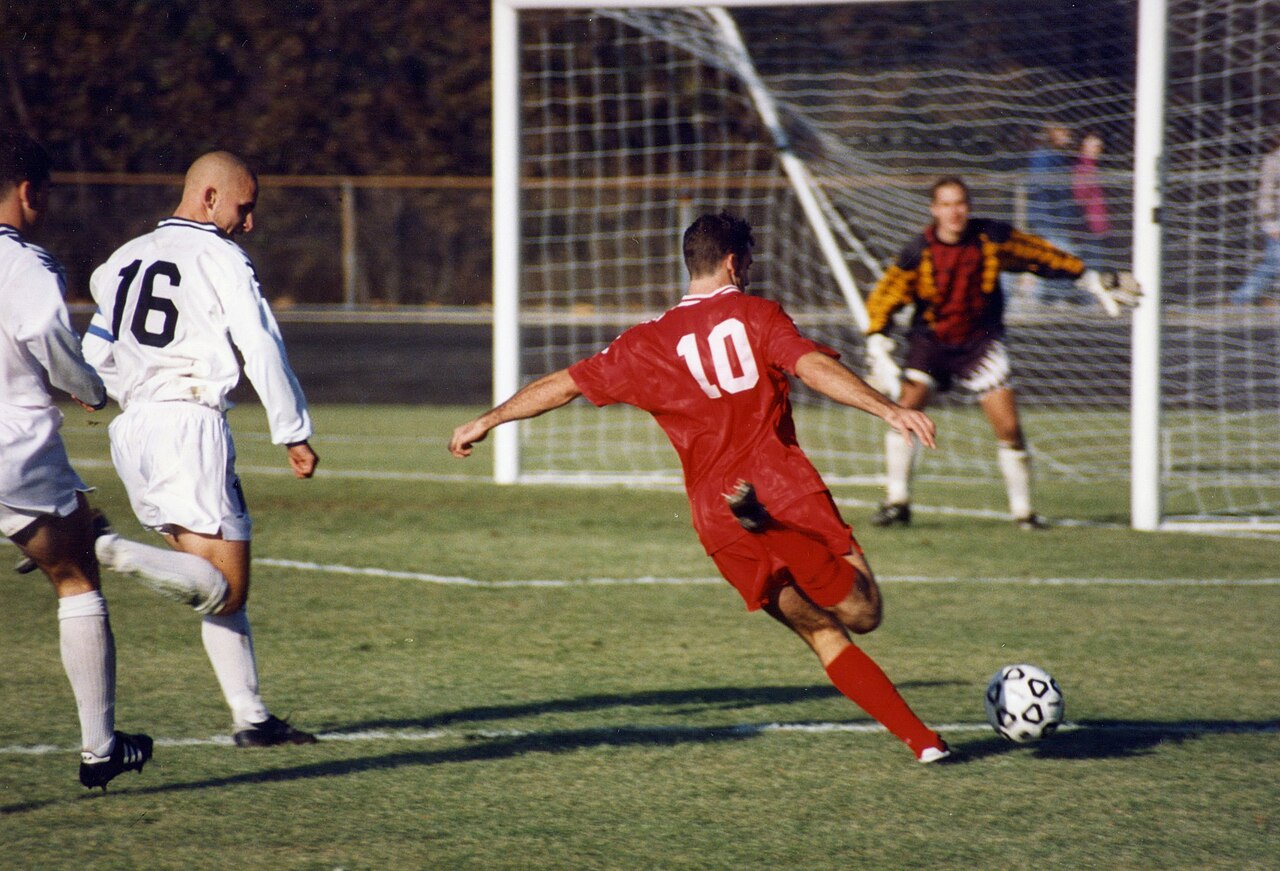
Kicking games are ancient — the Chinese military manual-era game cuju and the Florentine calcio storico both predate modern soccer by centuries — but association football as a distinct sport has a precise birthday: October 26, 1863, when representatives of a dozen London clubs met at the Freemasons' Tavern to found the Football Association and write a common rulebook. The decisive split came weeks later, when clubs favoring hacking and carrying the ball walked out; they would eventually codify rugby. What remained was a game built on the foot, the pass and the shared pitch.
The century and a half since divides cleanly into eras: Victorian codification and the birth of professionalism, FIFA-led globalization between the wars, the golden age of Hungary, Real Madrid and Brazil, the television-money revolution of the 1990s, and the data-saturated present. Each era pivots on specific matches and rulings — the 1925 offside change, the 1953 humiliation of England at Wembley, the 1995 Bosman verdict — that reshaped how the game was played, paid for and watched.
Timeline
Twelve London clubs found the Football Association at the Freemasons' Tavern and codify a common rulebook. Clubs wanting to allow hacking and handling walk out, a split that later produces rugby.
Scotland and England draw 0-0 at Hamilton Crescent in Partick on November 30. Scotland's short-passing approach, contrasted with English individual dribbling, previews a century of tactical debate.
William McGregor organizes twelve clubs into the world's first league. Preston North End win the inaugural 1888-89 title unbeaten and add the FA Cup without conceding — the original Invincibles.
Seven European associations create the Fédération Internationale de Football Association to govern the international game. England, initially aloof, joins the following year.
Thirteen teams travel to Montevideo, where the hosts — Olympic champions of 1924 and 1928 — beat Argentina 4-2 in the final at the purpose-built Estadio Centenario.
Needing only a draw before some 200,000 at the Maracanã, Brazil lose the deciding match 2-1 to Uruguay, Alcides Ghiggia scoring the winner. It remains the archetypal World Cup trauma.
Puskás, Hidegkuti and the Aranycsapat dismantle England at Wembley — England's first home defeat to continental opposition — exposing the rigidity of the WM formation. Hungary win the rematch 7-1 in Budapest.
The Santos teenager scores a semifinal hat-trick against France and two more in the 5-2 final win over Sweden, launching Brazil's first World Cup title and the sport's first global superstar.
Di Stéfano scores three and Puskás four as Madrid beat Eintracht Frankfurt 7-3 before 127,000 at Hampden Park, completing five consecutive titles in the competition's first five seasons.
The first World Cup broadcast in color ends with Brazil beating Italy 4-1, Carlos Alberto's fourth goal capping a team move still cited as the tournament's finest. Brazil keep the Jules Rimet trophy permanently.
Cruyff's Netherlands, built on Rinus Michels' positional interchange, dazzle the tournament but lose the final 2-1 to West Germany in Munich after taking the lead before a German player touched the ball.
In the quarterfinal against England on June 22, Maradona scores the Hand of God and, four minutes later, the Goal of the Century — a 60-meter slalom past five players — en route to Argentina's title.
The Premier League launches on a £304 million Sky television deal, the European Cup becomes the Champions League, and the new back-pass law forbids goalkeepers handling deliberate passes, transforming build-up play.
The European Court of Justice rules for Jean-Marc Bosman on December 15, granting players free agency at contract end and striking down foreigner quotas within the EU — the legal foundation of the modern transfer market.
The United States beat China on penalties in the Women's World Cup final before the largest crowd ever to watch a women's sporting event, with Brandi Chastain's winning kick becoming an era-defining image.
Claudio Ranieri's side, priced at 5,000-1 before the season, win the Premier League on counter-attacking economy built around Vardy, Mahrez and Kanté — modern sport's greatest statistical outlier.
Russia 2018 introduces video assistant referees to the tournament, reviewing goals, penalties, red cards and mistaken identity. Within three seasons, most major leagues adopt the system.
Argentina beat France 4-2 on penalties after a 3-3 final in which Mbappé scores the first World Cup final hat-trick since 1966. Messi, with 7 goals and a second Golden Ball, claims the one title he lacked.
The eras
Codification and the professional dawn
The FA's 1863 Laws unified a chaos of public-school variants, but the game's character was settled in the following two decades of argument. The FA Cup, first played in 1871-72 and won by Wanderers, gave the sport a competitive spine; the 1872 Scotland-England international revealed two philosophies, with the Scots' combination passing gradually defeating the English cult of individual dribbling. The fiercest battle was over money. Northern industrial clubs, importing Scottish professionals and compensating workers for missed shifts, collided with the southern amateur establishment until the FA legalized professionalism in 1885 rather than lose the north entirely. Three years later William McGregor of Aston Villa organized twelve clubs into the Football League, the world's first, and Preston North End swept the inaugural 1888-89 season unbeaten. By 1900 the template of the modern game existed in full: a codified sport, professional players, a league pyramid, knockout cups, and Saturday-afternoon crowds drawn from the industrial working class whose descendants still fill the same grounds. Crucially, British sailors, engineers and merchants were already exporting the game — clubs in Argentina, Uruguay, Italy and Spain founded in this era would soon overtake the teachers.
The game goes global
FIFA's founding by seven European nations in 1904 formalized what emigration had begun. South America moved fastest: the Copa América, first played in 1916, remains the oldest continental championship, and Uruguay's Olympic golds of 1924 and 1928 announced that the pupils had surpassed the masters — confirmed when Uruguay won the inaugural World Cup at home in 1930. The era's great tactical rupture was legislative. The 1925 offside change, reducing the required covering defenders from three to two, sent goals soaring — Football League totals jumped by more than a third in one season — and Arsenal's Herbert Chapman answered with the WM (3-2-2-3), withdrawing the center-half into a stopper role. Chapman's Arsenal won five league titles in the 1930s and established the manager as tactician and public figure. On the international stage Vittorio Pozzo's Italy won consecutive World Cups in 1934 and 1938 with the metodo system, while England, having quit FIFA in a dispute over payments, sat out all three pre-war tournaments in splendid isolation. The Second World War then froze the international game for twelve years, but club football's infrastructure — stadiums, leagues, rivalries — survived intact and hungry.
The golden age
Three national schools defined soccer's most romanticized stretch. Hungary's Aranycsapat, with Puskás and the withdrawn striker Hidegkuti, went unbeaten for four years, destroyed England 6-3 at Wembley in 1953 and 7-1 in Budapest, and lost only the match that mattered most — the 1954 final, 3-2 to a West Germany side they had beaten 8-3 in the group stage. Brazil answered with the 4-2-4 and then 4-3-3, winning in 1958, 1962 and 1970; the 1970 side, closing with Carlos Alberto's team goal against Italy, remains the consensus greatest international team. At club level Real Madrid won the first five European Cups from 1956 to 1960 around Di Stéfano's total centre-forward play, while Helenio Herrera's Inter perfected catenaccio's sweeper-and-counter game to take the 1964 and 1965 titles — until Celtic's Lisbon Lions overwhelmed it 2-1 in 1967 with relentless attacking. The era closed with its synthesis: Rinus Michels' Ajax won three straight European Cups from 1971 to 1973 playing Total Football, positional interchange built on universal technique and a high offside line, and Cruyff's Netherlands carried it to the 1974 final. Beauty lost to Beckenbauer's West Germany, 2-1 — but the ideas won the future.
Tragedy, television and the money revolution
The 1980s exposed the rot in soccer's Victorian infrastructure. Thirty-nine spectators died at Heysel in 1985 before the European Cup final, and English clubs were banned from Europe for five years; the 1989 Hillsborough disaster killed 97 Liverpool supporters and produced the Taylor Report, whose all-seater mandate rebuilt British stadiums and, unintentionally, gentrified the matchday audience. On the pitch, Serie A became the world's richest and strongest league — Maradona dragged Napoli to their first two Scudetti in 1987 and 1990, while Arrigo Sacchi's Milan abandoned Italian caution for a compact 4-4-2 zonal press and won back-to-back European Cups in 1989 and 1990, becoming the modern coaching manual's favorite team. Then 1992 changed everything at once: England's top flight seceded to form the Premier League on a £304 million Sky deal, the European Cup rebranded as the Champions League with lucrative group stages, and the back-pass law forced goalkeepers to play with their feet. The 1995 Bosman ruling completed the revolution, freeing out-of-contract players and abolishing EU foreigner quotas. Wages exploded, talent pooled at a handful of super-clubs, and television — not the turnstile — became the game's paymaster.
Positional play and the superclub era
The tactical center of gravity settled in Barcelona. Pep Guardiola, promoted in 2008, distilled Cruyffian principles into juego de posición: fixed zonal structure, numerical superiority in build-up, and a six-second counter-press on losing the ball. His side won the 2009 sextuple — every trophy available in a calendar year — and produced the era's benchmark performance in the 2011 Champions League final, a 3-1 dismantling of Manchester United at Wembley. Spain translated the style into an unprecedented international treble: Euro 2008, the 2010 World Cup, Euro 2012. The counter-argument came from Germany, where Jürgen Klopp's Borussia Dortmund won the 2011 and 2012 Bundesliga titles with gegenpressing, treating the moment of turnover as the best playmaker in the game. Above the tactics sat a new economics: Roman Abramovich's Chelsea (2003), Sheikh Mansour's Manchester City (2008) and Qatar's PSG (2011) introduced owner and state wealth that dwarfed matchday revenue, while the Messi-Ronaldo duopoly claimed every Ballon d'Or from 2008 through 2017 and turned individual rivalry into a global content industry. The Champions League's later rounds became a near-closed shop of a dozen superclubs — a concentration the failed 2021 Super League merely tried to formalize.
The data age
Soccer's analytics revolution arrived a decade after baseball's but landed just as hard. Expected goals, once a niche metric on Opta and StatsBomb feeds, now appears on broadcast graphics; clubs like Liverpool, under research director Ian Graham, and Brentford and Brighton, built on their owners' betting-model infrastructure, demonstrated that data-led recruitment could beat wage bills several times larger. Tracking data reshaped coaching itself — pressing distances, line heights and sprint loads are monitored per session — and specialist roles proliferated, from set-piece coaches to throw-in consultants. Officiating digitized in parallel: VAR debuted at the 2018 World Cup and semi-automated offside, using limb-tracking and a sensor ball, followed at Qatar 2022. The institutional game expanded aggressively — a 32-team Club World Cup in 2025, won 3-0 by Chelsea against PSG, and a 48-team, 104-match World Cup across North America in 2026 — while Saudi investment pulled Ronaldo, Benzema and Neymar to a new league in 2023. The women's game grew fastest of all: 91,648 watched Barcelona at Camp Nou in 2022, and the 2023 World Cup drew nearly two million spectators. The open questions are now about limits: of the calendar, of player workload, and of competitive balance.
Soccer's history is best read as a long argument between order and improvisation — Chapman's WM against the Danubian schools, catenaccio against Total Football, Sacchi's pressing against Italian caution, Guardiola's positional grid against Klopp's organized chaos. Every generation's heresy becomes the next generation's orthodoxy, which is why the game in 2026, for all its data and money, would still be legible to a spectator from 1926: eleven against eleven, a scarce and precious goal, and the permanent possibility that the better team loses.
Keep exploring
More in this category
Basketball
Five players, 24 seconds, and geometry at full sprint — the city game that conquered the world.
⚾Baseball
The clockless chess match where a round bat meets a round ball and the best hitters on earth still fail seven times out of ten.
🏈Football
Four downs, ten yards, one end zone: the ultimate game of territory, collision, and coaching.
🏏Cricket
The bat-and-ball contest where a single match can last five days and still turn on one ball.
🏉Rugby Union
Fifteen players, eighty minutes of collision and continuity, and a code that prizes the contest for the ball above all else.
🏒Hockey
The fastest team sport on Earth: six skaters, one frozen puck, and no time to breathe.
🏐Volleyball
Three touches, no second chances: the fast, vertical duel fought across a net no one may cross.
🤾Handball
The fastest scoring team sport on the planet: seven a side, thirty minutes a half, and a goal roughly every ninety seconds.