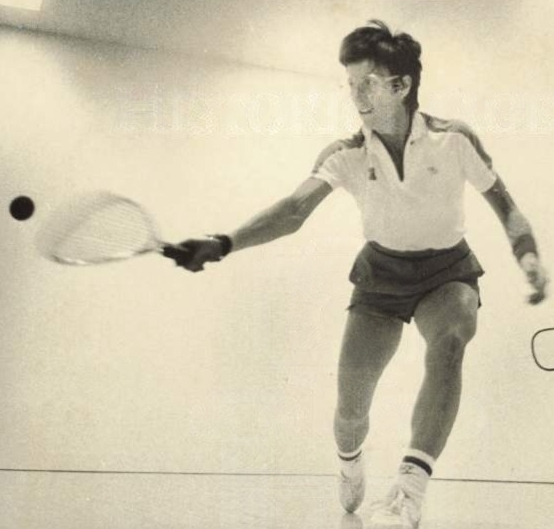
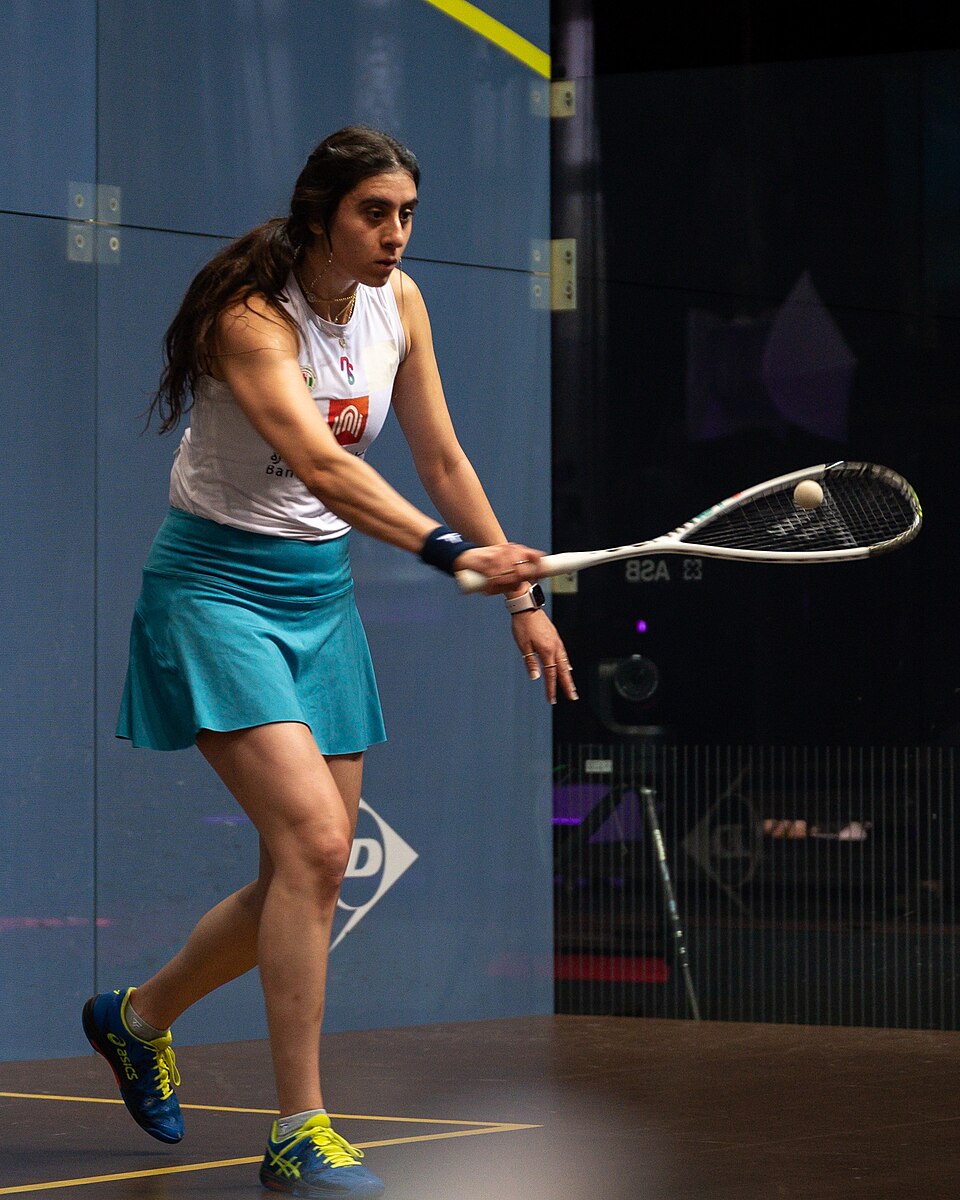
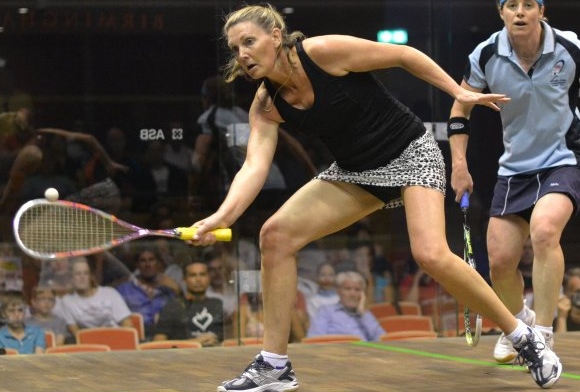
Yes, from 2028. The IOC session in Mumbai voted on October 16, 2023 to add squash to the Los Angeles 2028 programme, alongside cricket, baseball and softball, flag football and lacrosse. The programme is singles events for men and women. It ends a long campaign: squash bid unsuccessfully for the 2012, 2016, 2020 and 2024 Games, losing to golf and rugby sevens for 2016 and to reinstated wrestling for 2020. The consequences go well beyond one fortnight. In most countries, national sports funding is tied to Olympic status, so federations that operated on subscriptions and volunteers now qualify for state high-performance money, which is reshaping coaching and junior programmes worldwide.
How does squash scoring work?
Modern squash uses point-a-rally scoring, or PAR: every rally is worth a point regardless of who served. Games are played to 11, and at 10-10 play continues until someone leads by two. Matches are best of five games, with 90 seconds between games. There is only one serve — no second serve — so a fault loses the rally outright. This system replaced the old English scoring, in which only the server could score and games ran to nine; the men's professional tour switched in 2004 and the World Squash Federation extended PAR to every level from the 2008-09 season. The change shortened matches significantly and pushed players toward attacking earlier, since long defensive rallies now carry a real cost.
What is the difference between a let and a stroke?
Both concern interference, which is unavoidable when two players share one court. A let is a replayed rally with no point awarded: it is given when the opponent got in the way but made a genuine effort to clear, and the interfered player would have made a good return rather than a winning one. A stroke awards the point outright to the interfered player: it applies when the opponent did not make every effort to clear, when the striker's swing was blocked, when the ball would have hit the opponent on a direct path to the front wall, or when the striker would have hit a winner. If the striker could not have reached the ball anyway, or the interference was trivial, the referee calls no let and the appealing player loses the rally.
What do the coloured dots on a squash ball mean?
They indicate how much the ball bounces, which is really a measure of how much work you have to do. Blue and red dots are the liveliest and are made for beginners and cold courts, because the ball keeps bouncing without needing to be warmed up. A single yellow dot is slow, and the double yellow dot, standardized around 2000, is the extra-slow professional ball used in all serious competition. A double-yellow ball is almost dead when cold and must be warmed through several minutes of hard hitting before it plays properly, which is why matches begin with a five-minute knock-up. Beginners using a professional ball will find it simply does not bounce, which is the single most common reason people give up on squash.
Why is Egypt so dominant in squash?
Egypt has held roughly half of both the men's and women's world top tens through the 2020s, an unmatched concentration. The reasons are structural rather than mysterious. Egyptian sporting clubs in Cairo and Alexandria are family institutions with dense court provision, so children start young and play constantly. A coaching lineage runs from the pioneers through Amr Shabana and Ramy Ashour to today's academies, transmitting a distinctive attacking style built on deception, holds and front-court aggression. The domestic junior circuit is more competitive than most international ones. And there is a long history to build on: F.D. Amr Bey won five British Opens in the 1930s, so squash has been a prestige sport in Egypt for almost a century.
Is squash really the healthiest sport?
Forbes ranked squash first in its 2003 survey of the ten healthiest sports, scoring it on cardiorespiratory endurance, muscular endurance, calorie burn, strength, flexibility and injury risk. The logic holds up: squash combines near-continuous movement with repeated high-intensity efforts, rapid direction changes and deep lunges, all inside a heated, enclosed space, so heart rates sit high for long stretches and calorie expenditure per hour is among the highest of any recreational sport. The caveats are real, though. The same lunging load makes knee, hip and Achilles injuries common, and the intensity is not gentle on an unconditioned cardiovascular system. Eye injuries from the ball and racket are the reason protective eyewear is mandatory for juniors in most federations.
Squash's greatest careers are unusually easy to measure and unusually hard to compare. Easy, because the sport has had only two undisputed majors for most of its history — the British Open from 1930, and the World Open, now the PSA World Championships, from 1976 — so a player's haul of those two titles is a clean scoreboard. Hard, because the eras were not remotely equal: Hashim Khan competed against a few dozen serious professionals, Jahangir Khan against a deep but geographically narrow field, and today's Egyptians against the largest and most professional talent pool the game has ever had.
The ranking below weighs peak dominance, total major haul, longevity and the strength of the field, and the stat bars use a consistent vocabulary — World Championship titles, British Open titles, the combined total of those two, and elite career span — so that any two players can be laid side by side. The women's game is fully represented, because squash is one of the few sports where the single most dominant career on record, Heather McKay's, belongs to a woman.
All-time podium
🥈
Heather McKay
Australia
2
🥇
Jahangir Khan
Pakistan
1
🥉
Jansher Khan
Pakistan
3
Comparison Lab
Toggle athletes on and off — every bar rescales to the leader of your selection.
Peak keeps each athlete’s strongest metrics; Career averages the full published set. Both stay editorial teaching marks.
5 / 12
Drag only reorders the cosmetic shortlist — it does not change teaching scores.
Default shortlist below works without JavaScript. Toggle chips after load to rebuild bars.
Compare · in selection · Career
1Heather McKay85
2Jahangir Khan78
3Nicol David76
4Jansher Khan70
5Geoff Hunt63
World Championship titles
Nicol David8
Jansher Khan8
Jahangir Khan6
Geoff Hunt4
Heather McKay2
British Open titles
Heather McKay16
Jahangir Khan10
Geoff Hunt8
Jansher Khan6
Nicol David5
Combined major titles
Heather McKay18
Jahangir Khan16
Jansher Khan14
Nicol David13
Geoff Hunt12
Elite career span
Heather McKay20 years
Nicol David20 years
Geoff Hunt17 years
Jahangir Khan14 years
Jansher Khan13 years
Longest unbeaten run
Heather McKay19 years, 2 career losses
Jahangir Khan555 matches
Axis verdict on this selection
Pick one published scoring axis already on the GOAT lab. The leader is whoever is ahead among the athletes you keep selected — editorial teaching marks, not live stats.
Not a live box score, betting line, or a universal ranking. Bars stay scaled teaching marks from this sport’s published list.
The holder of the longest winning streak in professional sport: 555 consecutive matches unbeaten over five years and eight months, from a British Open final loss to Geoff Hunt in November 1981 until Ross Norman beat him in the 1986 World Open final in Toulouse. He had already won the world amateur title at 15 and the World Open at 17 in 1981, still the youngest men's world champion. He finished with six World Opens and ten consecutive British Opens from 1982 to 1991, sixteen majors in all, built on a length game so accurate and a fitness base so deep that opponents described facing him as an interrogation rather than a match. His 1983 win over Gamal Awad lasted 2 hours 46 minutes, the longest recorded competitive squash match. Son of the great Roshan Khan and nephew of Hashim, he later served as president of the World Squash Federation. No one else in squash combines that peak with that duration.
The most complete domination in the history of any racket sport. McKay lost exactly two competitive matches in her entire career, both in 1962, and was never beaten again — a run of roughly nineteen unbeaten years. She won sixteen consecutive British Opens from 1962 to 1977, when the British Open was the sport's world championship in all but name, and then won the first two Women's World Opens in 1976 and 1979, giving her eighteen major titles. She also won the Australian championship fourteen times. Her superiority was so absolute that contemporaries struggled to describe her weaknesses, and when she retired she switched codes and won the women's world racquetball championship as well. The standard argument against her is field depth: women's squash in the 1960s was smaller and less professional than the men's game. The standard answer is that she never lost to anyone, for two decades, in any of it.
The most successful player in World Championship history on the men's side, with eight titles between 1987 and 1996 — one more than Jahangir managed — plus six consecutive British Opens from 1992 to 1997, for fourteen majors. He also accumulated the highest career total of professional tour titles in the men's game, widely cited at 99. No relation to the Khan dynasty of Nawakille despite the name, he lost his first six meetings with Jahangir and then rebuilt his game around retrieval and patience until he had turned the rivalry around; across 37 career meetings the two finished within a match of each other. His style was the purest expression of squash as attrition: extraordinary court coverage, minimal risk, and a willingness to let rallies run until the opponent broke. Injuries and the demands of that method shortened his peak, but between 1992 and 1996 he was effectively unbeatable and closed out Pakistan's four-decade grip on the sport.
The most dominant player of squash's fully professional era and the reason the sport has a mass audience in Southeast Asia. David held the women's world number one ranking for 112 consecutive months, from August 2006 to September 2015, the longest unbroken reign at the top in squash history for either sex. She won a record eight World Championships between 2005 and 2014 and five British Opens, thirteen majors in all, and added Commonwealth Games singles gold in 2010 and 2014 along with a long run of Asian titles. Her game was built on relentless retrieval, immaculate length and a movement style so efficient that opponents complained she never looked hurried. She was the first Asian player of either sex to top the world rankings, was voted world player of the year repeatedly, and retired in 2019 as Malaysia's most decorated athlete in any sport.
The bridge between the amateur game and the modern professional one, and the man who beat everybody before Jahangir Khan arrived. Hunt won eight British Opens between 1969 and 1981 and the first, second, fourth and fifth World Opens in 1976, 1977, 1979 and 1980 — twelve majors — after collecting multiple world amateur titles in the late 1960s. He matched Jonah Barrington's training revolution and added a far superior technical base, and their rivalry through the 1970s defined the decade. His last great act was the 1981 British Open final, in which he beat the 17-year-old Jahangir Khan; it was the final defeat before Jahangir's 555-match streak began, and Hunt retired soon afterwards, his body worn out by the volume of work the era demanded. He later became one of the sport's most influential coaches, running Australia's national programme and shaping a generation of Australian world champions.
The founder. A court professional from Nawakille near Peshawar who learned the game as a ball boy on British army courts, Hashim Khan flew to England in 1951, aged around 35 — his birth year is disputed between 1914 and 1916 — and won the British Open at his first attempt. He took seven British Open titles in eight years, the last in 1958, when he was in his forties, and continued winning North American professional events into his fifties after moving to Detroit. The World Open did not exist in his time, so his major count understates him. His real legacy is dynastic: brother Azam Khan won four British Opens, cousin Roshan Khan won in 1957, nephew Mohibullah followed, and Roshan's son Jahangir became the greatest player of all. Pakistani squash held the sport's summit for four decades and every strand of it traces back to him.
The player who held the women's game together between Heather McKay and the Australians, and one of the shortest, most concentrated great careers in the sport. Devoy won eight British Opens between 1984 and 1992, seven of them consecutively, and four World Opens in 1985, 1987, 1990 and 1992 — twelve majors in barely a decade. She was world number one for almost the entire stretch from 1984 to her retirement, which came at 28, immediately after winning both the British Open and the World Open in the same year, a departure at the absolute summit that is almost unheard of in professional sport. Her game was aggressive by the standards of the period, built on early volleying and a willingness to attack the front court rather than grind. She was later made a Dame and served as New Zealand's Race Relations Commissioner, and remains the country's most successful racket-sport athlete.
The defining player of the Egyptian age and the youngest women's world champion in history, winning her first World Championship in 2016 at 20 after reaching the final at just 16 in 2012 — the youngest finalist ever. By the 2024-25 season she had assembled seven world titles, behind only Nicol David's record eight, plus multiple British Opens and long spells at world number one that have traded back and forth with her compatriots Raneem El Welily, Nouran Gohar and Hania El Hammamy. Her squash is the clearest statement of the modern Egyptian template: elite movement combined with holds, disguised drops and an ability to attack from positions where earlier generations would have played safe. She won world junior titles before she was 16 and has stayed at the top for more than a decade, an unusual longevity in a system that burns through prodigies, and she is the athlete most likely to carry Egypt's flag into the 2028 Olympic tournament.
The least naturally gifted player on this list and one of the most influential. Barrington came to serious squash in his twenties, having been expelled from university, and concluded that he could not out-hit the Pakistanis so he would out-train the entire sport. The regime he built — road running, weights, court sprints, brutal solo drilling — had no precedent in any racket sport and effectively invented modern squash conditioning. He won six British Opens between 1967 and 1973, at a time when that title was the world championship, and represented both Ireland and Great Britain. His impact off court was larger still: articulate, evangelical and made for television, he turned squash into a mass participation boom in Britain through the 1970s, when hundreds of new courts were built to meet demand. Every player who now treats fitness as the primary competitive weapon, from Jansher Khan to Paul Coll, is working inside the template he set.
The most decorated member of the most remarkable family in squash. Martin won three consecutive World Opens in 1993, 1994 and 1995 and six consecutive British Opens from 1993 to 1998, nine majors in six years of near-total control of the women's game between the Devoy and Fitz-Gerald eras. Her brothers were both world-class professionals: Rodney Martin won the 1991 World Open in Adelaide by beating Jahangir Khan in the semifinal and Jansher Khan in the final, the only man to defeat both at their peak in a single tournament, while Brett Martin also reached the world top five. Michelle's game was orthodox, powerful and relentlessly accurate, built on Australian coaching orthodoxy of hard length and early volleying, and she led Australia to repeated World Team Championship success. She is a rare case of a player whose peak was total but whose reputation has faded simply because it sat between two more famous eras.
Five World Open titles — in 1996, 1997, 1998, 2001 and 2002 — put Fitz-Gerald behind only Nicol David and Nour El Sherbini in the history of the women's world championship, and she added a British Open crown to go with them. Her career divides in two: three straight world titles in the late 1990s, then a serious knee injury and a comeback that produced two more at an age when most players of the period had retired. She reached world number one in 1996 and returned to it after the injury, a rare double ascent. Fitz-Gerald was known for a compact, low-error game and exceptional composure in deciding games, and she was central to Australia's dominance of the World Team Championship through the 1990s. She later moved into coaching and administration and served on the World Squash Federation's board during the sport's Olympic campaign.
The most naturally gifted player squash has produced, and the largest what-if in its history. Ashour won the world junior championship twice, in 2004 and 2006 — the first player to do so — and three World Championships, in 2008, 2012 and 2014, adding a British Open and long spells at world number one. His hallmark was a shot vocabulary nobody else possessed: holds that froze opponents mid-stride, flicked crosscourt nicks hit from impossible positions, and an ability to attack off balls that the coaching manual said must be played safe. At his best, through 2013 and 2014, he strung together long unbeaten runs and was regarded by his peers as untouchable. Chronic hamstring injuries repeatedly cut those runs short and eventually ended his career, and his major total sits well below the players above him. On pure ability, most professionals of his generation still name him first.
World Championship titles
3
British Open titles
1
Combined major titles
4
Elite career span
13 years
Bars are scaled to the leader in this list.
The debate
The argument at the top is not really about who was best but about what dominance means. Jahangir Khan's 555 unbeaten matches is the single most extreme statistic in professional sport, and he sits at number one on that basis. But Heather McKay lost two matches in a twenty-year career and none at all after 1962, which is arguably a longer and purer streak; the case against her rests entirely on the depth of women's squash in the 1960s, a fair objection that she had no power to answer. Jansher Khan holds more world titles than Jahangir and finished their head-to-head almost level, which is the strongest available argument for reversing the Pakistani order.
Below the top four, the list omits several careers that would head the honour roll in most sports. Egypt's Amr Shabana won four World Opens between 2003 and 2009 as the first Egyptian world champion; England's Nick Matthew took three world titles and three British Opens in his thirties; France's Grégory Gaultier finally won the 2015 world title after four losing finals; Peter Nicol was the first British world number one and won Commonwealth gold for two different countries; Mohamed ElShorbagy spent years at number one before switching allegiance to England; Raneem El Welily became Egypt's first woman at the summit; and F.D. Amr Bey took five British Opens in the 1930s in an era this ranking barely reaches. The active generation, led by Ali Farag, Mostafa Asal, Diego Elias, Nouran Gohar and Hania El Hammamy, will be judged partly on something none of their predecessors could contest: an Olympic medal in 2028.
Walk through this GOAT ranking once
A static pass over the published Squash list on this page — teaching marks, not live stats.
Open the ranking block — Scroll to the numbered GOAT table below the lab. Order is editorial; bars are teaching percentages tied to each athlete card.
Read Peak vs Career as labels — The Career / Peak toggle reshapes which bars the comparison lab shows. It does not fetch new statistics — it switches published teaching marks.
Compare Jahangir Khan and Heather McKay on World Championship titles — Find both names in the table and read the first published axis (World Championship titles). Note who leads on that axis only; other axes can disagree.
Use the axis-verdict picker second — After you have read the table, the axis-verdict block is a second pass on the same published stats — a teaching check, not a trophy ceremony.
On Squash, Jahangir Khan vs Heather McKay on World Championship titles is the smallest honest comparison the page offers before you open VS links.
Editorial teaching ranks only. Not betting advice, fantasy scoring or a live leaderboard.
Second pass: Peak toggle and another axis
After the first-axis walk on Squash, use Peak vs Career and a second published axis already on this page.
Flip Career to Peak once — On the comparison lab, switch from Career to Peak. Bars reshape from published peak marks — no live fetch.
Read Jahangir Khan and Heather McKay on British Open titles — In the GOAT table, leave the first axis behind and read the second published axis (British Open titles) for both names.
Note if the leader flips — If Peak or British Open titles reverses Jahangir Khan vs Heather McKay from the first-axis pass, keep both results as teaching marks, not a trophy.
Axis-verdict as a check — Optionally set the axis-verdict picker to British Open titles and confirm the same published numbers.
On Squash, Peak plus British Open titles for Jahangir Khan vs Heather McKay is a second honest decision using only marks already printed here.
Editorial teaching only. Not betting, fantasy scoring or a live board.
Pick the published mark
Teaching read only. Not a trophy, a bet, or a live board.
How to read this GOAT list
Are these live rankings or betting odds?
No. The bars are editorial teaching marks scaled to the leader already published on this sport’s GOAT page. They are not live box scores, transfer values, or a betting line.
What is the difference between Peak and Career?
Peak keeps each athlete’s strongest published metrics. Career averages the full published set on this page. Both stay teaching marks — switch the era buttons on the lab to rescale the same list.
How do I see who leads on one published axis?
Open the axis verdict on this page, pick one scoring axis already in the lab, and keep the athletes you want selected. The line names whoever is ahead on that axis among that selection.
How do VS pages relate to this list?
A VS page uses the same published numbers as this ranking. It does not invent a new score. Open Compare if you want to rescale a custom subset.