At a glance
Battle of Inchon · taglineThe 15 September 1950 UN amphibious landing that cut KPA supply to the Pusan…
Battle of Inchon · Wolmi-do fell in the morning; the evening tide put Marines and sWolmi-do fell in the morning; the evening tide put Marines and soldiers onto…
Battle of Inchon · Chromite did not end the warChromite did not end the war. The UN drive across the 38th parallel and…
Battle of Inchon · paras 1A landing at Kunsan or closer to Pusan would have been orthodox. Inchon…
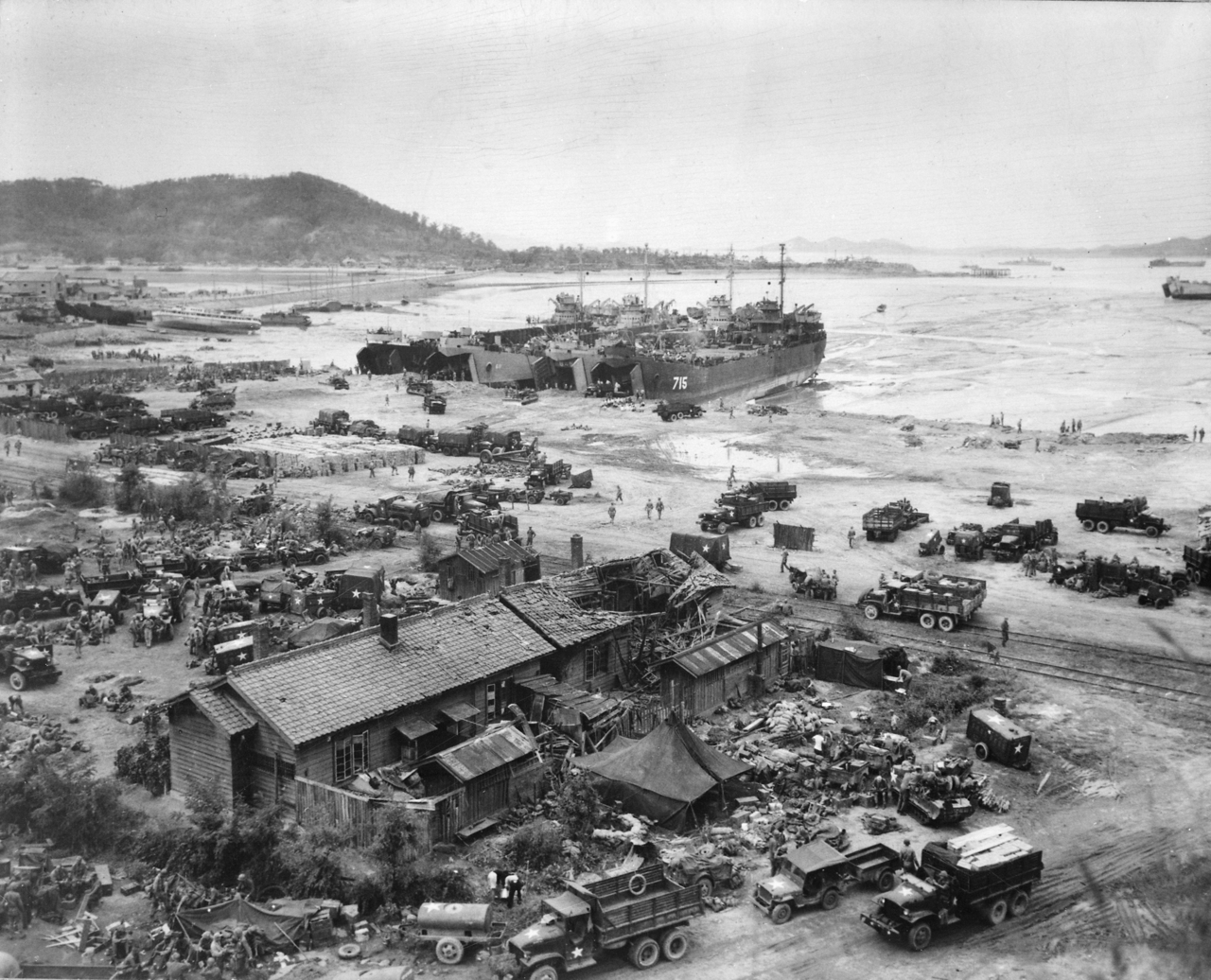
Wolmi-do fell in the morning; the evening tide put Marines and soldiers onto the city. Kimpo airfield and the Han crossings opened the fight for Seoul, declared recaptured on 28 September. UN and ROK dead in the Inchon-Seoul operation are usually given in the hundreds; KPA losses in dead and captured were much higher. The landing wrecked KPA logistics in the south.
Battle of Inchon · tagline
The 15 September 1950 UN amphibious landing that cut KPA supply to the Pusan Perimeter and retook Seoul -- a tide-table gamble, not the end of the Korean War. Operation Chromite put X Corps ashore at Inchon on 15 September 1950, far behind the Korean People's Army fighting on the Pusan Perimeter.
Battle of Inchon · Wolmi-do fell in the morning; the evening tide put Marines and s
Wolmi-do fell in the morning; the evening tide put Marines and soldiers onto the city. Kimpo airfield and the Han crossings opened the fight for Seoul, declared recaptured on 28 September. UN and ROK dead in the Inchon-Seoul operation are usually given in the hundreds; KPA losses in dead and captured were much higher. The landing wrecked KPA logistics in the south.
Battle of Inchon · Chromite did not end the war
Chromite did not end the war. The UN drive across the 38th parallel and toward the Yalu invited Chinese intervention. For Korean readers this is a national-capital story as much as a MacArthur story: Seoul's second liberation in three months, and a reminder that operational brilliance can widen a war.
Battle of Inchon · paras 1
A landing at Kunsan or closer to Pusan would have been orthodox. Inchon promised to cut the Seoul-Pusan axis and collapse the KPA from the rear. The price was hydrography. Naval gunfire and carrier air prepared Wolmi-do. Marines climbed seawalls. The city fight was short compared with Seoul's street week.
This explains a campaign, battle, or weapon in context. It is not a league of nations. It does not replace the full topic page.
Questions
- What is the next question after this?
- Chromite did not end the war. The UN drive across the 38th parallel and toward the Yalu invited Chinese intervention. For Korean readers this is a national-capital story as much as a MacArthur story: Seoul's second liberation in three months, and a reminder that operational brilliance can widen a war.
- Does this page rank people or nations?
- This explains a campaign, battle, or weapon in context. It is not a league of nations. It does not replace the full topic page.
- Where is the longer entry?
- A landing at Kunsan or closer to Pusan would have been orthodox. Inchon promised to cut the Seoul-Pusan axis and collapse the KPA from the rear. The price was hydrography. Naval gunfire and carrier air prepared Wolmi-do. Marines climbed seawalls. The city fight was short compared with Seoul's street week.
Next question: Iran-Iraq War · Open the topic: Battle of Inchon
Why is "a single assassination headline" the wrong stop when reading the August mobilization in 1914? · Why is "a paper count of tanks" the wrong stop when reading the campaign in France in 1940? · Why is "the landing nickname alone" the wrong stop when reading the Inchon landing in 1950? · Why is "a body-count column" the wrong stop when reading the Tet offensive in 1968? · Why is "the battle nickname alone" the wrong stop when reading Austerlitz in 1805? · Why is "one casualty total" the wrong stop when reading Gettysburg in 1863? · 50 campaign reading notes