At a glance
Battle of Inchon · paras 2Almond's X Corps -- Marines and 7th Infantry, with ROK units -- was a…
Battle of Inchon · paras 2Truman would fire MacArthur in April 1951 for a different argument -- but…
Battle of Inchon · Why did it work?Surprise, naval/air preparation, KPA overstretch in the south, and a plan…
Battle of Inchon · Did it end the Korean War?No. It ended the first campaign. The war continued until 27 July 1953, after…
Truman would fire MacArthur in April 1951 for a different argument -- but Chromite made the general politically almost untouchable for a season. UN/ROK killed in the Inchon-Seoul operation are usually given in the hundreds. KPA dead and captured were much higher. Civilian deaths in Seoul's recapture are part of a wider 1950 urban ledger -- use ranges, not a fake precision.
Battle of Inchon · paras 2
Almond's X Corps -- Marines and 7th Infantry, with ROK units -- was a MacArthur instrument as much as a joint team. Syngman Rhee and MacArthur's ceremony in the damaged capital was political theatre on a clock. The KPA in the south was already breaking toward the parallel.
Battle of Inchon · paras 2
Truman would fire MacArthur in April 1951 for a different argument -- but Chromite made the general politically almost untouchable for a season. UN/ROK killed in the Inchon-Seoul operation are usually given in the hundreds. KPA dead and captured were much higher. Civilian deaths in Seoul's recapture are part of a wider 1950 urban ledger -- use ranges, not a fake precision.
Battle of Inchon · Why did it work?
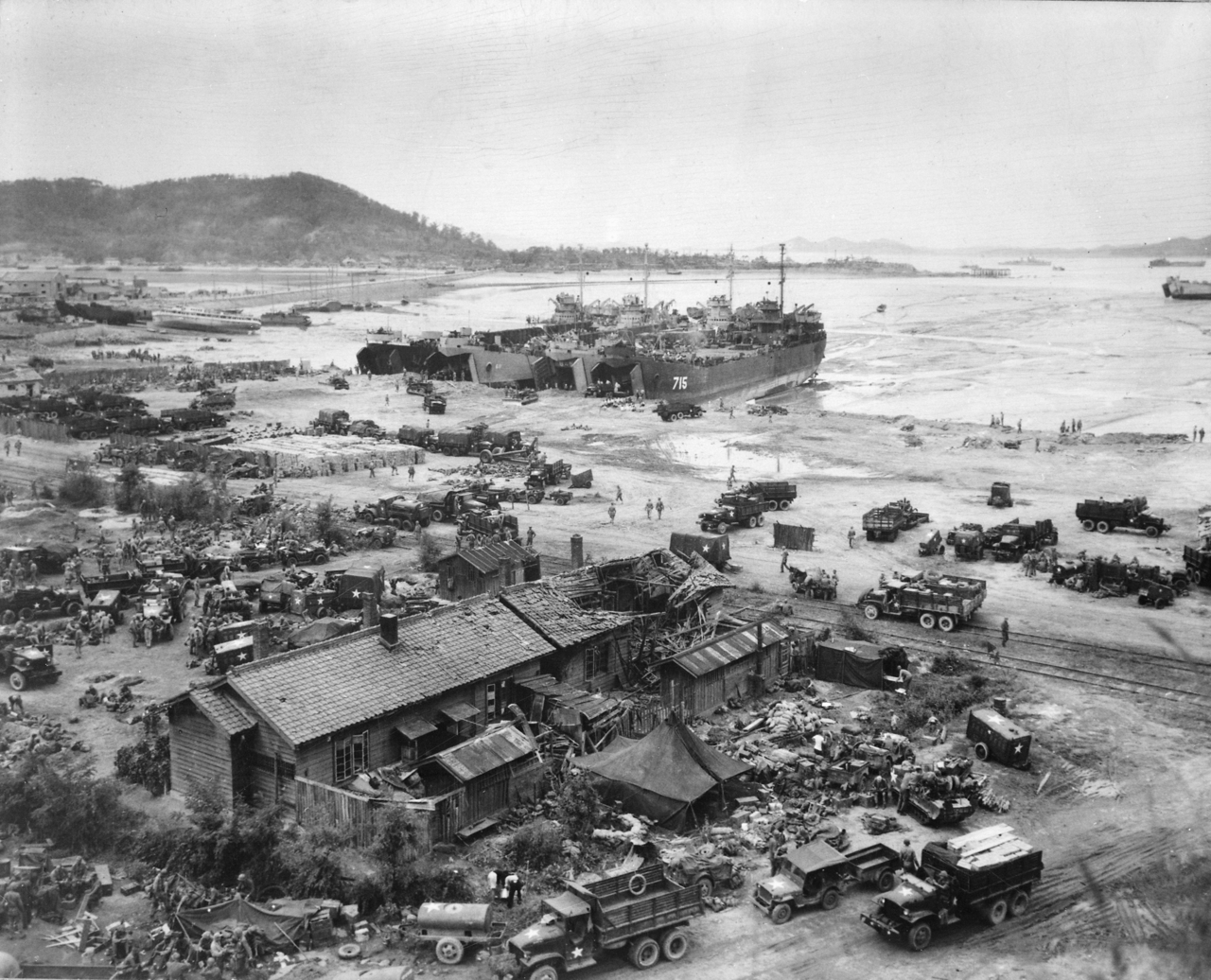
Surprise, naval/air preparation, KPA overstretch in the south, and a plan fitted to tides. It was not magic and not costless. Tides, mudflats, channels, and seawalls -- Inchon was a hydrographic nightmare on paper. The sceptics were not cowards; they were sailors who could read a chart.
Battle of Inchon · Did it end the Korean War?
No. It ended the first campaign. The war continued until 27 July 1953, after Chinese intervention. MacArthur at UNC; Admiral Doyle afloat; General Almond (X Corps); Marine generals (Smith and others) on the landing force; ROK units under the same operation.
This explains a campaign, battle, or weapon in context. It is not a league of nations. It does not replace the full topic page.
Questions
- What is the next question after this?
- Surprise, naval/air preparation, KPA overstretch in the south, and a plan fitted to tides. It was not magic and not costless. Tides, mudflats, channels, and seawalls -- Inchon was a hydrographic nightmare on paper. The sceptics were not cowards; they were sailors who could read a chart.
- Does this page rank people or nations?
- This explains a campaign, battle, or weapon in context. It is not a league of nations. It does not replace the full topic page.
- Where is the longer entry?
- No. It ended the first campaign. The war continued until 27 July 1953, after Chinese intervention. MacArthur at UNC; Admiral Doyle afloat; General Almond (X Corps); Marine generals (Smith and others) on the landing force; ROK units under the same operation.
Next question: Iran-Iraq War · Open the topic: Battle of Inchon
Why is "a single assassination headline" the wrong stop when reading the August mobilization in 1914? · Why is "a paper count of tanks" the wrong stop when reading the campaign in France in 1940? · Why is "the landing nickname alone" the wrong stop when reading the Inchon landing in 1950? · Why is "a body-count column" the wrong stop when reading the Tet offensive in 1968? · Why is "the battle nickname alone" the wrong stop when reading Austerlitz in 1805? · Why is "one casualty total" the wrong stop when reading Gettysburg in 1863? · 50 campaign reading notes