Myth to coinage
Athena to omens
Mediterranean night birds were wisdom in Athens and death omens in Rome — the same silhouette, opposite readings.
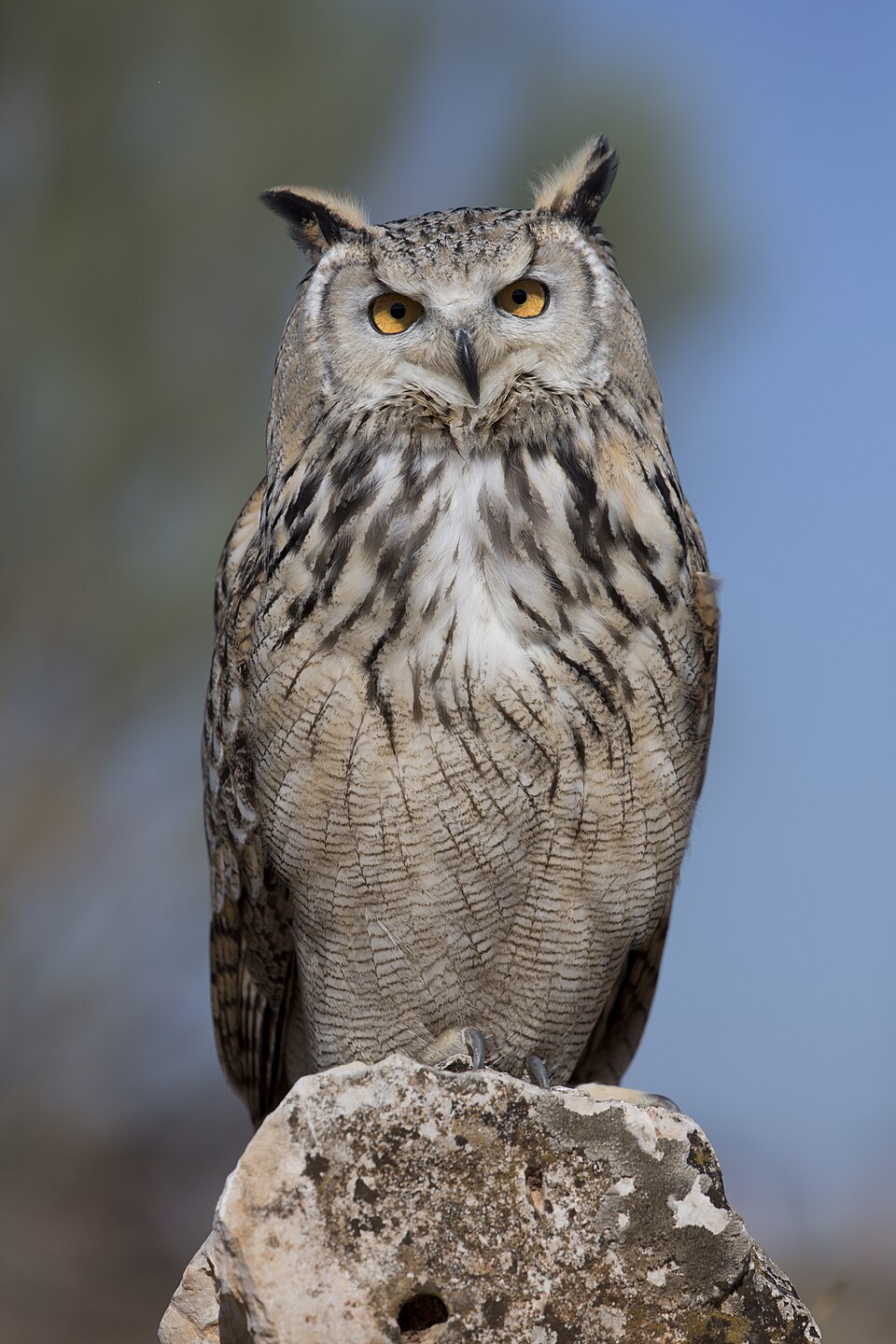
Owl · Nocturnal raptors whose facial discs, silent flight and asymmetric ears turn darkness into a hunting map.
Milestones in order. This is history, not a weekly activity grid.
Darker cells mean a higher score for this topic on that metric.
LessMore
Last reviewed Sources & creditsMedia creditsMethodology
Barn owls can strike by hearing alone. Asymmetric ear openings give elevation; the facial disc gives azimuth. Vision still matters in starlight.
The velvet and comb are strongest in forest nocturnal hunters. Fish owls and some burrowing species are noisier — water and day hunting change the trade.
Corvids and parrots outscore owls on many lab tasks. The “wise owl” is Athena’s bird, not a working-memory ranking.
Hedwig is Bubo scandiacus, an Arctic lemming specialist. The films made a tundra bird the global pet-owl image — and briefly spiked illegal trade.
Tyto alba can lay 2–12 eggs when vole cycles peak. Nest-box programmes in UK barns track that boom-bust directly.
Ketupa blakistoni is Endangered. Riparian old growth in Hokkaido and the Russian Far East is the binding constraint.
The owl did not enter English as a finished emblem. Hunts, films, listings and field stations rewrote the animal on a dated clock.
This chapter keeps ten timeline points, five eras and three milestones so a later translation can hold the same years.
Paleocene fossils already show the nocturnal raptor grade separating from diurnal hawks.
Athenian tetradrachms put Athene noctua on silver — the civic “wise owl” that later English never quite dropped.
Systema Naturae treatments began splitting barn owls from typical owls on disc and sternum characters.
Roger Payne’s barn-owl localisation papers showed prey capture in a dark room by sound alone.
Hawk and Owl Trust and farmers put boxes in Dutch barns as vole habitat shrank with agri-change.
Hedwig fixed the snowy owl as a global pet image, with later IUCN trade notes.
Masakazu Konishi’s barn-owl auditory-space work became a textbook of computational neuroethology.
Japan–Russia coordinated surveys treated river ice and old trees as one transboundary habitat.
Several North American jurisdictions tightened take rules as prairie-dog towns vanished.
Second-generation anticoagulant bans in parts of California cited owl liver residues as evidence.
Mediterranean night birds were wisdom in Athens and death omens in Rome — the same silhouette, opposite readings.
Skull and sternum characters separated barn owls from typical owls long before DNA confirmed the deep split.
Caltech and later labs mapped barn-owl midbrain space — an animal model that outlived the fashion for other raptors.
Nest-box recovery and Potter-era pet demand ran in parallel, one legal and one often not.
Anticoagulant rodenticides and urban lighting are now the owl stories that DDT once was for eagles.
Dark-room barn-owl trials proved hearing sufficient for capture — a rare clean sensory demonstration.
UK and Dutch barn programmes turned farm buildings into substitute tree cavities.
Hokkaido–Primorye surveys treated one riverine species as a shared wintering and breeding system.
Reading owl history beside the resilience score keeps a recovered stock from standing in for a threatened cousin.
Apex diurnal raptors whose stoops, territories and national emblems stretch from taiga cliffs to tropical canopy.
Overall 75 🐧Flightless southern divers that turned wings into flippers and ice edges into commute routes.
Overall 56 🐦New World nectar specialists that hover on figure-eight wings and migrate on a few grams of fat.
Overall 63 🦩Long-legged filter feeders whose bent bills and carotenoid diets turn alkaline lakes into pink cities.
Overall 52 🦜Zygodactyl hookbills whose social brains, mimicry and nest-cavity needs collide with the cage trade.
Overall 58 🪽Dynamic-soaring ocean birds whose metres-long wings and baited longlines now share the same latitudes.
Overall 58 🦢Tall wetland dancers whose red-crowned East Asian population is the atlas type and a conservation bottleneck.
Overall 53