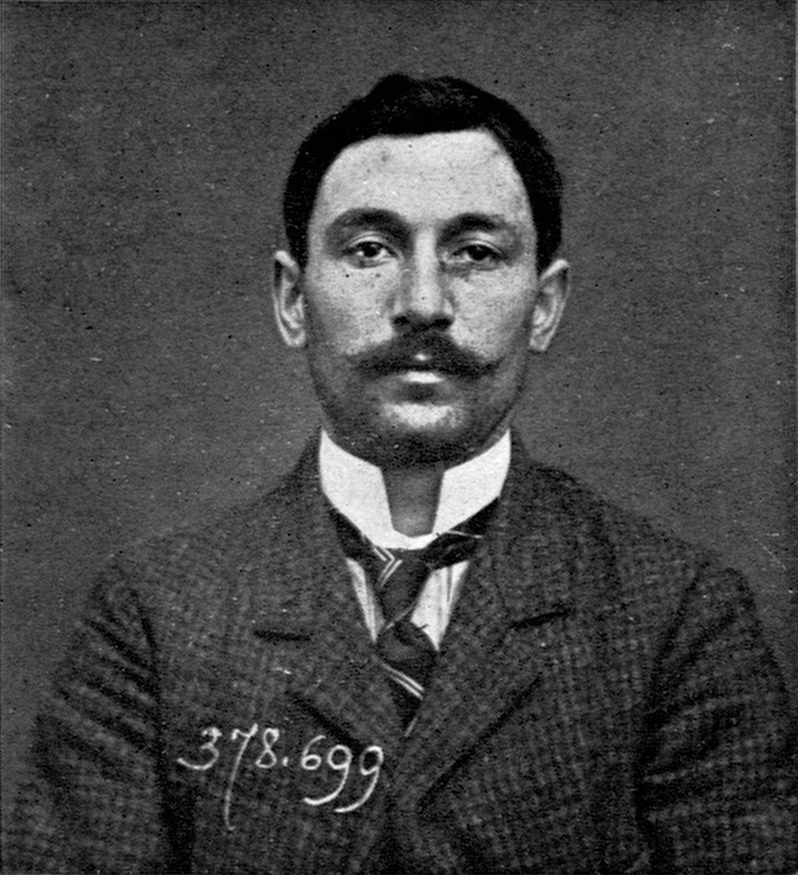
On 21 August 1911 the Mona Lisa left the Louvre. Vincenzo Peruggia was caught in Florence in December 1913; the portrait returned to Paris in January 1914 and became a global celebrity.
Also called: Vincenzo Peruggia · Louvre 1911
At a glance
Score intensity
Darker cells mean a higher score for this topic on that metric.
Notoriety92
Mystery15
Scale50
Evidence80
Legal impact40
Culture90
LessMore
Score profile
Each bar is a 0-100 atlas score for this topic, not a timeline.
Notoriety92
Mystery15
Scale50
Evidence80
Legal impact40
Culture90
Evidence
Evidence
80%
Score profile
Mystery
15%
Timeline
Milestones in order. This is history, not a weekly activity grid.
On Monday 21 August 1911, Leonardo da Vinci's portrait known in French as La Joconde and in English as the Mona Lisa was taken from the Salon Carré of the Musée du Louvre in Paris. Staff noticed the empty wall on 22 August. The Paris police and the Louvre's own security became a European press story within a day. Guillaume Apollinaire was arrested and released; Pablo Picasso was questioned. Neither was the thief.
In November–December 1913 a man using the name Leonardo Vincenzo contacted Florentine dealer Alfredo Geri and Uffizi director Giovanni Poggi, offering the painting. Peruggia, a former Louvre glazier and handyman of Italian birth, was arrested in Florence. The portrait was authenticated, shown briefly in Italy and returned to the Louvre in January 1914. A Florence court convicted Peruggia; the sentence was short, and he cited a patriotic claim that the work should be in Italy.
The case is convicted and the object is back. What the theft changed was fame. A painting already respected by specialists became, after two years of 'WANTED' reproductions in newspapers, the most recognised portrait on earth. This page records the loss, the Florence recovery and the court. It does not reconstruct how a worker walked a panel out of a palace.
Date taken21 Aug 1911
MuseumLouvre, Paris
FoundFlorence, Dec 1913
ReturnedLouvre, Jan 1914
ConvictedVincenzo Peruggia
StatusConvicted
Dossier scores
Notoriety 92
Mystery 15
Scale 50
Evidence 80
Legal impact 40
Culture 90
Notoriety
92
Mystery
15
Scale
50
Evidence
80
Legal impact
40
Culture
90
A missing panel that made a celebrity
The 1911 theft is the type case of an art crime whose cultural afterlife dwarfs its legal one: one man convicted, one painting returned, a global icon born in the empty space.
What left the Salon Carré
The object is a poplar-panel portrait painted by Leonardo in the early sixteenth century, already in the French royal then national collection. In 1911 it was important; it was not yet a pilgrimage image. The empty wall, photographed and described in Le Petit Parisien and foreign wires, did more for its fame than any salon catalogue.
For twenty-eight months the Louvre hung a gap. Suspect lists wandered through modern artists and through Louvre staff. The painting itself was in Peruggia's Paris lodging for much of that time, a fact established after the Florence arrest — a hiding place, not a lesson.
Apollinaire, Picasso and a press panic
Apollinaire had once possessed Iberian statuettes stolen from the Louvre by Géry Pieret. Police arrested the poet in September 1911. Picasso was brought in. Both were cleared of the Mona Lisa. The episode is part of the public record and a warning about celebrity dragnets.
The Paris Prefecture and the Louvre's understaffed watch became a political embarrassment for the Third Republic. English and American papers treated the loss as proof that the Old World could not guard its masterpieces. That tone reversed in 1914 when the panel came home.
Florence, December 1913
Alfredo Geri's letter to the Uffizi, Poggi's examination of the panel and the arrest of Peruggia closed the who question. Italian crowds saw the picture before it went back. The patriotic motive Peruggia offered — that Napoleon had looted Italian art — did not match the painting's actual French provenance after Leonardo's own late years in France, but it played well in some Italian papers.
The Florence court convicted him and gave a short term, later reduced. He was not treated as an international mastermind. The Louvre tightened staff rules. No famous 'Mona Lisa Act' followed; the legal impact is modest, the cultural one is not.
Fame as the real haul
Postcard, newspaper and later film reproductions made the smile a mass image. Visitors after 1914 came to see the painting that had been stolen. Duchamp's L.H.O.O.Q. (1919) and a century of advertising riffs assume that everyone already knows the face.
Compared with Gardner, this file has a recovered object and a named convict. Compared with the Great Train Robbery, the cash value in 1911 was not the point: the panel was already unsaleable on an open market. The scale score in this atlas is about a single work, not a vault of stones.
Beat weight marks
Mark each timeline beat already on this dossier as supported, contested or unknown, using the public-record claims already filed here. Not a verdict.
Editorial marks on this device only. Public-record encyclopedia — not legal advice, not a how-to, not a private file.
Timeline beat
Supported / Contested / Unknown
21 Aug 1911 — Taken from the Louvre
Claim already on file: Picasso stole the Mona Lisa.
Sep 1911 — Apollinaire arrested
Claim already on file: The painting is still missing.
1911–13 — Press reproductions
Claim already on file: Peruggia was restoring Italy's rightful property.
Nov–Dec 1913 — Geri and the Uffizi
Claim already on file: A vast conspiracy moved the panel.
Dec 1913 — Peruggia arrested
Claim already on file: A vast conspiracy moved the panel.
Dec 1913 — Shown in Italy
Claim already on file: A vast conspiracy moved the panel.
Jan 1914 — Returned to the Louvre
Claim already on file: A vast conspiracy moved the panel.
1914 — Florence conviction
Claim already on file: A vast conspiracy moved the panel.
1919 — Duchamp's L.H.O.O.Q.
Claim already on file: A vast conspiracy moved the panel.
2005– — Salle des États crowds
Claim already on file: A vast conspiracy moved the panel.
On 21 August 1911, from the Salon Carré of the Louvre in Paris. The empty wall was noticed on 22 August. The painting was missing for twenty-eight months.
Who took it?
Vincenzo Peruggia, an Italian-born former Louvre glazier and handyman. He was arrested in Florence in December 1913 after offering the panel through dealer Alfredo Geri. A Florence court convicted him.
When did the painting return?
It was authenticated in Florence in December 1913, shown briefly in Italy and returned to the Louvre in January 1914. It has remained in the French national collection since, now in the Salle des États.
Were Picasso and Apollinaire involved?
No. Apollinaire was arrested because of an earlier, separate Louvre theft of small Iberian sculptures by an acquaintance. Picasso was questioned. Both were cleared of the Mona Lisa. The episode is a documented false lead.
Why did Peruggia say he took it?
He offered a patriotic story: that the work belonged in Italy. Leonardo had brought the portrait to France himself, and it had long been in the French royal collection. The court treated a motive speech as a motive speech, not as title to the panel.
Did the theft make the Mona Lisa famous?
It made the face universally famous. Specialists already ranked the portrait high. Two years of newspaper reproductions and a triumphant 1914 return created the modern pilgrimage picture.
Is the case unsolved?
No. The status is convicted. The object was recovered. Remaining arguments are about Peruggia's exact help, if any, and about how much the press inflated later legends — not about who took the panel.
Was anyone else convicted?
Peruggia is the convicted thief on the public record. Later rumours of a wider plot have not replaced the Florence judgment with a second dock of masterminds.