The statistical summit of the sport: seven world titles, tying Schumacher, plus all-time records of 105 wins, 104 pole positions and more than 200 podiums as of the end of 2024. The breadth is the argument — Hamilton won races in every season from 2007 to 2021, a fifteen-year streak no one else approaches, and won titles in three distinct regulation eras with V8 and hybrid machinery. He nearly took the championship as a rookie in 2007, beat double champion Alonso on points in the same car, and his 2020 season — 11 wins, a seventh title sealed with a wet-weather masterclass in Turkey — came at age 35. The counterargument is machinery: Mercedes was the class of the field for most of 2014 to 2020. But he beat every teammate over a season bar Rosberg in 2016 and Russell in 2024, and lost the 2021 title only on the final lap. His 2025 move to Ferrari extended the longest elite career of the modern era.
#1 Lewis Hamilton
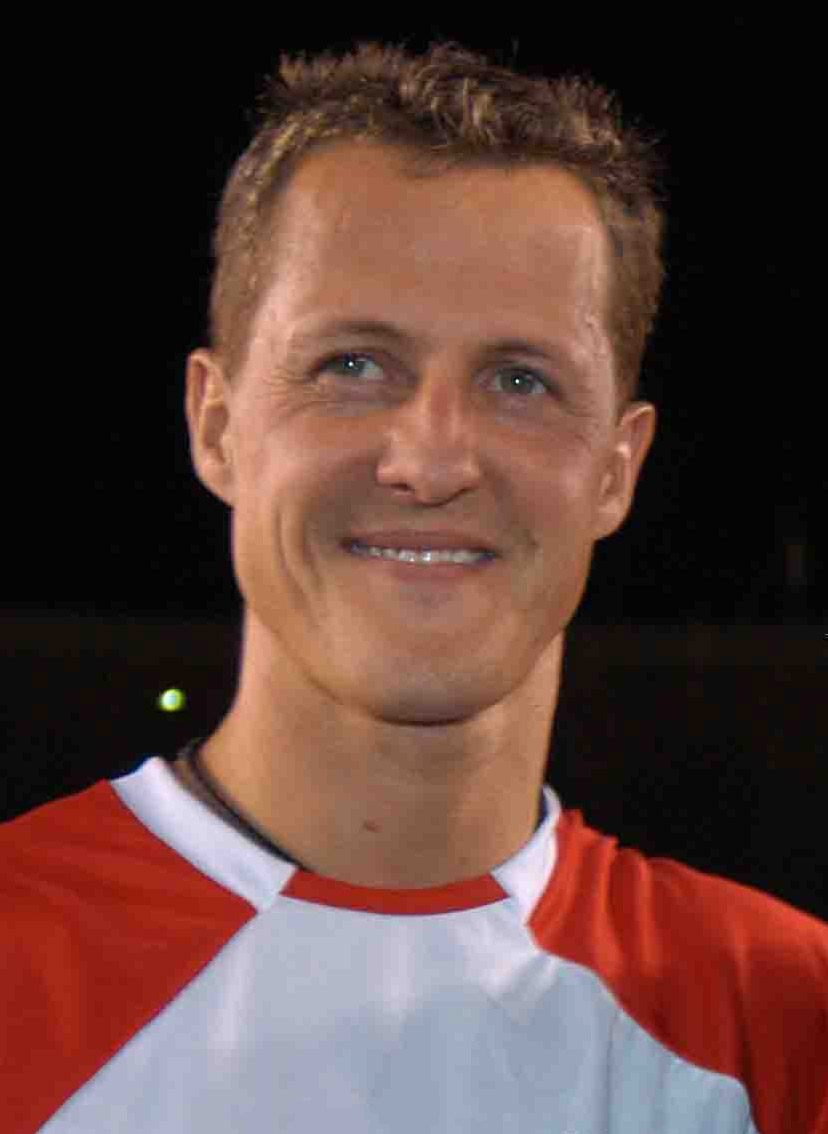
#2 Michael Schumacher
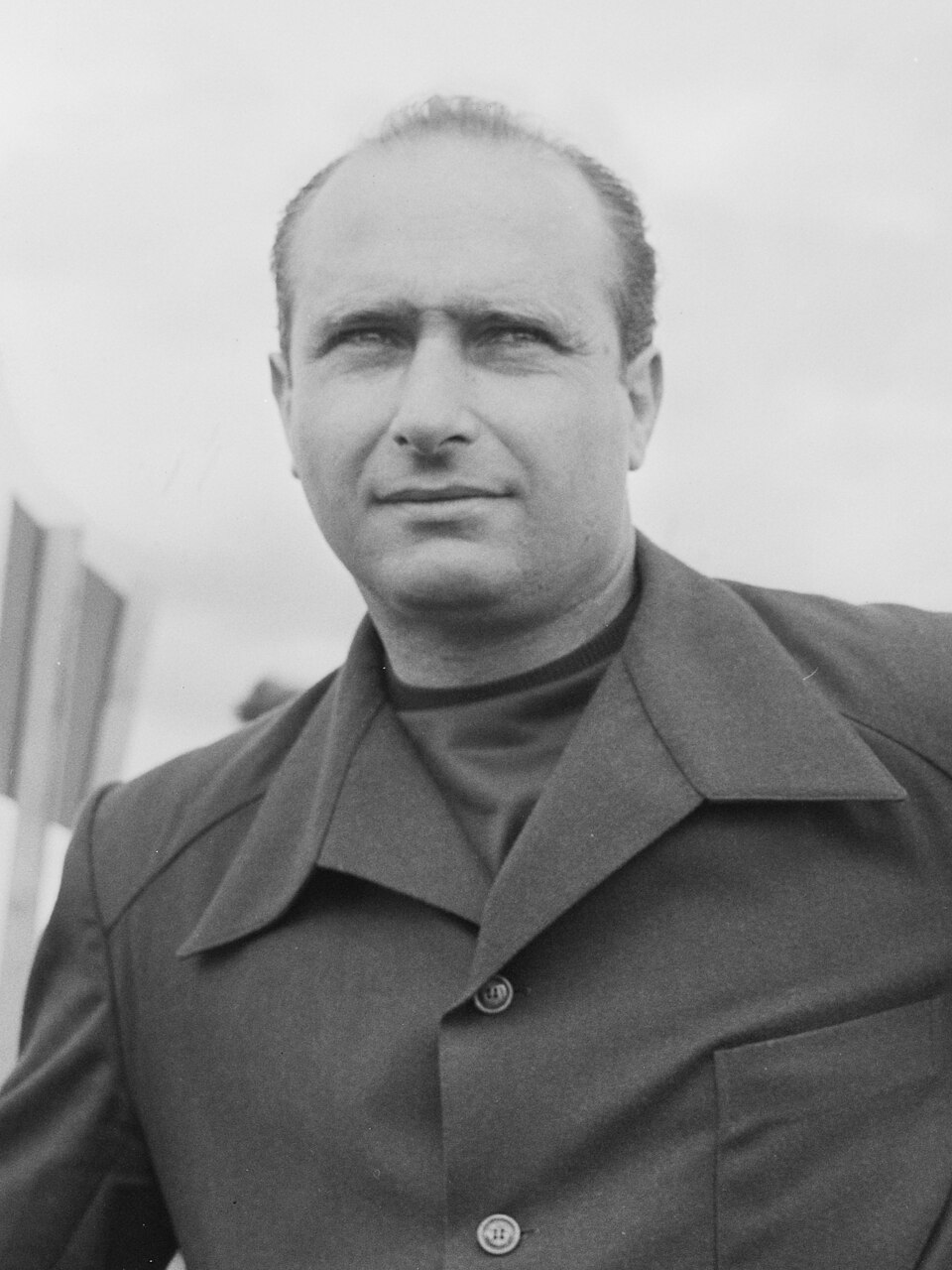
#3 Juan Manuel Fangio
Last reviewed Sources & creditsMedia creditsMethodology
Quick answers
Why is it called Formula 1?
The formula is the set of technical regulations every car must meet — engine size, weight, dimensions, aerodynamics — and Formula One designates the top tier of that rules ladder, above Formula 2 and Formula 3. The FIA codified the modern formula in 1946, drawing on pre-war Grand Prix regulations, and attached a world championship to it from 1950. So the name literally means the number-one rule set of single-seater racing. The regulations are rewritten periodically — 2014 introduced hybrid power units, 2022 reintroduced ground effect, and 2026 brings the next full reset — which is why the cars, and often the competitive order, change so dramatically between eras while the name stays the same.
How fast do F1 cars actually go?
The highest speed recorded in a race is 372.5 km/h, set by Valtteri Bottas at the 2016 Mexican Grand Prix with a slipstream at high altitude; typical top speeds at circuits like Monza are 340 to 360 km/h. Raw straight-line speed is not the point, though — plenty of cars go faster. What defines F1 is cornering: downforce lets cars take corners at loads above 5g, brake from 300 km/h to 100 km/h in well under two seconds, and lap circuits faster than any other racing car. The fastest average lap in history is Lewis Hamilton's 2020 Monza pole at 264.362 km/h — an entire lap, corners included, at over 260 km/h average.
Who is the greatest F1 driver of all time?
By raw numbers, Lewis Hamilton: seven titles equal with Michael Schumacher, plus outright records of 105 wins and 104 pole positions as of the end of 2024. Schumacher's advocates cite five consecutive titles and his rebuilding of Ferrari; Juan Manuel Fangio won 24 of his 52 championship entries in the 1950s, a strike rate no one has approached; Ayrton Senna is widely held the fastest over one lap; and Max Verstappen's 19-win 2023 season is statistically the most dominant ever. There is no settled answer because equipment quality varies so much between drivers — the most honest tiebreaker is performance against teammates in identical cars, and by that measure Hamilton, Fangio and Verstappen all have elite cases.
How much does it cost to run a Formula 1 team?
Since 2023 teams operate under a cost cap of 135 million dollars per season for car design, development and racing operations — but that excludes driver salaries, the three highest-paid staff, marketing, engine programmes and capital projects, so real total budgets at top teams still comfortably exceed 300 million dollars a year. Before the cap arrived in 2021, Mercedes, Ferrari and Red Bull were each spending upwards of 400 million annually. Power units are covered by a separate cost cap for manufacturers. The individual hardware is startling: a single power unit is valued in the millions, a front wing in the hundreds of thousands, and crash damage is tracked lap by lap because it now eats directly into development budget.
What is DRS and how does it work?
DRS — the Drag Reduction System, introduced in 2011 — is a driver-operated flap in the rear wing that opens to reduce drag and boost straight-line speed by roughly 10 to 12 km/h. It can only be used in designated activation zones, and only if the pursuing car is within one second of the car ahead at a detection point just before the zone; it closes automatically when the driver brakes. The system exists to offset dirty air, the turbulence that costs a following car downforce and makes passing difficult. Critics call its passes artificial; defenders note it merely restores an attack that aerodynamics took away. From 2026 DRS is replaced by active aerodynamics on all cars plus a push-to-pass style manual energy override.
Why don't F1 cars refuel during pit stops?
Refuelling was banned from 2010, on cost and safety grounds — teams hauled heavy rigs around the world, and the era produced fires and botched releases, most famously Jos Verstappen's 1994 pit fire at Hockenheim. Cars now start with all their race fuel, up to 100 kilograms, and pit stops change tyres only, which is why they take under two and a half seconds; the all-time record is McLaren's 1.80-second stop at the 2023 Qatar Grand Prix. The ban reshaped racing strategy: with no fuel-length gambits, tyre management became the central strategic variable, and drivers must manage a car that is dramatically heavier and slower in the opening stint than at the flag.
Formula 1's greatest-of-all-time debate is uniquely treacherous because no sport ties individual results more tightly to equipment. A prime Alonso finished 2015 in seventeenth place; a rookie Hamilton nearly won the 2007 title. Any honest ranking therefore has to weigh three things at once: raw numbers, dominance relative to machinery, and performance against teammates — the only opponents who ever drive the same car. The list below leans on hard career statistics but refuses to treat them as the whole answer.
Counting stats are anchored to the end of the 2024 season for active drivers, and percentage rates are used to compare across calendar sizes — Fangio had seven to nine championship rounds a year, Verstappen has twenty-four. Twelve drivers, ranked, with the case for each stated plainly.
All-time podium
Comparison Lab
Toggle athletes on and off — every bar rescales to the leader of your selection.
Peak keeps each athlete’s strongest metrics; Career averages the full published set. Both stay editorial teaching marks.
Drag only reorders the cosmetic shortlist — it does not change teaching scores.
Default shortlist below works without JavaScript. Toggle chips after load to rebuild bars.
Compare · in selection · Career
- 1Lewis Hamilton93
- 2Michael Schumacher86
- 3Juan Manuel Fangio56
- 4Max Verstappen55
- 5Ayrton Senna48
World titles
Race wins
Pole positions
Podiums
Win rate
Fastest laps
World titles (end 2024)
Race wins (end 2024)
Pole positions (end 2024)
Podiums (end 2024)
Axis verdict on this selection
Pick one published scoring axis already on the GOAT lab. The leader is whoever is ahead among the athletes you keep selected — editorial teaching marks, not live stats.
Not a live box score, betting line, or a universal ranking. Bars stay scaled teaching marks from this sport’s published list.
Athletes in this verdict
The top 10
Schumacher redefined what a Formula 1 driver's job was. Beyond the seven titles, 91 wins and 155 podiums, he was the first modern driver to treat the entire team as his instrument — famously fit, relentless in testing, fluent in the engineering, and the organising force around which Ferrari rebuilt itself. After titles with Benetton in 1994 and 1995, he joined a Ferrari team that had not crowned a champion since 1979 and dragged it through four painful seasons before delivering five consecutive titles from 2000 to 2004, the last with 13 wins in 18 races. His 77 fastest laps stood as the record for years and signal his defining trait: sustained qualifying-speed stints on demand, the skill that made refuelling-era strategy work. The stains are real — Adelaide 1994, Jerez 1997, Monaco 2006 — and they cost him the top spot here, but his peak-era command of a race weekend has never been exceeded.
Fangio's numbers look small until you convert them to rates, at which point they become absurd: 24 wins from 52 championship entries, a strike rate around 46 percent that no driver since has approached, plus 29 poles and five titles in the championship's first nine seasons. He won those five championships with four different constructors — Alfa Romeo, Mercedes, Ferrari, Maserati — proving the results travelled with the man, and he did it in an era when cars killed their drivers routinely and Fangio himself broke his neck at Monza in 1952. His masterpiece is the 1957 German Grand Prix: 46 years old, hunting down the Ferraris of Hawthorn and Collins after a disastrous pit stop, breaking the Nurburgring lap record repeatedly, winning by three seconds. He retired at 47, still the best driver alive. Adjusted for era and risk, a legitimate case exists that he is number one; he sits third only because the fields he beat were shallower.
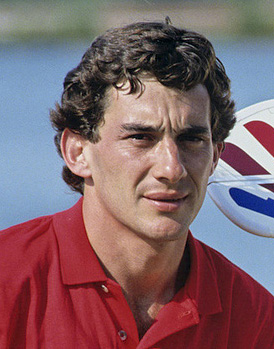
The greatest qualifier the sport has seen: 65 pole positions in 161 starts, a 40 percent pole rate achieved against Prost, Mansell and Piquet in their primes. Senna's three titles — 1988, 1990, 1991 — and 41 wins undersell a talent defined by singular performances: the 1988 Monaco qualifying lap 1.4 seconds faster than Prost in an identical McLaren; six Monaco wins, still the record; Donington 1993, passing four cars on the opening lap in the wet in an inferior Williams-beating McLaren; Estoril 1985, winning by over a minute in the rain in an uncompetitive Lotus. His rivalry with Prost — title-deciding collisions at Suzuka in 1989 and 1990 — remains the sport's defining feud, and his ruthlessness at Suzuka 1990 is the asterisk on his record. Killed at Imola on 1 May 1994 at 34, leading the race, he remains the sport's great unfinished argument: on peak, perhaps the fastest ever.
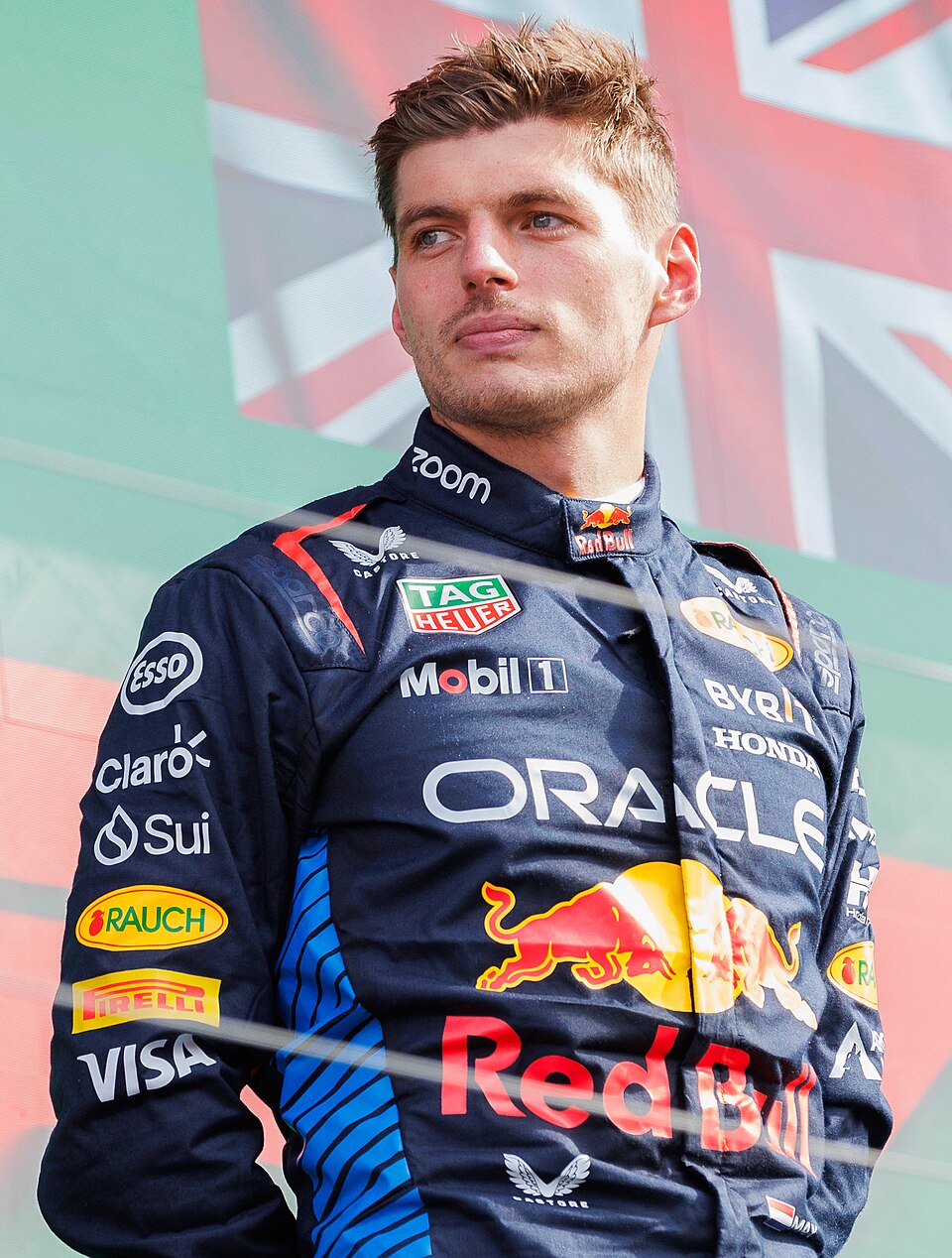
Still mid-career, and already fifth with a bullet. Verstappen debuted at 17 — a record that prompted the FIA to raise the minimum age — won his first race at 18 in Spain 2016 on debut for Red Bull, and by the end of 2024 had four consecutive titles, 63 wins and a win rate over 30 percent, the highest of the modern grid. His 2023 season is statistically the most dominant ever driven: 19 wins from 22 races, 1,000-plus laps led, victory margins measured in tens of seconds. The strongest evidence is 2024, when the Red Bull fell back to third-fastest for long stretches and he won the title anyway on racecraft and consistency — including a wet-weather drive from 17th to victory at Interlagos that stands with the great rain performances. Critics note his title era coincided with weak teammate comparisons and Red Bull's design edge; the Brazil 2024 answer is that he wins without it. His ceiling is the top of this list.
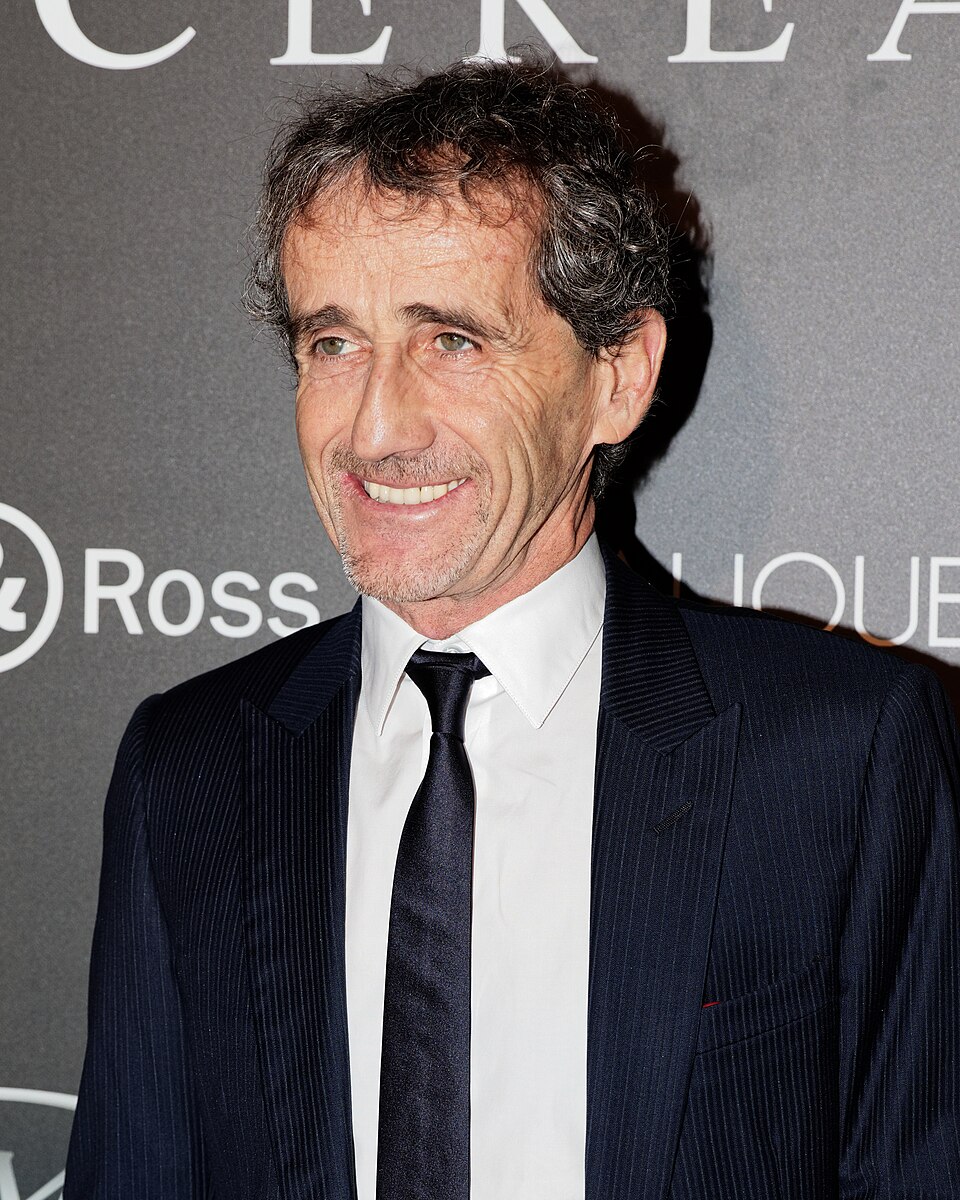
The Professor's four titles — 1985, 1986, 1989, 1993 — and 51 wins were built on an approach decades ahead of its time: manage the tyres, the fuel, the gearbox and the risk, be fastest only when it pays, and collect points with machine regularity, which is how he retired as the all-time leader in both wins and points. His teammate ledger is the strongest of his generation: he beat Lauda on points as a young driver in 1984 (losing the title by half a point), matched Senna at McLaren in 1988-89 and took the 1989 crown, and won 1986 in a McLaren that was slower than the Williams-Hondas, sealing it in the three-way Adelaide finale after Mansell's tyre exploded. In the turbo era's fuel-limited races, his economy of effort was a weapon nobody could copy. He is remembered as Senna's foil; the record says he was his equal, with a fraction of the drama.
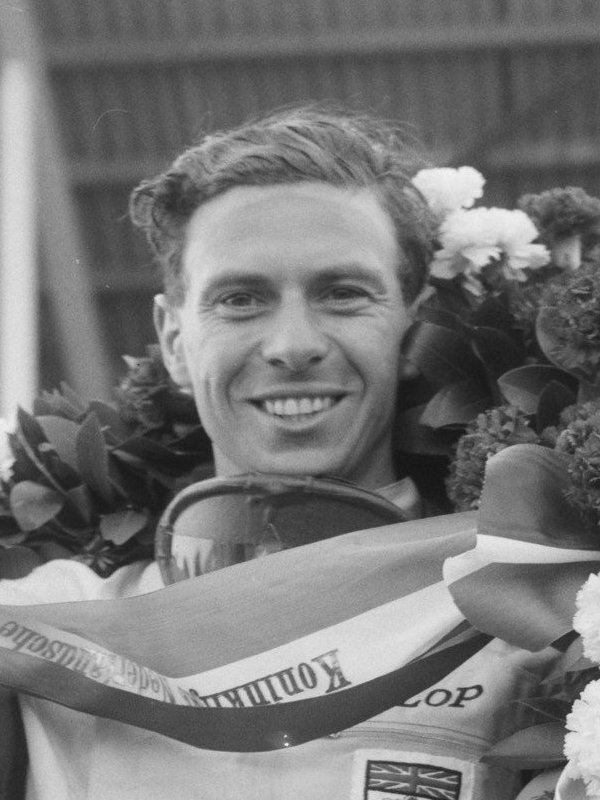
Clark's rate stats are second only to Fangio's among champions: 25 wins and 33 poles from just 72 starts — winning more than a third of every Grand Prix he entered — with two titles, 1963 and 1965, both sealed with crushing superiority. He still holds the record for grand chelems (pole, win, fastest lap, every lap led) with eight. His versatility has no modern equivalent: in 1965 he won the Formula 1 world championship and the Indianapolis 500 in the same summer, and he won in touring cars, sports cars and Formula 2 almost casually. Contemporaries considered the gap behind him unbridgeable — when conditions were equal, Clark simply drove away, as at Spa 1963, won by nearly five minutes in the rain. He died at Hockenheim in April 1968 in a minor Formula 2 race, aged 32, almost certainly with multiple championships left in him. On pure driving, many period observers rated him the best ever.
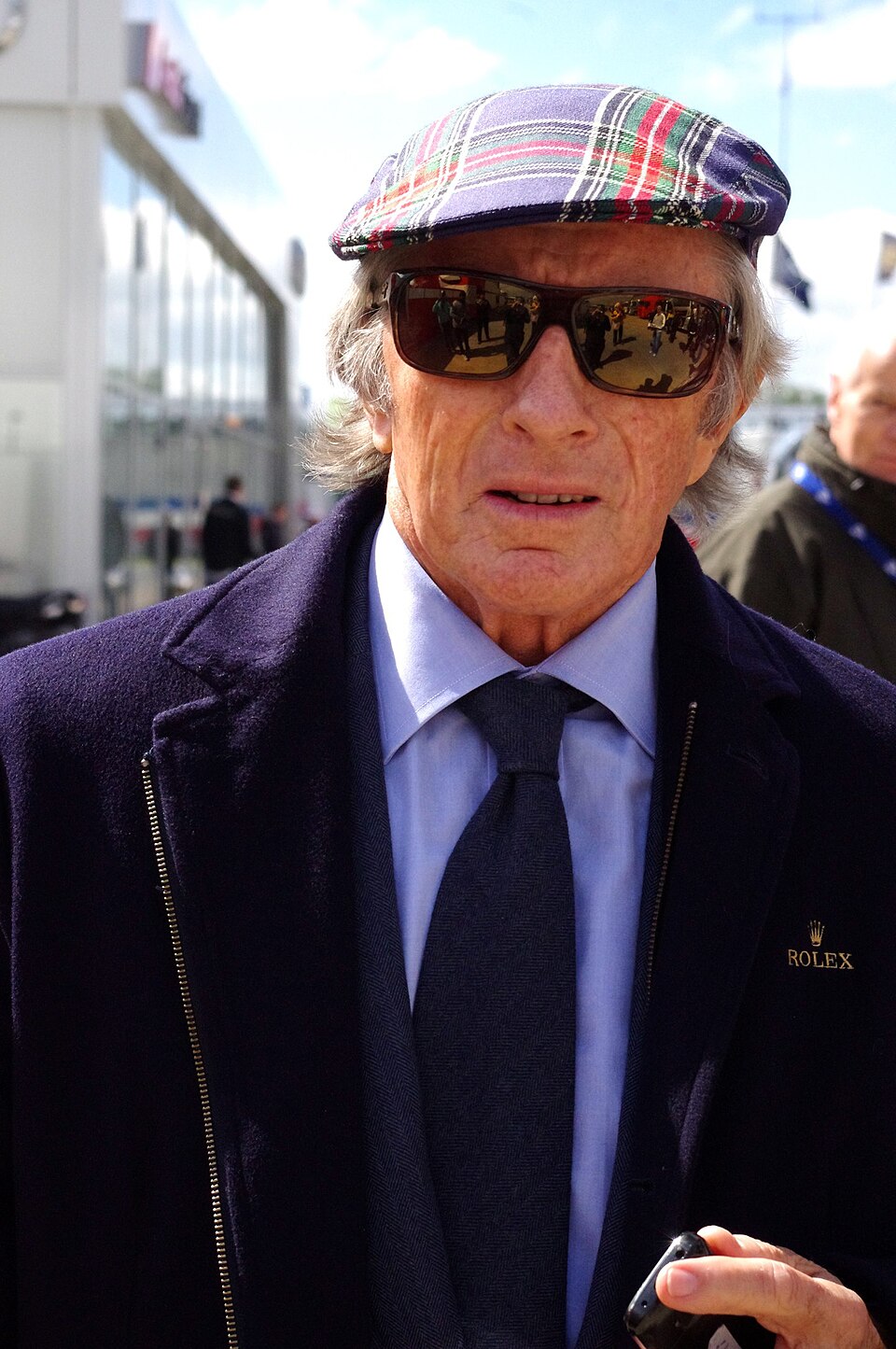
Three titles — 1969, 1971, 1973 — and 27 wins from only 99 starts, a 27 percent win rate compiled in the deadliest years the sport has known. Stewart's defining drive is the 1968 German Grand Prix at the Nurburgring: in fog and rain, with a broken wrist in a cast, he won by more than four minutes. What elevates him beyond the numbers is that he transformed the sport twice over — as its best driver and as its conscience. After being trapped in his crashed BRM at Spa in 1966, soaked in fuel, he waged a relentless and deeply unpopular safety campaign: circuit barriers, seat belts, full-face helmets, medical facilities, boycotts of lethal tracks. Much of the safety architecture that later saved lives traces to him. He retired at the end of 1973, at his peak, after his teammate Francois Cevert was killed in qualifying at Watkins Glen — walking away as reigning champion.
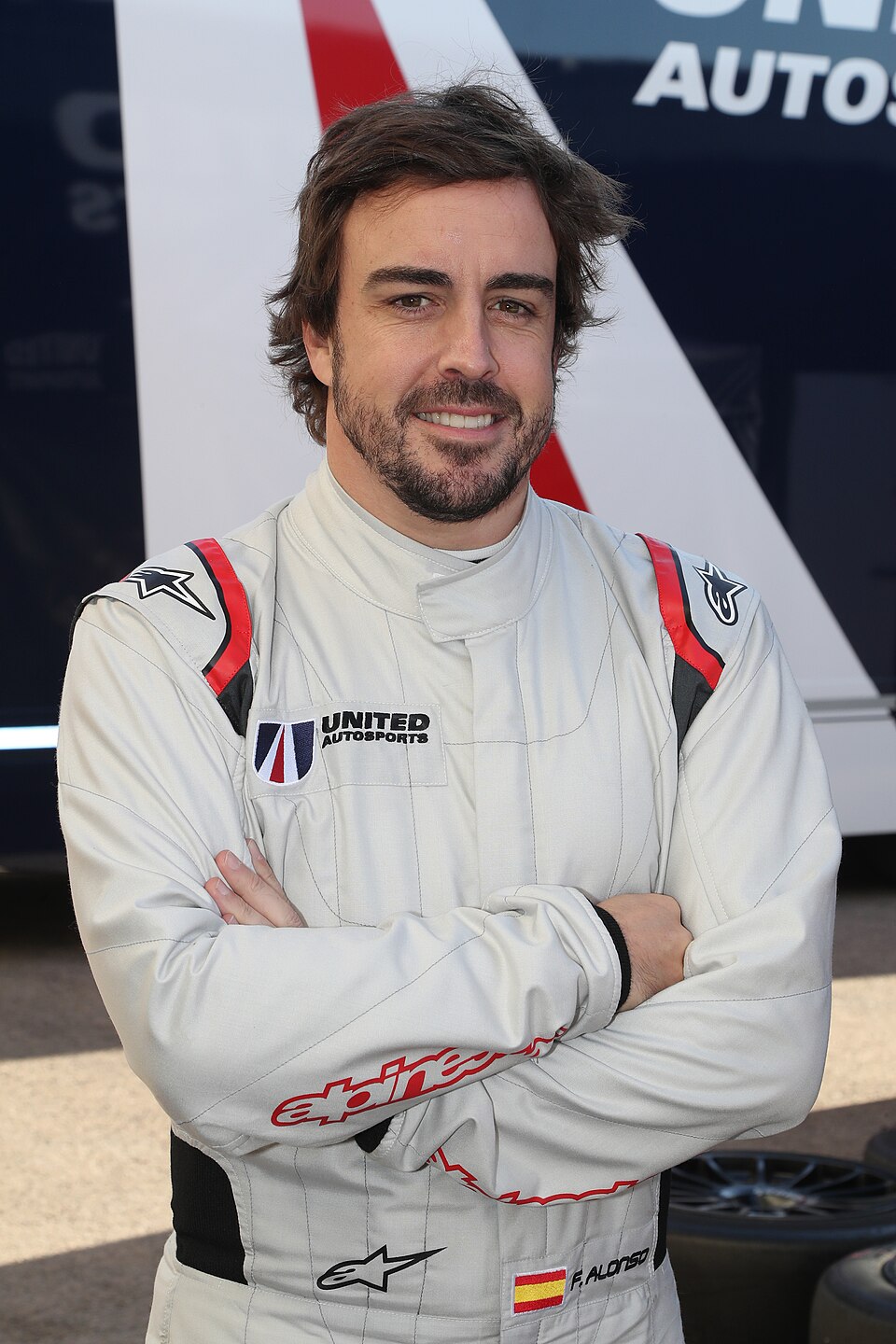
Two titles in 2005 and 2006 that broke Ferrari and Schumacher's five-year stranglehold, won at 24 and 25 in a Renault that was rarely the fastest car — followed by eighteen further seasons that turned Alonso into the sport's benchmark for extracting the impossible from ordinary machinery. He holds the record for Grand Prix starts, passing 400 in 2024, with 32 wins, 22 poles and 106 podiums, but his reputation rests on races the totals miss: dragging a Ferrari to within a handful of points of the 2010 and 2012 titles, and a 2012 European Grand Prix win from eleventh that many rate the finest drive of the decade. Peerless wheel-to-wheel and metronomically consistent, he also won Le Mans twice and the World Endurance Championship during an F1 sabbatical. The knock is a career of catastrophic team choices — leaving or arriving one season too early almost every time — that left an all-time talent stranded on only two crowns.
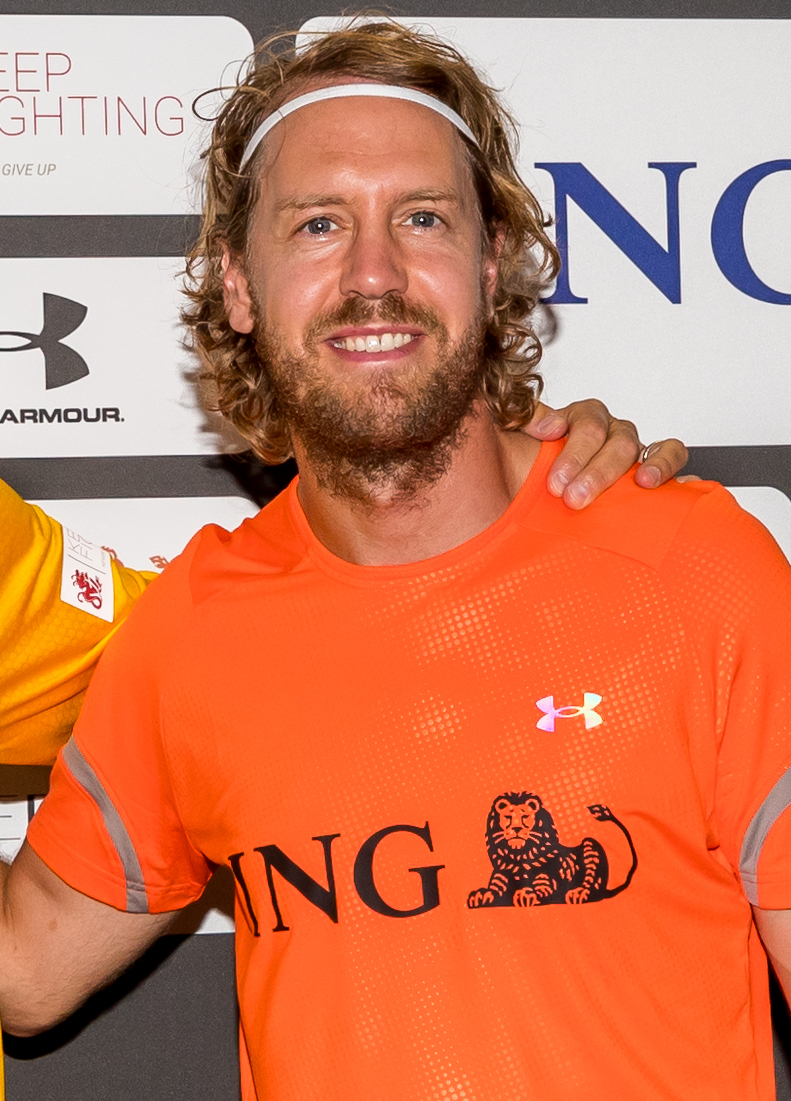
Four consecutive world titles from 2010 to 2013, 53 wins, 57 poles and 122 podiums. Vettel became the youngest champion in history at 23 years and 134 days, and his 2011 and 2013 seasons rank among the most complete ever driven — 15 poles in 2011, and in 2013 a run of nine straight wins to close the year, still the record. His mastery of the exhaust-blown-diffuser Red Bulls was genuinely singular: the technique of keeping the throttle open to energise the diffuser mid-corner suited him better than anyone, including teammate Mark Webber, whom he out-scored comprehensively across their partnership. The case against is the second act: the Ferrari years brought 14 wins but title collapses in 2017 and 2018 under pressure from Hamilton, including the decisive Hockenheim crash from the lead in the rain. His first win — Monza 2008 in a Toro Rosso, from pole, in the wet — remains one of the sport's great underdog results.
Three titles and 25 wins, but no career in the sport's history carries more narrative weight per statistic. Lauda bought his way into Formula 1 with a bank loan, made Ferrari champions again in 1975, and then, in August 1976, crashed at the Nurburgring, suffered burns and lung damage severe enough that a priest administered the last rites — and raced again 42 days later at Monza, finishing fourth with wounds still bleeding under his balaclava. He lost that title by one point after withdrawing from the monsoon at Fuji, a decision he never regretted, then reclaimed the championship in 1977 with clinical points accumulation. Retired in 1979, he returned in 1982 with McLaren and won the 1984 title by half a point — the closest margin ever — over his young teammate Prost. The purest embodiment of the calculating, risk-pricing professional driver, and the sport's greatest comeback, twice over.
The greatest driver never to win the world championship, and it was not for want of speed. Moss finished runner-up four consecutive years from 1955 to 1958 and third three times, losing the 1958 title by a single point to Mike Hawthorn — after Moss himself testified in Hawthorn's defence at a stewards' hearing, a stroke of sportsmanship that very likely cost him the crown. He won 16 Grands Prix and 16 poles from 66 starts, frequently in privateer or British cars he chose over faster machinery out of patriotism. His 1961 Monaco victory in an outdated Lotus, holding off quicker Ferraris for two hours, remains a masterclass in defensive driving, as does his 1955 Mille Miglia won at an average near 100 mph. So synonymous was he with velocity that British police reputedly asked speeders, who do you think you are, Stirling Moss? Only the title itself eluded him.
Bars are scaled to the leader in this list.
The debate
Comparing eras honestly means separating three questions. First, dominance over available machinery: Fangio and Clark won at rates — 46 and 35 percent — that dwarf anyone in the 20-plus-race modern era, but against grids where perhaps four cars could win. Second, depth of competition: Senna and Prost faced each other, plus Mansell and Piquet, in closely matched machinery, which is why their head-to-head carries so much evidential weight; Schumacher's Ferrari peak and the 2014-2020 Mercedes era both featured stretches where the second-best car was clearly beaten before Sunday. Third, survivorship: pre-1980 careers were shaped by mortal risk — Clark and Senna were subtracted mid-argument, and Stewart's total is capped by a rational early retirement, not declining ability.
The teammate ledger is the least distorted instrument we have, because it is the only same-car comparison the sport provides. By that lens, Hamilton beating Alonso as a rookie, Prost's half-point war with Lauda, and Verstappen's blowouts of every stablemate all matter more than raw totals. The ranking above therefore treats Hamilton's combination of volume, longevity and era-spanning adaptability as the safest number one — while conceding that on peak single-lap ability the answer is probably Senna, on rate dominance Fangio, and that if Verstappen sustains his current trajectory through the 2026 regulation reset, this list gets rewritten within five years.
Walk through this GOAT ranking once
A static pass over the published F1 list on this page — teaching marks, not live stats.
- Open the ranking block — Scroll to the numbered GOAT table below the lab. Order is editorial; bars are teaching percentages tied to each athlete card.
- Read Peak vs Career as labels — The Career / Peak toggle reshapes which bars the comparison lab shows. It does not fetch new statistics — it switches published teaching marks.
- Compare Lewis Hamilton and Michael Schumacher on World titles — Find both names in the table and read the first published axis (World titles). Note who leads on that axis only; other axes can disagree.
- Use the axis-verdict picker second — After you have read the table, the axis-verdict block is a second pass on the same published stats — a teaching check, not a trophy ceremony.
On F1, Lewis Hamilton vs Michael Schumacher on World titles is the smallest honest comparison the page offers before you open VS links.
Editorial teaching ranks only. Not betting advice, fantasy scoring or a live leaderboard.
Second pass: Peak toggle and another axis
After the first-axis walk on F1, use Peak vs Career and a second published axis already on this page.
- Flip Career to Peak once — On the comparison lab, switch from Career to Peak. Bars reshape from published peak marks — no live fetch.
- Read Lewis Hamilton and Michael Schumacher on Race wins — In the GOAT table, leave the first axis behind and read the second published axis (Race wins) for both names.
- Note if the leader flips — If Peak or Race wins reverses Lewis Hamilton vs Michael Schumacher from the first-axis pass, keep both results as teaching marks, not a trophy.
- Axis-verdict as a check — Optionally set the axis-verdict picker to Race wins and confirm the same published numbers.
On F1, Peak plus Race wins for Lewis Hamilton vs Michael Schumacher is a second honest decision using only marks already printed here.
Editorial teaching only. Not betting, fantasy scoring or a live board.
Pick the published mark
Teaching read only. Not a trophy, a bet, or a live board.
How to read this GOAT list
Are these live rankings or betting odds?
What is the difference between Peak and Career?
How do I see who leads on one published axis?
How do VS pages relate to this list?
Keep exploring
More sports
Soccer
The simplest game on Earth, played by hundreds of millions and argued over by half the planet.
🏀Basketball
Five players, 24 seconds, and geometry at full sprint — the city game that conquered the world.
⚾Baseball
The clockless chess match where a round bat meets a round ball and the best hitters on earth still fail seven times out of ten.
🎾Tennis
The loneliest duel in sport: no clock, no teammates, no place to hide until the last point is won.
⛳Golf
A six-century test of nerve where the only opponent is the ground, the wind, and yourself.
🏈Football
Four downs, ten yards, one end zone: the ultimate game of territory, collision, and coaching.
🏏Cricket
The bat-and-ball contest where a single match can last five days and still turn on one ball.
🏉Rugby Union
Fifteen players, eighty minutes of collision and continuity, and a code that prizes the contest for the ball above all else.