Last reviewed Sources & creditsMedia creditsMethodology
Quick answers
Why is it called Formula 1?
The formula is the set of technical regulations every car must meet — engine size, weight, dimensions, aerodynamics — and Formula One designates the top tier of that rules ladder, above Formula 2 and Formula 3. The FIA codified the modern formula in 1946, drawing on pre-war Grand Prix regulations, and attached a world championship to it from 1950. So the name literally means the number-one rule set of single-seater racing. The regulations are rewritten periodically — 2014 introduced hybrid power units, 2022 reintroduced ground effect, and 2026 brings the next full reset — which is why the cars, and often the competitive order, change so dramatically between eras while the name stays the same.
How fast do F1 cars actually go?
The highest speed recorded in a race is 372.5 km/h, set by Valtteri Bottas at the 2016 Mexican Grand Prix with a slipstream at high altitude; typical top speeds at circuits like Monza are 340 to 360 km/h. Raw straight-line speed is not the point, though — plenty of cars go faster. What defines F1 is cornering: downforce lets cars take corners at loads above 5g, brake from 300 km/h to 100 km/h in well under two seconds, and lap circuits faster than any other racing car. The fastest average lap in history is Lewis Hamilton's 2020 Monza pole at 264.362 km/h — an entire lap, corners included, at over 260 km/h average.
Who is the greatest F1 driver of all time?
By raw numbers, Lewis Hamilton: seven titles equal with Michael Schumacher, plus outright records of 105 wins and 104 pole positions as of the end of 2024. Schumacher's advocates cite five consecutive titles and his rebuilding of Ferrari; Juan Manuel Fangio won 24 of his 52 championship entries in the 1950s, a strike rate no one has approached; Ayrton Senna is widely held the fastest over one lap; and Max Verstappen's 19-win 2023 season is statistically the most dominant ever. There is no settled answer because equipment quality varies so much between drivers — the most honest tiebreaker is performance against teammates in identical cars, and by that measure Hamilton, Fangio and Verstappen all have elite cases.
How much does it cost to run a Formula 1 team?
Since 2023 teams operate under a cost cap of 135 million dollars per season for car design, development and racing operations — but that excludes driver salaries, the three highest-paid staff, marketing, engine programmes and capital projects, so real total budgets at top teams still comfortably exceed 300 million dollars a year. Before the cap arrived in 2021, Mercedes, Ferrari and Red Bull were each spending upwards of 400 million annually. Power units are covered by a separate cost cap for manufacturers. The individual hardware is startling: a single power unit is valued in the millions, a front wing in the hundreds of thousands, and crash damage is tracked lap by lap because it now eats directly into development budget.
What is DRS and how does it work?
DRS — the Drag Reduction System, introduced in 2011 — is a driver-operated flap in the rear wing that opens to reduce drag and boost straight-line speed by roughly 10 to 12 km/h. It can only be used in designated activation zones, and only if the pursuing car is within one second of the car ahead at a detection point just before the zone; it closes automatically when the driver brakes. The system exists to offset dirty air, the turbulence that costs a following car downforce and makes passing difficult. Critics call its passes artificial; defenders note it merely restores an attack that aerodynamics took away. From 2026 DRS is replaced by active aerodynamics on all cars plus a push-to-pass style manual energy override.
Why don't F1 cars refuel during pit stops?
Refuelling was banned from 2010, on cost and safety grounds — teams hauled heavy rigs around the world, and the era produced fires and botched releases, most famously Jos Verstappen's 1994 pit fire at Hockenheim. Cars now start with all their race fuel, up to 100 kilograms, and pit stops change tyres only, which is why they take under two and a half seconds; the all-time record is McLaren's 1.80-second stop at the 2023 Qatar Grand Prix. The ban reshaped racing strategy: with no fuel-length gambits, tyre management became the central strategic variable, and drivers must manage a car that is dramatically heavier and slower in the opening stint than at the flag.
Formula 1 is remembered by driver names, but the entity that actually competes is the constructor — the team that builds the car. Regulations require each team to design its own chassis, so an F1 team is not like a club that assembles players; it is a factory that invents a new competitive tool every year. The Constructors' Championship was not introduced until 1958, but the contest had already been fought between names such as Alfa Romeo, Ferrari and Mercedes long before that.
The twelve constructors below are the ones that genuinely shaped this championship from 1950 through 2024. Ferrari, McLaren, Mercedes, Williams and Red Bull were all on the 2024 grid; Renault survives as Alpine; the rest each defined an era and then closed their doors. All figures are championship records through the end of the 2024 season, and the bar charts scale each metric against the highest value among these twelve teams, set to 100.
Key teams
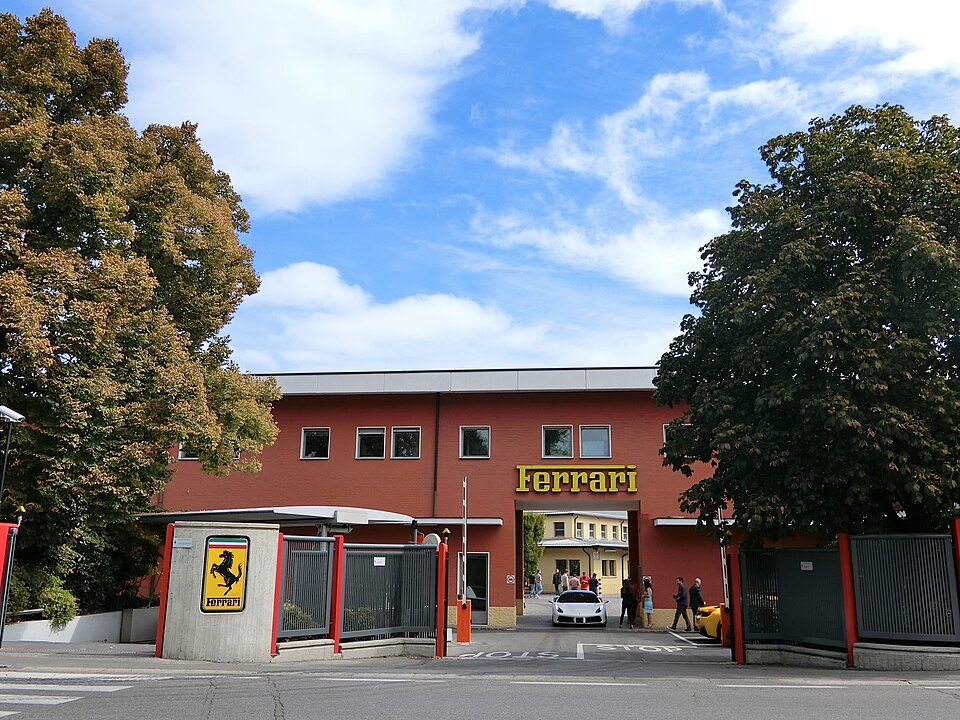
Scuderia Ferrari
Explore →
McLaren
Explore →
Mercedes
Explore →
Williams
Explore →
Red Bull Racing
Explore →
Team Lotus
Explore →
Brabham
Explore →
Renault
Explore →
Benetton
Explore →
Cooper
Explore →
Tyrrell
Explore →
Alfa Romeo
Explore →