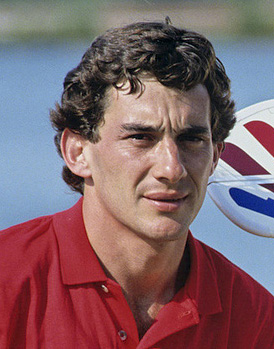
Ayrton Senna
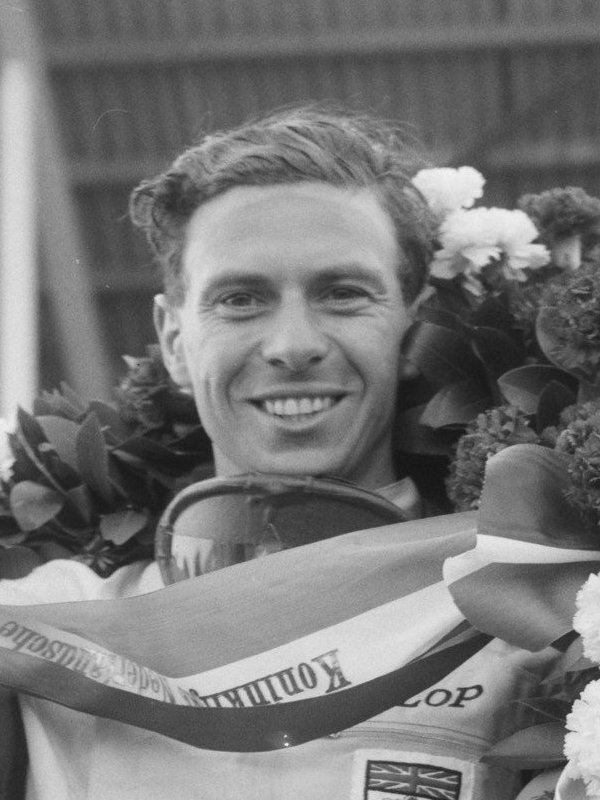
Jim Clark
Stat by stat
Bars are scaled to the leader in this list.
The verdict
Ayrton Senna leads 3 of 4 categories. Our all-time ranking places Ayrton Senna at #4 and Jim Clark at #7.
Head-to-head FAQ
Who leads more shared metrics?
How do the published ranks compare?
Are these live stats?
The case for Ayrton Senna
The greatest qualifier the sport has seen: 65 pole positions in 161 starts, a 40 percent pole rate achieved against Prost, Mansell and Piquet in their primes. Senna's three titles — 1988, 1990, 1991 — and 41 wins undersell a talent defined by singular performances: the 1988 Monaco qualifying lap 1.4 seconds faster than Prost in an identical McLaren; six Monaco wins, still the record; Donington 1993, passing four cars on the opening lap in the wet in an inferior Williams-beating McLaren; Estoril 1985, winning by over a minute in the rain in an uncompetitive Lotus. His rivalry with Prost — title-deciding collisions at Suzuka in 1989 and 1990 — remains the sport's defining feud, and his ruthlessness at Suzuka 1990 is the asterisk on his record. Killed at Imola on 1 May 1994 at 34, leading the race, he remains the sport's great unfinished argument: on peak, perhaps the fastest ever.
The case for Jim Clark
Clark's rate stats are second only to Fangio's among champions: 25 wins and 33 poles from just 72 starts — winning more than a third of every Grand Prix he entered — with two titles, 1963 and 1965, both sealed with crushing superiority. He still holds the record for grand chelems (pole, win, fastest lap, every lap led) with eight. His versatility has no modern equivalent: in 1965 he won the Formula 1 world championship and the Indianapolis 500 in the same summer, and he won in touring cars, sports cars and Formula 2 almost casually. Contemporaries considered the gap behind him unbridgeable — when conditions were equal, Clark simply drove away, as at Spa 1963, won by nearly five minutes in the rain. He died at Hockenheim in April 1968 in a minor Formula 2 race, aged 32, almost certainly with multiple championships left in him. On pure driving, many period observers rated him the best ever.