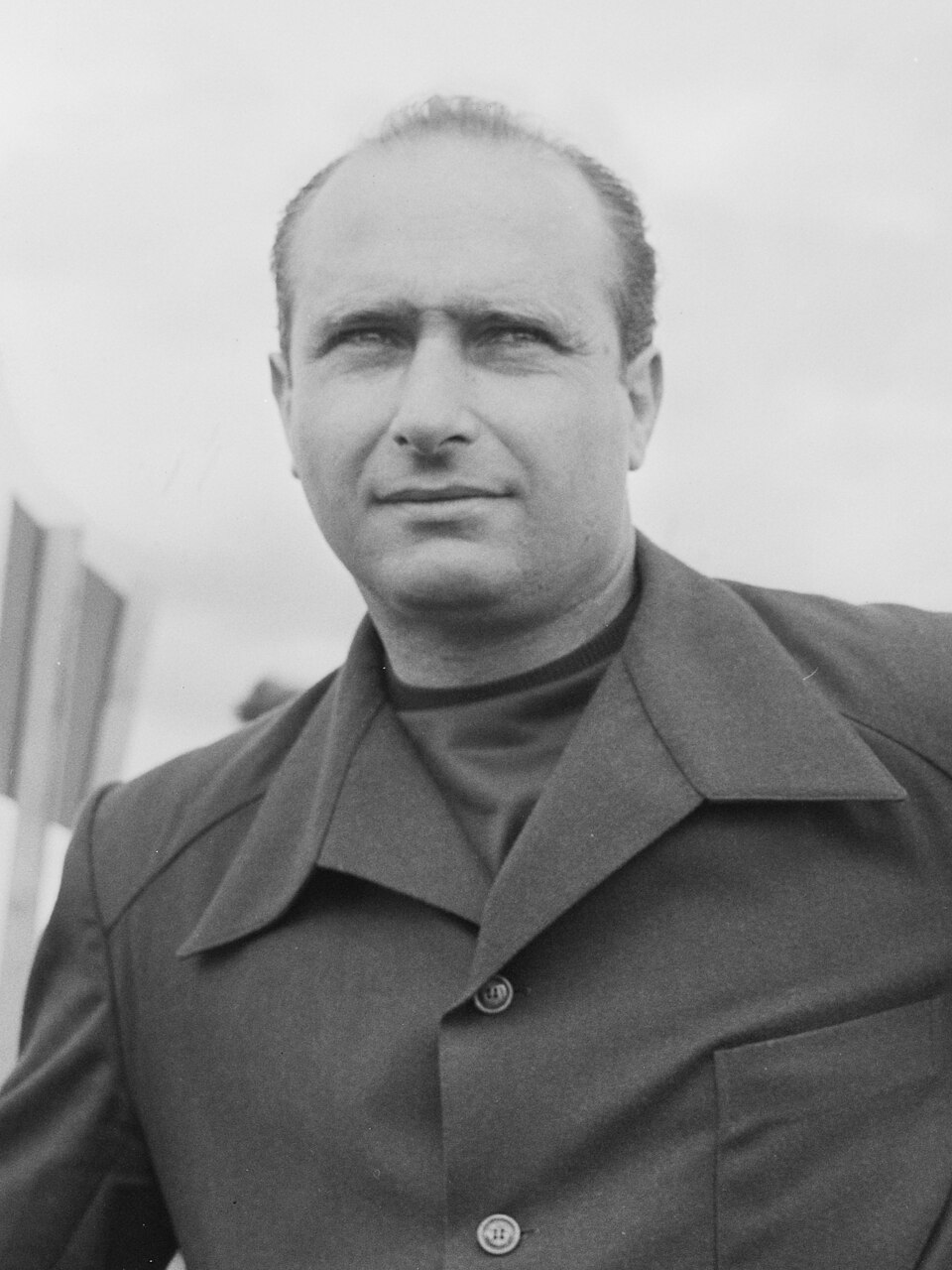
Juan Manuel Fangio
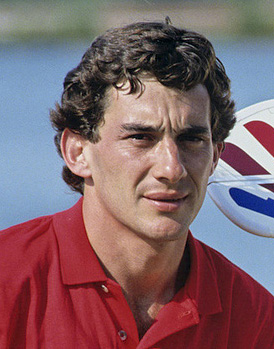
Ayrton Senna
Stat by stat
Bars are scaled to the leader in this list.
The verdict
Dead even across the measured categories. Our all-time ranking places Juan Manuel Fangio at #3 and Ayrton Senna at #4.
Head-to-head FAQ
Who leads more shared metrics?
How do the published ranks compare?
Are these live stats?
The case for Juan Manuel Fangio
Fangio's numbers look small until you convert them to rates, at which point they become absurd: 24 wins from 52 championship entries, a strike rate around 46 percent that no driver since has approached, plus 29 poles and five titles in the championship's first nine seasons. He won those five championships with four different constructors — Alfa Romeo, Mercedes, Ferrari, Maserati — proving the results travelled with the man, and he did it in an era when cars killed their drivers routinely and Fangio himself broke his neck at Monza in 1952. His masterpiece is the 1957 German Grand Prix: 46 years old, hunting down the Ferraris of Hawthorn and Collins after a disastrous pit stop, breaking the Nurburgring lap record repeatedly, winning by three seconds. He retired at 47, still the best driver alive. Adjusted for era and risk, a legitimate case exists that he is number one; he sits third only because the fields he beat were shallower.
The case for Ayrton Senna
The greatest qualifier the sport has seen: 65 pole positions in 161 starts, a 40 percent pole rate achieved against Prost, Mansell and Piquet in their primes. Senna's three titles — 1988, 1990, 1991 — and 41 wins undersell a talent defined by singular performances: the 1988 Monaco qualifying lap 1.4 seconds faster than Prost in an identical McLaren; six Monaco wins, still the record; Donington 1993, passing four cars on the opening lap in the wet in an inferior Williams-beating McLaren; Estoril 1985, winning by over a minute in the rain in an uncompetitive Lotus. His rivalry with Prost — title-deciding collisions at Suzuka in 1989 and 1990 — remains the sport's defining feud, and his ruthlessness at Suzuka 1990 is the asterisk on his record. Killed at Imola on 1 May 1994 at 34, leading the race, he remains the sport's great unfinished argument: on peak, perhaps the fastest ever.