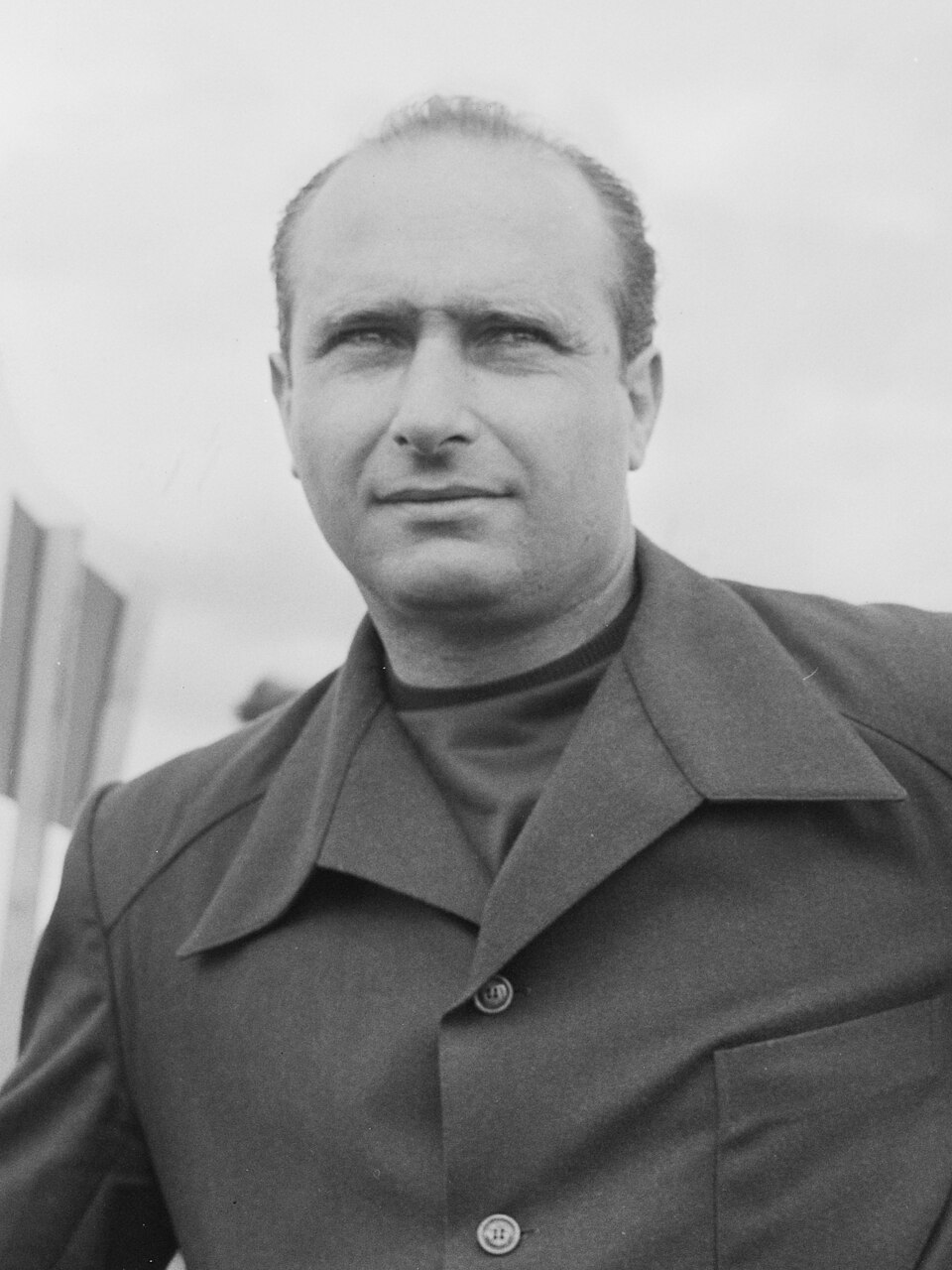
Juan Manuel Fangio
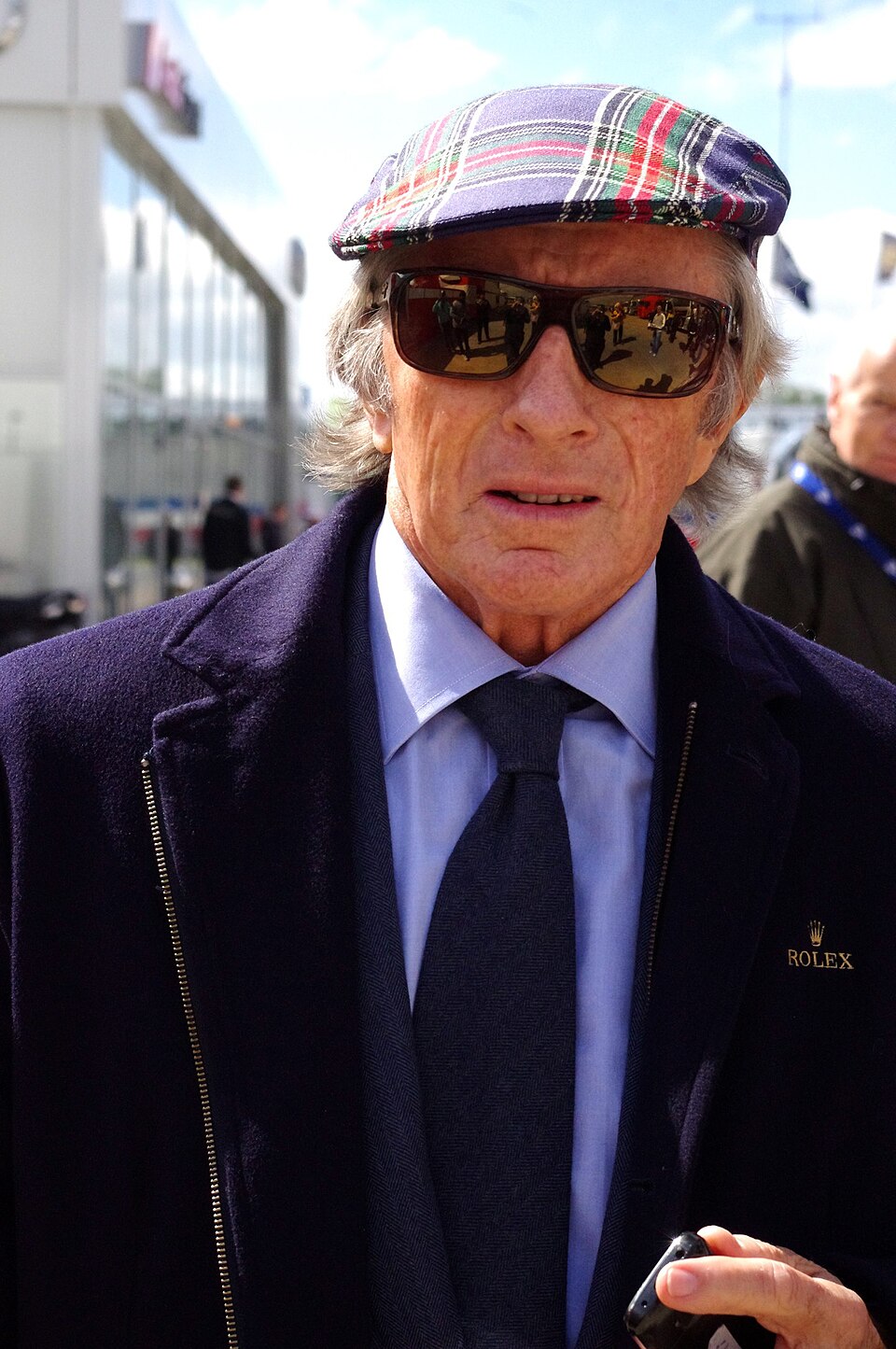
Jackie Stewart
Stat by stat
Bars are scaled to the leader in this list.
The verdict
Juan Manuel Fangio leads 3 of 4 categories. Our all-time ranking places Juan Manuel Fangio at #3 and Jackie Stewart at #8.
Head-to-head FAQ
Who leads more shared metrics?
How do the published ranks compare?
Are these live stats?
The case for Juan Manuel Fangio
Fangio's numbers look small until you convert them to rates, at which point they become absurd: 24 wins from 52 championship entries, a strike rate around 46 percent that no driver since has approached, plus 29 poles and five titles in the championship's first nine seasons. He won those five championships with four different constructors — Alfa Romeo, Mercedes, Ferrari, Maserati — proving the results travelled with the man, and he did it in an era when cars killed their drivers routinely and Fangio himself broke his neck at Monza in 1952. His masterpiece is the 1957 German Grand Prix: 46 years old, hunting down the Ferraris of Hawthorn and Collins after a disastrous pit stop, breaking the Nurburgring lap record repeatedly, winning by three seconds. He retired at 47, still the best driver alive. Adjusted for era and risk, a legitimate case exists that he is number one; he sits third only because the fields he beat were shallower.
The case for Jackie Stewart
Three titles — 1969, 1971, 1973 — and 27 wins from only 99 starts, a 27 percent win rate compiled in the deadliest years the sport has known. Stewart's defining drive is the 1968 German Grand Prix at the Nurburgring: in fog and rain, with a broken wrist in a cast, he won by more than four minutes. What elevates him beyond the numbers is that he transformed the sport twice over — as its best driver and as its conscience. After being trapped in his crashed BRM at Spa in 1966, soaked in fuel, he waged a relentless and deeply unpopular safety campaign: circuit barriers, seat belts, full-face helmets, medical facilities, boycotts of lethal tracks. Much of the safety architecture that later saved lives traces to him. He retired at the end of 1973, at his peak, after his teammate Francois Cevert was killed in qualifying at Watkins Glen — walking away as reigning champion.