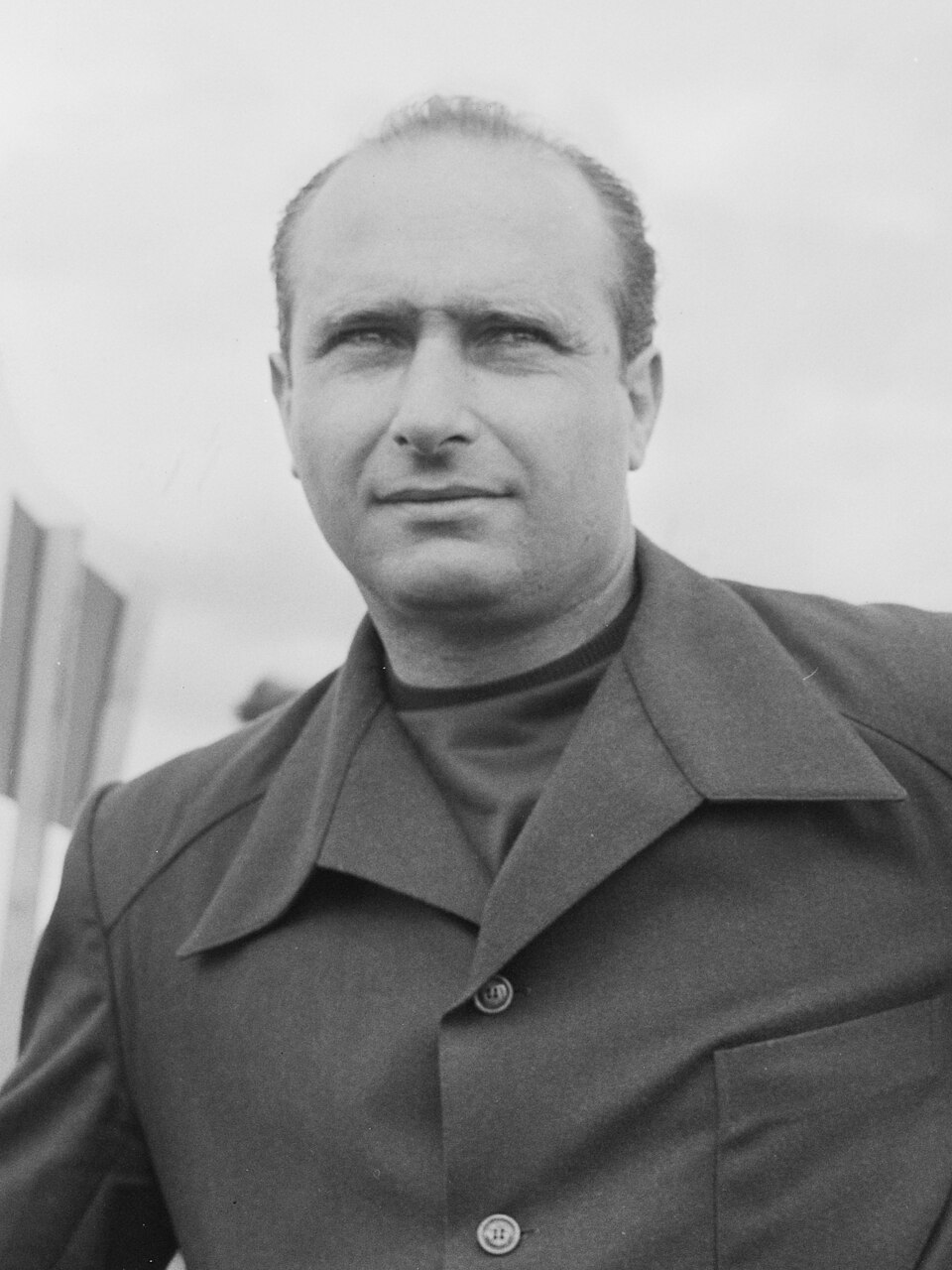
Juan Manuel Fangio
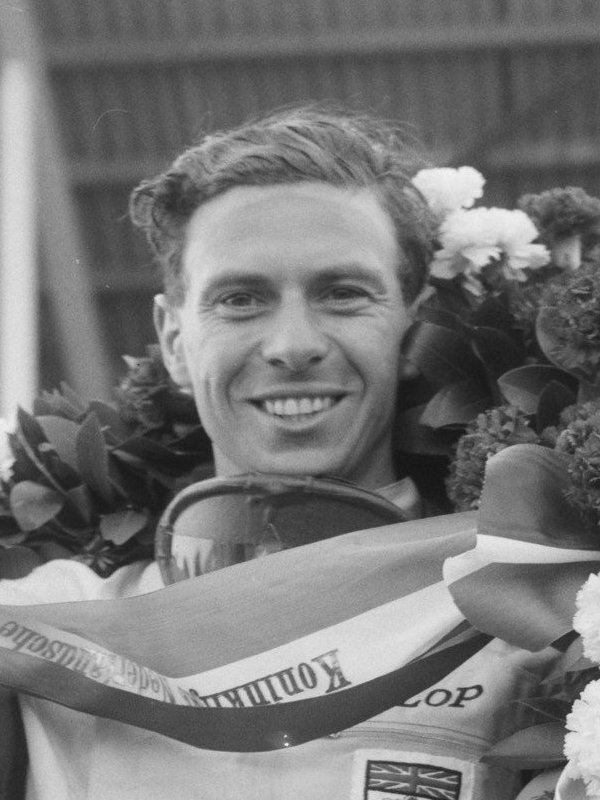
Jim Clark
Stat by stat
Bars are scaled to the leader in this list.
The verdict
Dead even across the measured categories. Our all-time ranking places Juan Manuel Fangio at #3 and Jim Clark at #7.
Head-to-head FAQ
Who leads more shared metrics?
How do the published ranks compare?
Are these live stats?
The case for Juan Manuel Fangio
Fangio's numbers look small until you convert them to rates, at which point they become absurd: 24 wins from 52 championship entries, a strike rate around 46 percent that no driver since has approached, plus 29 poles and five titles in the championship's first nine seasons. He won those five championships with four different constructors — Alfa Romeo, Mercedes, Ferrari, Maserati — proving the results travelled with the man, and he did it in an era when cars killed their drivers routinely and Fangio himself broke his neck at Monza in 1952. His masterpiece is the 1957 German Grand Prix: 46 years old, hunting down the Ferraris of Hawthorn and Collins after a disastrous pit stop, breaking the Nurburgring lap record repeatedly, winning by three seconds. He retired at 47, still the best driver alive. Adjusted for era and risk, a legitimate case exists that he is number one; he sits third only because the fields he beat were shallower.
The case for Jim Clark
Clark's rate stats are second only to Fangio's among champions: 25 wins and 33 poles from just 72 starts — winning more than a third of every Grand Prix he entered — with two titles, 1963 and 1965, both sealed with crushing superiority. He still holds the record for grand chelems (pole, win, fastest lap, every lap led) with eight. His versatility has no modern equivalent: in 1965 he won the Formula 1 world championship and the Indianapolis 500 in the same summer, and he won in touring cars, sports cars and Formula 2 almost casually. Contemporaries considered the gap behind him unbridgeable — when conditions were equal, Clark simply drove away, as at Spa 1963, won by nearly five minutes in the rain. He died at Hockenheim in April 1968 in a minor Formula 2 race, aged 32, almost certainly with multiple championships left in him. On pure driving, many period observers rated him the best ever.