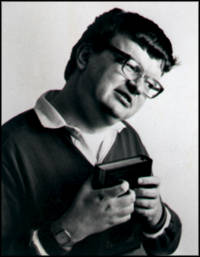
Savant syndrome is a clinical pattern: extraordinary skill in a narrow island — calendar, music, drawing, calculation, memory — beside significant disability in other areas.
Darold Treffert spent decades insisting on respectful description. Kim Peek, Leslie Lemke, Stephen Wiltshire, Derek Paravicini and historical cases like Gottfried Mind are documented lives, not acts. The skill is typically not a school “gifted” profile and does not transfer widely — hence the low transfer and trainability scores.
This page will not treat people as entertainment. It is educational, not diagnosis, and not a talent-show brief.
How this talent is seen here
English-speaking systems · US, UK, Canada, Australia and related school markets
Savants shows up here through tests, conservatories, academies and workplace stories — windows that already mix training with starting points.
What follows is a map of institutions, not a diagnosis. Selection usually measures current performance.
Country/language notes that must not stay English under a local URL.
Local lens
schools, clubs and labs.
selection systems without group rankings.
Field note
coaches, teachers and clinics.
conservatories, gyms and classrooms.
Caveat
Prefer dated bands over current live figures.
Scores here are browsing aids.
92innateWeightEditorial 0-100 browsing score
25trainabilityEditorial 0-100 browsing score
80earlyWindowEditorial 0-100 browsing score
65evidenceEditorial 0-100 browsing score
Savants: concrete atlas depth on Tool-Lifes.
Frequently asked questions
Does this atlas rank groups by IQ, race or nation?
No. Pathways and evidence stay individual. Scores are browsing aids — never group biological or racial ranks.
Is every autistic person a savant?
No. Most are not. Most savants in the modern clinic have autism or other developmental/brain difference — the overlap is not identity.
Can savant skills be trained like Ericsson hours?
The island is usually not a conservatoire story. Trainability is low; support and harm-reduction are the educational tasks. Some skills refine with opportunity; they do not become general talent.
Is this giftedness?
No. Gagné/Renzulli school giftedness is a different file. Jaggedness can appear in both; the clinical island-plus-disability pattern is specific.
What about Rain Man?
A film that mixed Peek-like memory with fiction. Use it as a media-warning, not a case file.
Did Gardner use savants to prove MI?
Yes, as existence proofs of unevenness. That does not validate eight school IQs (Waterhouse).
Group stories?
No. This is not a ranking of disabled people or of peoples.