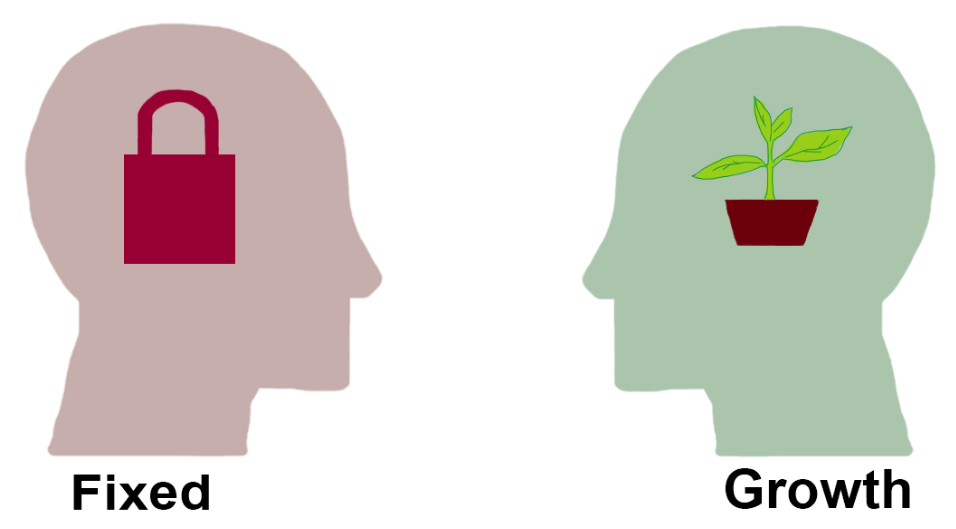
Growth mindset is Carol Dweck’s name for the belief that abilities can be developed. The contrasting “fixed” mindset treats ability as a static trait.
Laboratory praise studies in the 1990s (Mueller and Dweck) and later school interventions (Blackwell, Trzesniewski and Dweck, 2007) made the idea a global education export. The 2006 book Mindset did the rest.
Victoria Sisk and colleagues’ 2018 meta-analyses found only modest average associations and intervention effects, larger in some high-risk groups. Li and Bates reported failures to replicate key praise findings. The construct remains useful as a caution against ability-as-destiny talk — and weak as a miracle programme.
How this talent is seen here
English-speaking systems · US, UK, Canada, Australia and related school markets
Growth mindset shows up here through tests, conservatories, academies and workplace stories — windows that already mix training with starting points.
What follows is a map of institutions, not a diagnosis. Selection usually measures current performance.
Musical talentSame atlas neighbourhood as Growth mindset (science).
Key terms
Corridor
Route, season or institution that sets access.
Envelope
Safe operating band — speed, depth, load or dose.
Certification
Agency or type-approval gate before public use.
Transfer
Skill carry-over across domains; usually limited.
Era bound
Figures valid only inside a dated window.
Local lens
Country/language notes that must not stay English under a local URL.
Local lens
schools, clubs and labs.
selection systems without group rankings.
Field note
coaches, teachers and clinics.
conservatories, gyms and classrooms.
Caveat
Prefer dated bands over current live figures.
Scores here are browsing aids.
22innateWeightEditorial 0-100 browsing score
85trainabilityEditorial 0-100 browsing score
45earlyWindowEditorial 0-100 browsing score
55evidenceEditorial 0-100 browsing score
Growth mindset: concrete atlas depth on Tool-Lifes.
Frequently asked questions
Does this atlas rank groups by IQ, race or nation?
No. Pathways and evidence stay individual. Scores are browsing aids — never group biological or racial ranks.
What did Mueller and Dweck 1998 show?
Children praised for intelligence later avoided challenges more than children praised for effort, in their experiments. Later replications have been mixed.
What did Sisk et al. 2018 find?
Two meta-analyses: mindset–achievement correlations were small on average; interventions had small average effects, with some larger effects for students at higher risk.
What did Li and Bates report?
Failures to replicate core praise effects in their samples. The debate is about robustness and moderators, not about whether beliefs can ever matter.
Did Binet already think intelligence was educable?
Yes. Binet’s original project was instructional. Dweck often cites that history against later “fixed IQ” folklore.
Is growth mindset the opposite of giftedness?
No. Gagné’s talents develop. A gifted label plus incremental theory is a common, coherent pairing. Entity giftedness (“I am a genius, so I must not struggle”) is the failure mode.
Should schools buy a mindset curriculum?
They should stop praising kids as permanently smart and then abandoning them. Whether a branded programme beats that basic hygiene is an empirical, local question.
Does this page treat mindset as settled science?
No. Evidence is rated mid because of mixed replications. The editorial line is: beliefs about difficulty matter sometimes; posters are not a substitute for teaching.