At a glance
Mongol conquests · paras 1The Khwarezm war (from 1219) after the Otrar incident produced the most…
Mongol conquests · paras 1Ain Jalut (1260) stopped the Syrian advance. Japan survived two invasion…
Mongol conquests · paras 1The Golden Horde, Ilkhanate, Chagatai Khanate and Yuan were successor…
Mongol conquests · whyMuch later; both decided who ruled China -- the Yuan was a conquest dynasty,…
Ain Jalut (1260) stopped the Syrian advance. Japan survived two invasion attempts (1274, 1281) that Korean and Chinese shipyards were forced to support -- a Goryeo trauma as much as a Japanese typhoon legend.
Mongol conquests · paras 1
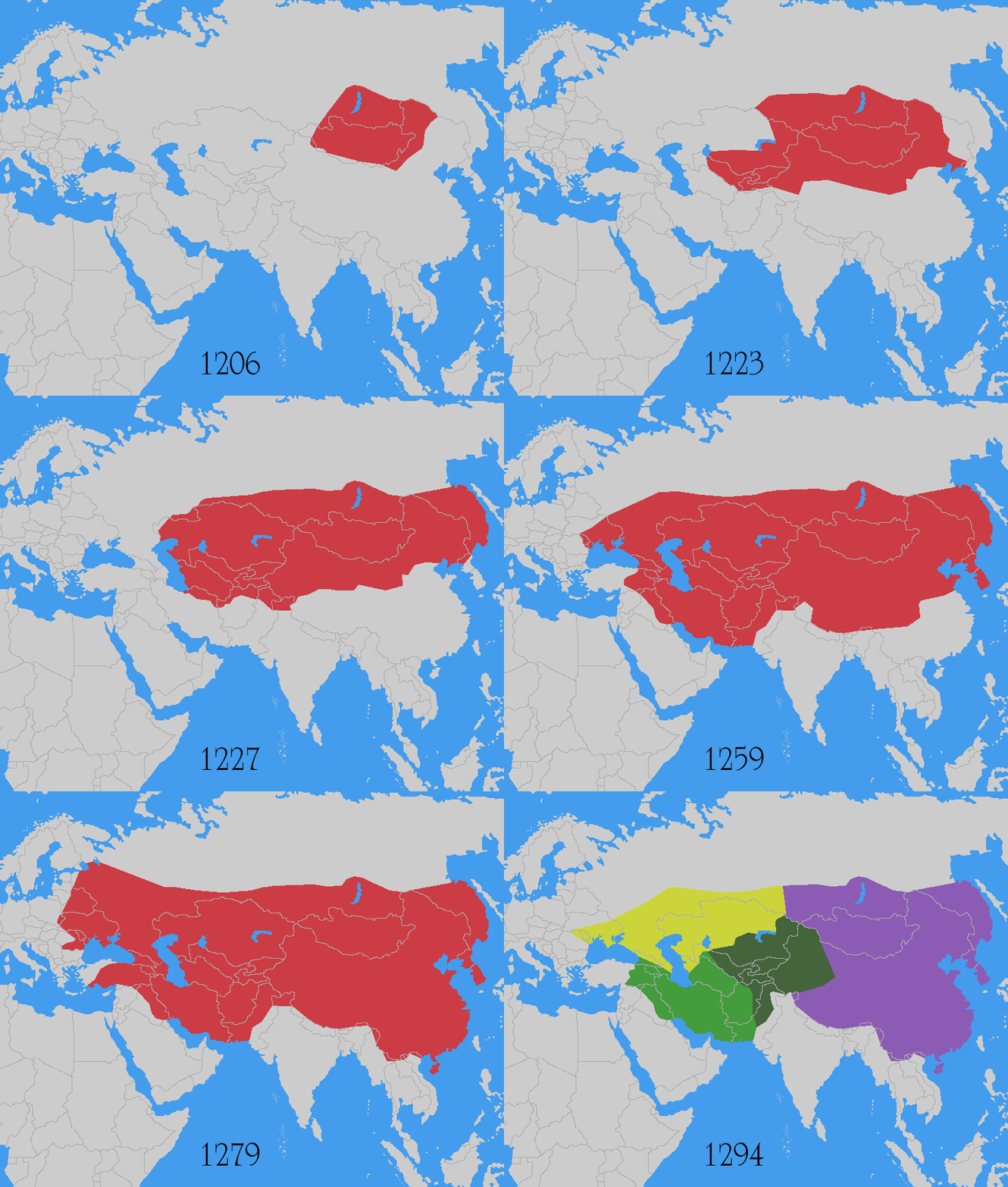
The Khwarezm war (from 1219) after the Otrar incident produced the most famous massacre chronicles. Batu and Subutai's 1237-42 western campaign broke Volga Bulgaria and many Rus' cities and defeated European knights at Legnica and Mohi -- then withdrew when Ogedei died.
Mongol conquests · paras 1
Ain Jalut (1260) stopped the Syrian advance. Japan survived two invasion attempts (1274, 1281) that Korean and Chinese shipyards were forced to support -- a Goryeo trauma as much as a Japanese typhoon legend.
Mongol conquests · paras 1
The Golden Horde, Ilkhanate, Chagatai Khanate and Yuan were successor politics, not one forever-army. Plague in the fourteenth century later moved along some of the same routes -- a debated link, not a slogan. The Mongol wars were a technology of mobility and terror that became, in the successor khanates, a system of tax, post and pluralism -- at a demographic price still counted in ranges.
Mongol conquests · why
Much later; both decided who ruled China -- the Yuan was a conquest dynasty, 1949 a revolutionary one. Paired as China-rule turning points in this atlas. Another long imperial force structure; the Mongol case is mobility and a short political peak, Rome a centuries-long institution -- a contrast.
This explains a campaign, battle, or weapon in context. It is not a league of nations. It does not replace the full topic page.
Questions
- What is the next question after this?
- The Golden Horde, Ilkhanate, Chagatai Khanate and Yuan were successor politics, not one forever-army. Plague in the fourteenth century later moved along some of the same routes -- a debated link, not a slogan. The Mongol wars were a technology of mobility and terror that became, in the successor khanates, a system of tax, post and pluralism -- at a demographic price still counted in ranges.
- Does this page rank people or nations?
- This explains a campaign, battle, or weapon in context. It is not a league of nations. It does not replace the full topic page.
- Where is the longer entry?
- Much later; both decided who ruled China -- the Yuan was a conquest dynasty, 1949 a revolutionary one. Paired as China-rule turning points in this atlas. Another long imperial force structure; the Mongol case is mobility and a short political peak, Rome a centuries-long institution -- a contrast.
Next question: Napoleonic Wars · Open the topic: Mongol conquests
Why is "a single assassination headline" the wrong stop when reading the August mobilization in 1914? · Why is "a paper count of tanks" the wrong stop when reading the campaign in France in 1940? · Why is "the landing nickname alone" the wrong stop when reading the Inchon landing in 1950? · Why is "a body-count column" the wrong stop when reading the Tet offensive in 1968? · Why is "the battle nickname alone" the wrong stop when reading Austerlitz in 1805? · Why is "one casualty total" the wrong stop when reading Gettysburg in 1863? · 50 campaign reading notes