
Antiquity–1800
Bloom and crucible
Wrought iron and small crucible heats; charcoal, skill and pattern welding defined quality.
Steel · The iron–carbon workhorse of buildings, ships, rails and tools — endlessly recast.
Milestones in order. This is history, not a weekly activity grid.
Darker cells mean a higher score for this topic on that metric.
LessMore
Last reviewed Sources & creditsMedia creditsMethodology
As a metal it is Euroclass A1, but it loses yield in fire and usually needs protection for a rated duration.
Steel is iron with controlled carbon (typically <2%) and alloys; cast iron has more carbon and a different solidification path.
No. Thermal conductivity is tens of W/m·K. Insulation is a separate layer (mineral wool, boards, VIP).
Iron oxidises in the presence of water and oxygen. Alloys, zinc, paint or concrete cover slow that.
No. Chlorides, crevices and wrong grades pit. 304 vs 316 is a chemistry choice, not a slogan.
Magnetically, yes as a family. Copper contamination and coatings constrain some high-spec loops.
heat 72 · fire 84
Steel did not arrive as a finished commodity. bloomery c. 1800 BCE / Bessemer 1856 around Anatolia → Sheffield still explains who makes it and which tests it sits in.
Ten dated points, five eras and three milestones below are the spine — not a complete industrial history.
Solid-state reduction of ore in charcoal furnaces produced wrought iron blooms in Anatolia and the Levant.
South Indian crucible steels, later traded as Damascus blades, showed high-carbon patterned microstructures.
Chinese bloomery and fining routes scaled agricultural tools and weapons in the Han period.
Benjamin Huntsman in Sheffield remelted blister steel in clay crucibles for clock springs and cutlery.
Henry Bessemer’s air-blown converter dropped the cost of bulk steel and opened rails and ship plate.
Siemens–Martin hearths allowed scrap + pig iron charges and tighter chemistry control.
The Linz–Donawitz oxygen converter cut cycle time versus open hearth and became the global default.
Slabs and billets froze in motion, cutting energy and yield loss versus ingot teeming.
Dual-phase and TRIP steels let car bodies thin while crash energy absorption rose.
Direct-reduced iron with hydrogen aims to cut blast-furnace CO₂; first commercial lines are still regional.
Wrought iron and small crucible heats; charcoal, skill and pattern welding defined quality.
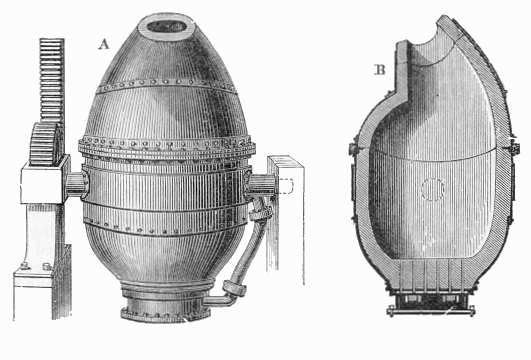
Bessemer and open-hearth steel made rails, bridges and hulls a bulk commodity.
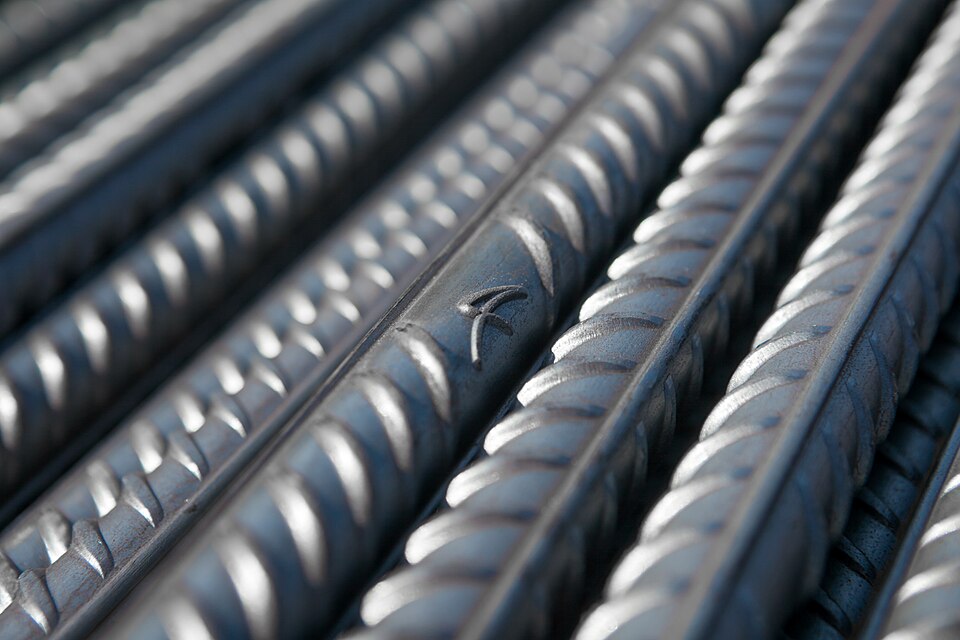
Nickel, chromium and molybdenum grades served armour, aircraft and machine tools.
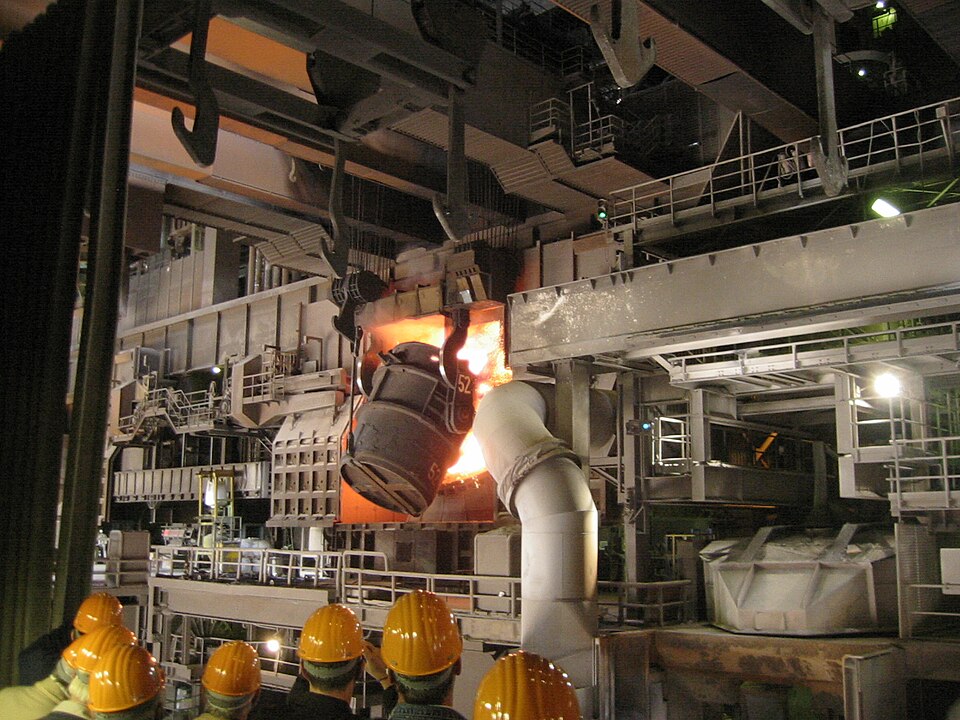
Oxygen steelmaking plus electric-arc scrap mills split primary and recycling routes.
Advanced high-strength auto steels and hydrogen-DRI pilots rewrite both cars and climate math.
Air blow through molten pig iron made cheap bulk steel possible.
Oxygen converters became the dominant primary route worldwide.
Multi-phase microstructures let crash structures lose mass without losing energy absorption.
Knowing this timeline is how to read a mill certificate without treating Steel as timeless.
Light structural metal from Hall–Héroult cells — aircraft skins, cans and façades.
Overall 59 ✈️High specific strength and chloride-tolerant films — airframes, implants and seawater.
Overall 58 🔶The first industrial conductor — wiring, heat exchangers, roofs that go green.
Overall 57 🍴Chromium passive films that keep kitchens, chemical plant and façades from rusting like carbon steel.
Overall 64