Site specificity
A moist toe-web is not a dry forearm.
Skin microbiome — A site-specific living film — oily, moist and dry neighbourhoods, not a sterile wrapper.
Darker cells mean a higher score for this topic on that metric.
LessMore
Last reviewed Sources & creditsMedia creditsMethodology
Read Identity → How they live → Body & health, then use compare rails.
Public-health education — not a care plan, prescription, or outbreak briefing.
It names everyday desks for Beneficial allies before English norms look universal.
No — editorial 0–100 browsing aids inside this atlas only.
Use related cards and best-of / quiz rails after the first three chapters.
How they live and Body & health carry mechanisms; skim Identity first.
Grice and colleagues (2009) sequenced twenty skin sites and found oily, moist and dry habitats more than a single skin germ.
Cutibacterium likes sebum, Staphylococcus epidermidis is a common colonist, Malassezia yeasts live on lipids.
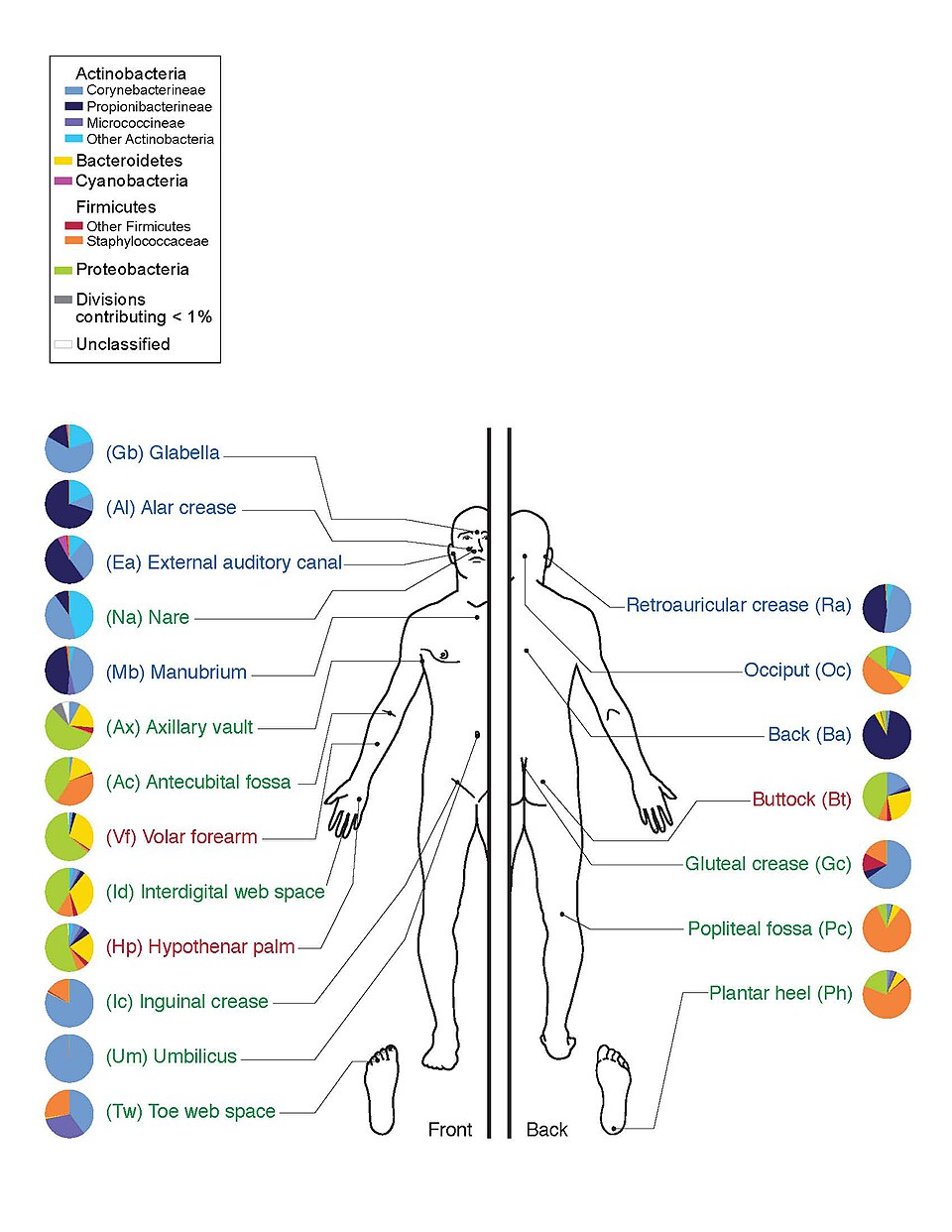
A moist toe-web is not a dry forearm.
Sweat, sebum and residents help keep pH low.
Filled niches make it harder for some pathogens to attach.
Malassezia is ordinary on sebum-rich skin. Bloom, not presence, is the usual complaint.
Skin communities share little with stool.
Soap removes oil and transient dirt. Communities rebound.
Once you see skin as occupied, kill-99.9 ads look less like health and more like weather control.
A diverse intestinal community fed by fibre — not a single ideal species list and not a wellness shop.
Familiarity 88Live microbes in food or capsules — strain-specific guests, not a whole microbiome and not medical advice.
Familiarity 90Microbes turning food into kimchi, doenjang, yoghurt and other living crafts — chemistry plus culture.
Familiarity 85The hidden workforce of land — decomposers, mycorrhizae and a mostly uncultured majority.
Familiarity 48How microbes move nitrogen between air, soil, water and food — plus the industrial shortcut that feeds billions.
Familiarity 40