Blauwal ist eine der 24 Arten in diesem Atlas. Kein Katalog: Evolution, Anatomie, Verhalten, Kultur, Ikonen, Schutz und Areal sind ein System.
Scores vergleichen Tempo, Intelligenz, Areal, Resilienz, kulturellen Einfluss und ökologische Rolle. Redaktionelle Relativwerte, kein Laborranking.
Sieben Kapitel graben nach: Ursprünge, Körper und Sinne, Leben und Verhalten, Kultur, Ikonen, Schutzdruck und das mit Menschen geteilte Areal.
Tiefe Einführung
Tiefgang: Blauwal
Blauwal ist kein Postkarten-Tier. Es ist ein Satz von Populationen, Unterarten und menschlichen Regeln in der Familie Wildtiere dieses Atlas.
Vielfalt, Körper, Kultur und Areale — plus eine Linse für diese Sprachregion.
Vielfalt im Typ
Feldführer falten viele Linien in das Wort Blauwal. Unterarten, Zugwege und Haltungslinien teilen nicht ein Schicksal.
Dieser Atlas wählt einen Wikipedia-Titel als Heldenbild und lässt den Rest der Stufe sichtbar, damit ein erholter Bestand keine vom Aussterben bedrohte Cousine wäscht.
Life in the landscape
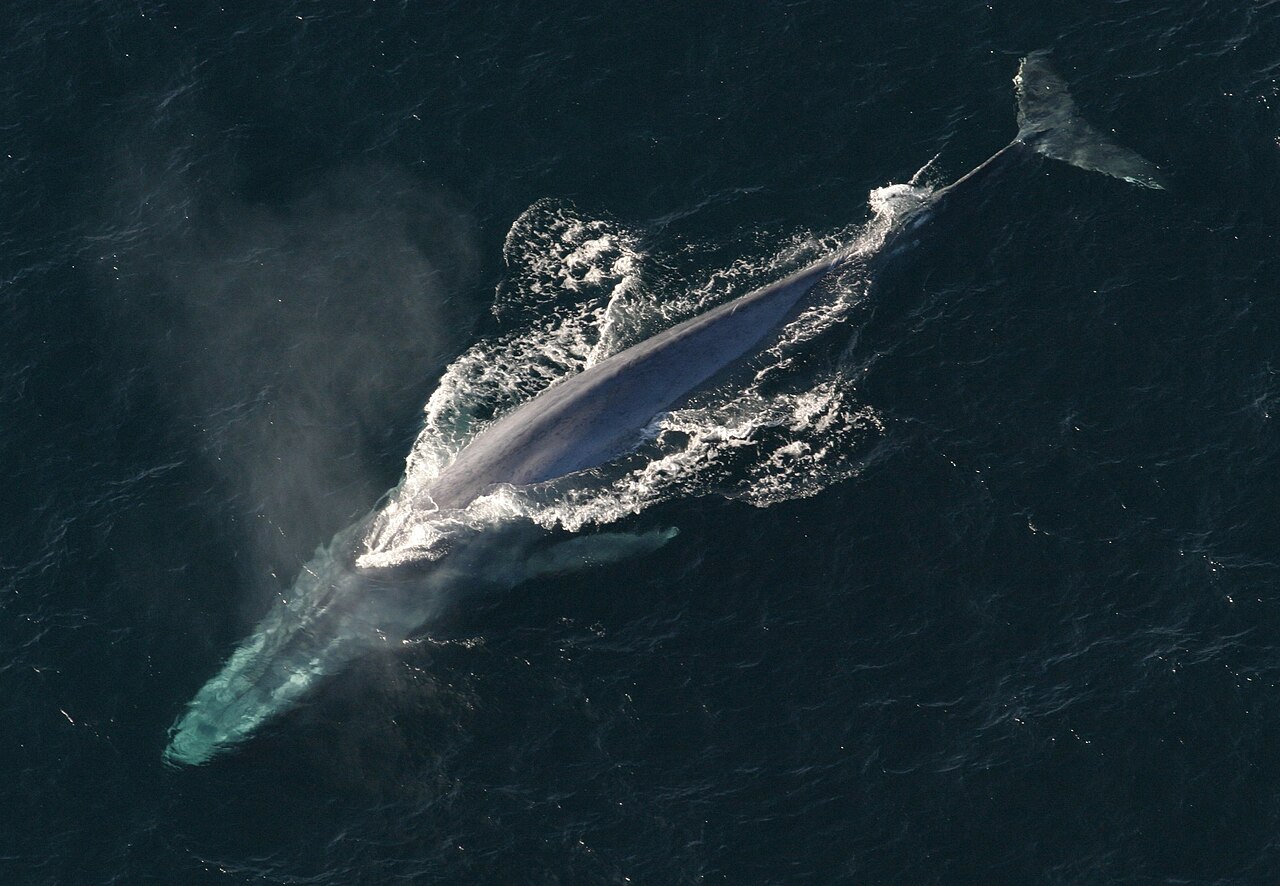
A rorqual with ventral pleats, a 3 m heart in the public myth (the real heart is smaller than the postcard), and baleen for krill. Size is a filter-feeding outcome.
Lunge-feeding on krill swarms -- the most expensive gulp, paid by the densest food. Fasting between polar summer and low-latitude winter.
Kultur und Bedeutung
Film, Recht, Heraldik, Zoos und lokale Geschichte trafen Blauwal. Diese Bilder bewegen Geld; sie sind keine Feldzählung.
Das Kulturkapitel datiert Plakate und Gesetze, damit ein Film von 1975 oder ein Logo von 1961 nicht als Rote Liste der 2020er auftreten.
Conservation and money
Endangered. Some populations (California) are healthier; Antarctic blue whales remain a fraction of pre-whaling biomass.
Tourism, conflict payments, quotas and captive loans are dated economic bands in the market chapter -- not live prices and not a best-species prize.
Lebenswissenschaftlicher Tiefgang
Biologie im Tiefgang: Blauwal
Die Biologie von Blauwal stapelt Struktur, Energie, Sinne und harte Grenzen. Die vier Abschnitte nutzen dieselben Atlas-Überschriften, damit Typen ohne Best-Species-Rahmen vergleichbar bleiben.
Anatomie, Sinne, Verhalten und Grenzen — plus Feldsprach dieser Region.
Structure
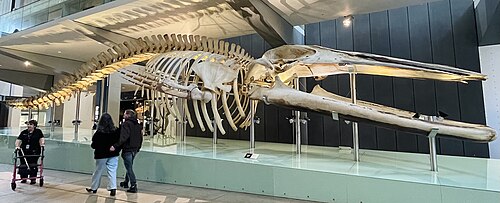
A rorqual with ventral pleats, a 3 m heart in the public myth (the real heart is smaller than the postcard), and baleen for krill. Size is a filter-feeding outcome.
Load paths and tissues (not metals) are expanded in the anatomy chapter.
Energy and foraging
Lunge-feeding on krill swarms -- the most expensive gulp, paid by the densest food. Fasting between polar summer and low-latitude winter.
The how-it-works diagrams reduce that budget to a six-node loop.
Senses and control
Low-frequency sound that crosses basins. Eyes are secondary in that budget.
Control here means the animal steering itself -- not a vehicle ECU.
Limits
A 1966 lock on a emptied south, and ships on the healthier coasts. EN is still the species card.
Resilience scores encode those limits relative to the other 23 types.
Some Northern Hemisphere stocks look better. Antarctic blues remain far below pre-whaling. EN is still the honest card.
What did 1966 change?
The IWC protected blue whales after the factory-ship years had already taken the Antarctic majority. Protection was a lock on an empty room in the south.
Is the 1982 moratorium a blue-whale law?
It is a commercial-whaling pause for many species. Blues were already protected; the moratorium is the political weather that kept factory ships from a sequel.
Why ecological role near the top?
A blue whale eats tonnes of krill and returns nutrients in faecal plumes; a fall feeds the benthos. In this atlas that pump outranks most terrestrial carnivores except elephants and wolves.
Did Roger Payne study blues?
Payne whale-song fame is mostly humpback. Blue-whale acoustics (low-frequency pulses) are a later Navy-and-NOAA file.
What is a pygmy blue whale?
A southern subspecies/form -- smaller, still EN, often confused in catch histories.
Are ship strikes the new harpoon?
In some coastal stocks (Sri Lanka, California) yes -- a recovery problem that 1966 did not imagine.
Why cultural impact below tiger and lion?
Save the Whales was huge; lions and tigers still win flags and millennia of art. Scores are relative across 24, not a concert-poster contest.
Rolle, kein Sieger
Naturschutzlesen. Kein Live-Abruf der IUCN.
Dieses Ranking einbetten
Fügen Sie diesen Code in Ihr Blog oder Ihre Website ein — das Ranking bleibt aktuell.
Kopiert!
Ähnliche Arten
Nächste Nachbarn auf den sechs Achsen — Tempo, Intelligenz, Areal, Resilienz, Kultur und ökologische Rolle.