Tiger is one of 24 types in this animals atlas. The pages treat it as a full system -- history, anatomy, operating principles, culture, icons, future pressure and market shape -- not a ranking of a best species.
Scores compare the tiger with the other 23 types on speed, intelligence, range, resilience, cultural impact and ecological role. They are relative editorial marks. Resilience high means more secure; low means threatened. Endangered. Wild numbers rose in India after Project Tiger (1973) and Tx2 pledges (2010); Southeast Asian and South China lineages did not share that graph.
Seven chapters follow: origins, systems, how the animal works, cultural life, named icons, what conservation can still change, and how tourism, conflict, fisheries and parks move money.
Deep introduction
Deep dive: Tiger
Tiger is not a single postcard animal. It is a set of populations, subspecies and human rules inside the wildlife family of this atlas.
Diversity, bodies, culture and ranges — plus a lens tuned to this language region.
Diversity inside the type
Field guides collapse many lineages into the word tiger. Subspecies, flyways and captive lines do not share one fate.
This atlas picks a Wikipedia title as the hero image and then keeps the rest of the grade in view so a recovered stock cannot launder a Critically Endangered cousin.
Life in the landscape
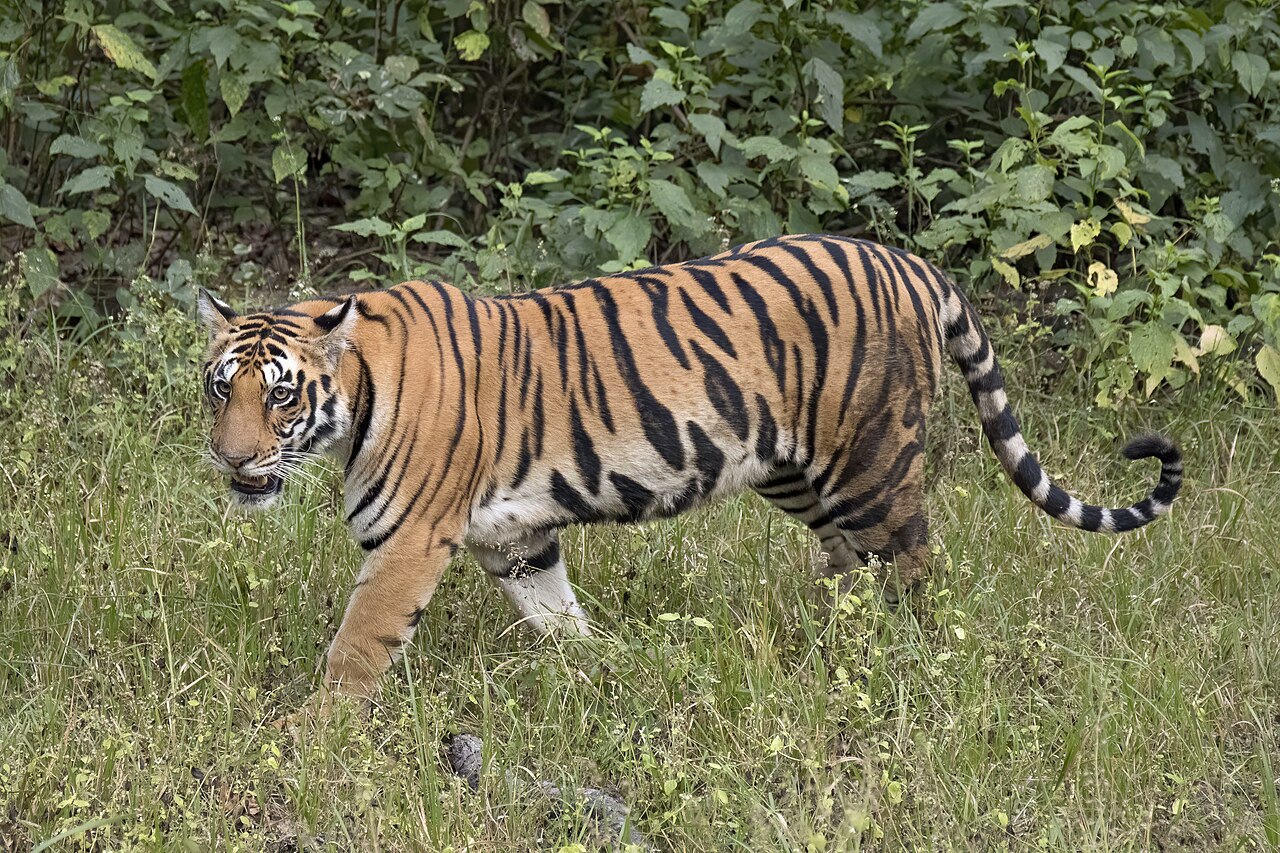
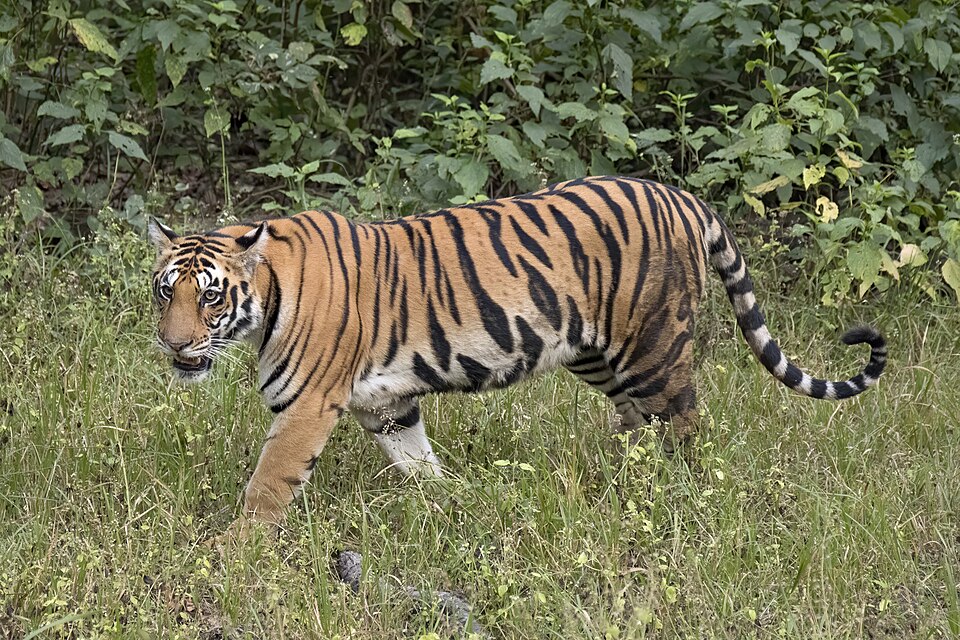
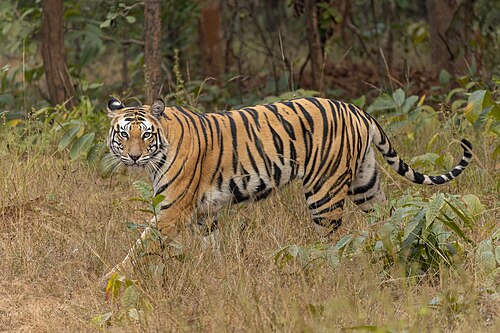
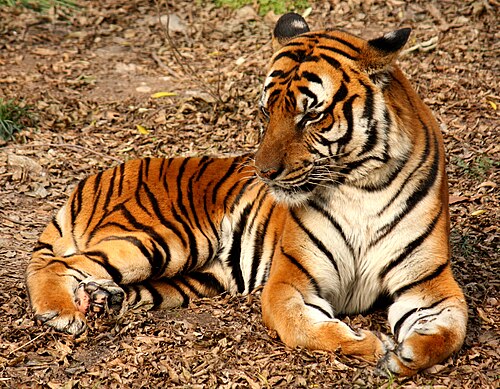
A solitary pantherine with a long body, striped disruptive coat and forelimbs built to wrestle large ungulates. Canines and a killing bite to the neck or throat finish what the ambush starts.
Sit-and-ambush on chital, sambar, wild pig and, in the Amur, deer and boar. A large kill funds days; livestock is the conflict calorie.
Culture and meaning
Culture met the tiger through film, law, heraldry, zoos and local story. Those portrayals move money and sometimes take; they are not a field census.
The culture chapter dates posters and statutes so a 1975 film or a 1961 logo cannot pretend to be a 2020s Red List.
Conservation and money
Endangered. Wild numbers rose in India after Project Tiger (1973) and Tx2 pledges (2010); Southeast Asian and South China lineages did not share that graph.
Tourism, conflict payments, quotas and captive loans are dated economic bands in the market chapter -- not live prices and not a best-species prize.
Life-science deep dive
Biology deep dive: Tiger
Tiger biology is a stack of structure, energy, sensing and hard limits. The four sections below are the same headings used across the atlas so types can be compared without a best-species frame.
Anatomy, senses, behaviour and limits — plus field language for this region.
Structure
A solitary pantherine with a long body, striped disruptive coat and forelimbs built to wrestle large ungulates. Canines and a killing bite to the neck or throat finish what the ambush starts.
Load paths and tissues (not metals) are expanded in the anatomy chapter.
Energy and foraging
Sit-and-ambush on chital, sambar, wild pig and, in the Amur, deer and boar. A large kill funds days; livestock is the conflict calorie.
The how-it-works diagrams reduce that budget to a six-node loop.
Senses and control
Night vision and hearing in closed forest. Stripes break outline more than they advertise.
Control here means the animal steering itself -- not a machine dashboard.
Limits
A few thousand animals, shrinking SE Asian forest, and a prey base that snares erase. High cultural impact does not raise resilience.
Resilience scores encode those limits relative to the other 23 types.
Global estimates in the 2020s sit near 4,000-5,500 depending on the year and method. India holds the majority. The number is a camera-trap product, not a Victorian hunter tale.
Did Project Tiger work?
India wild counts rose from a 1970s crisis to the largest national population. Methods changed (pugmarks to cameras), so the graph is not a single instrument. Southeast Asia did not copy the rebound.
What was Tx2?
A 2010 pledge by tiger-range states in St Petersburg to double wild numbers by 2022. Some countries gained; others lost. The slogan outlived the deadline.
Why not score tigers and lions the same?
Lions are Vulnerable with a wider African footprint and a tiny Gir relic. Tigers are Endangered, more forest-bound, and culturally heavier in South and East Asia. Scores stay relative across all 24 types.
Who was Jim Corbett in this story?
A hunter of man-eaters who wrote Man-Eaters of Kumaon (1944) and later lent his name to India first national park -- a colonial-to-reserve arc.
Are Siberian tigers a separate conservation?
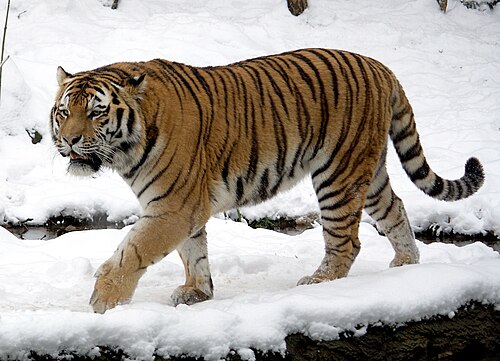
Panthera tigris tigris now lumps many mainland tigers in some taxonomies; Amur animals still have a Russian-Chinese border programme and a different prey winter.
What about South China tigers?
Wild P. t. amoyensis is considered extinct or functionally so. Captive Chinese lines are a genetic and political argument, not a forest population.
Do tigers need inviolate cores?
Project Tiger ideology said yes. Buffer people and corridor science later complicated the fortress model without dropping the core idea.
Pin tiger anatomy against behaviour
How do I read tiger anatomy against behaviour on this page?
Pin one anatomy system already listed, for example Support and integument (striped ambush body and a neck-or-throat killing bite) or Feeding apparatus (sit-and-ambush on chital, sambar, wild pig), against one how-it-works principle such as Energy in, work out or Information before motion. The pair is a reading aid, not a winner board.
Does this atlas rank tigers against lions or other species?
No. Scores are relative editorial marks across 24 types: speed 69, intelligence 76, range 37, resilience 14, cultural impact 94, ecological role 82. They are not a best-species ranking and not a live race.
Is the resilience number a live IUCN feed?
No. Resilience 14/100 is an on-file teaching band: Endangered, with India counts up after Project Tiger (1973) and Tx2 pledges (2010), while Southeast Asian and South China lineages did not share that graph. There is no live Red List poll on this page.
Why pin night vision with the striped coat?
The anatomy chapter says night vision and hearing work in closed forest, and stripes break outline more than they advertise. The matching behaviour principle is Information before motion. Pinning those two together teaches the ambush already on file; it is not a new field measurement.
Can I restore the last anatomy-behaviour pair?
Yes, on this device only. Change one pin to reopen the same pair. Field biology and local law still decide any real encounter. The page does not rank species and does not refresh a live IUCN status.
Read conservation without species ranking
On Tiger, pin Support and integument against Energy in, work out, then read resilience as atlas literacy — not a live IUCN feed.
Pin one anatomy system — Start with Support and integument already in the anatomy chapter.
Pin one behaviour principle — Pair it with Energy in, work out from how-it-works — a reading aid, not a winner board.
Read conservation as literacy — Resilience and any IUCN label on file are published notes, not a live red-list API.
Scores are not a species ranking — The six hub marks compare types in this atlas; they do not crown a best species.
Support and integument + Energy in, work out on Tiger teaches structure before headlines — not who beats the lion.
Editorial atlas marks. Not medical advice or live IUCN data.
Second axis: resilience beside ecological role
On Tiger, read conservation as two published atlas marks — resilience 14 and ecological role 82 — not a winner podium or live IUCN feed.
Read the resilience mark — Resilience on this hub is 14/100 — editorial pressure literacy among 24 types.
Read the ecological-role mark — Ecological role is 82/100 — a different axis from who looks strongest.
Sit them without ranking species — Two axes explain trade-offs; they do not crown a best animal.
Still not a live red list — Any IUCN label on file stays a published note, not an API refresh.
Resilience 14 and ecological role 82 on Tiger are a second conservation reading — no podium.
Editorial atlas marks. Not medical advice or live IUCN data.
Role, not a winner
Conservation literacy. Not a live IUCN fetch.
Embed this ranking
Paste this code into your blog or site — the ranking stays up to date.
Copied!
Similar species
Closest neighbours on the six atlas axes — speed, intelligence, range, resilience, culture and ecological role.