13 min read
Encounter route pick
Pick one encounter or route already written on this topic and reopen it next time.
Classroom literacy — not a lab result, diagnosis or outbreak alert.
Route on this page
Quick facts
An outbreak at a school in Norwalk, Ohio, in 1968 became the namesake after the agent was later visualized.Norwalk 1968
Albert Kapikian and colleagues saw the Norwalk agent by immune electron microscopy in 1972.Kapikian 1972
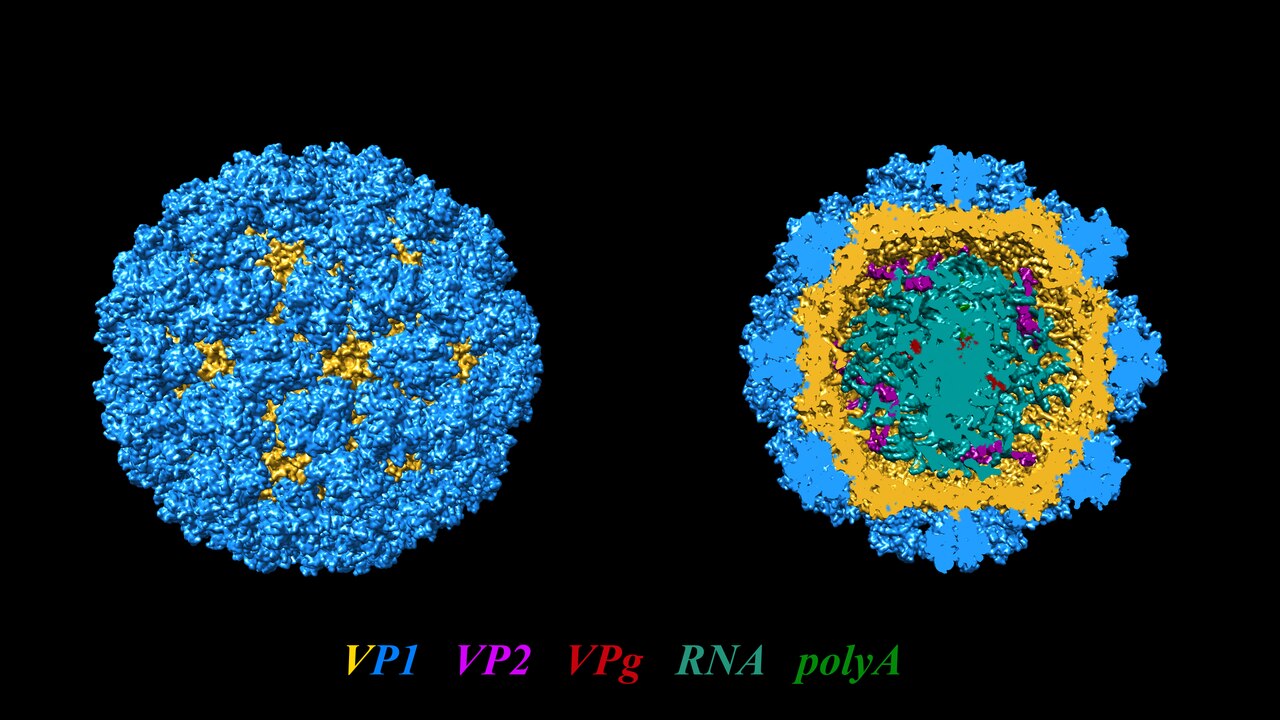
Noroviruses are caliciviruses. Many genotypes exist; GII.4 has often dominated global waves.Caliciviridae
Reviews often cite on the order of 10 to 100 particles — conceptually very low compared with many gut microbes.Tiny infectious dose
Closed populations — ships, camps, hospitals, schools — turn vomit and feces into efficient indoor spread.Cruise and school fame
Alcohol gels are less reliable than soap and water on hands; hypochlorite is the usual talk for hard surfaces after vomit.Soap and bleach surfaces
Norovirus is a tiny, tough calicivirus that needs very few particles to start a vomiting chain in a school or ship.
Soap, stay-home manners and bleach on the right surfaces do more than panic about cruises.
This page is an encounter atlas, not a prescription and not a lab growth guide.
80FamiliarityEditorial 0–100 browsing aid within this atlas.
72Medical weightEditorial 0–100 browsing aid within this atlas.
5BenefitEditorial 0–100 browsing aid within this atlas.
74RiskEditorial 0–100 browsing aid within this atlas.
Norovirus — concrete atlas depth on Tool-Lifes.
Best-of microbe rankings
Norovirus — concrete atlas depth on Tool-Lifes.
Local lensThe vomiting virus
English cruise-ship news made norovirus famous. Family English still says stomach flu — often this virus, not influenza.
Stomach flu
A misleading English nickname. Influenza is a different family.
Cruise news
Outbreaks are famous because they are dense. The virus is common on land too.
Public-health desks
Public English winter stories. Care is for clinicians and local health departments.
Read the local lens — English-speaking public health
The profile
- Familiarity80
- Medical weight72
- Benefit5
- Risk74
- Research60
- Live debate25
Risk
A very-low-dose gut virus of schools and ships — soap and bleach surfaces, not alcohol-gel faith.
Seven ways into this topic
01
Identity
A low-dose winter gut virus of closed rooms.
Read
02
How they live
Ingest, gut, vomit, contaminate, repeat.
Read
03
Body & health
Schools, ships, hospitals, oyster beds.
Read
04
History
1968 outbreak, 1972 pictures, 1990s genes, cruise rules.
Read
05
Everyday life
Soap, stay home, bleach the right mess.
Read
06
Frontiers
Vaccines, better surface rules, genotype forecasts.
Read
07
Myths
Not a cruise-only bug; gels are not enough.
Read
Related on the scale
Slide across the log scale — teaching sizes, not lab measurements.
See size scale →
Frequently asked questions
Where should I start with Norovirus?
Read Identity → How they live → Body & health, then use compare rails.
Is this page advice for Norovirus?
Public-health education — not a care plan, prescription, or outbreak briefing.
What does the local lens add?
It names everyday desks for Encounters before English norms look universal.
Are the scores a ranking of Norovirus?
No — editorial 0–100 browsing aids inside this atlas only.
How do I compare Norovirus to neighbours?
Use related cards and best-of / quiz rails after the first three chapters.
Which chapter is densest?
How they live and Body & health carry mechanisms; skim Identity first.
Can I cite these scores externally?
Treat them as atlas orientation, not certificates or forecasts.
What should I check before acting?
Primary desks for Encounters: public-health desks and lab teaching frames.