Side by side
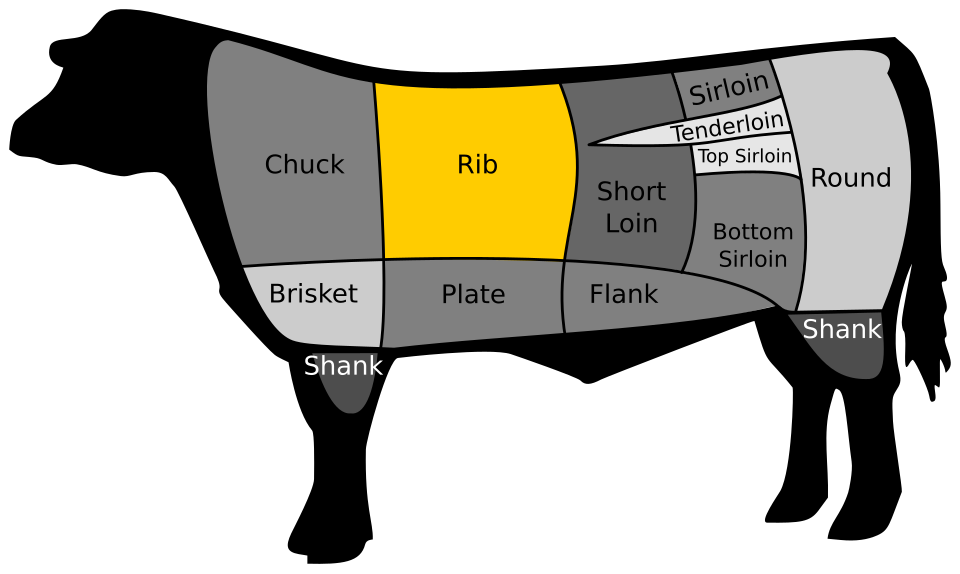
Ribeye
Rib roast · entrecôte · côte de bœuf
The muscle sitting over ribs six to eight. It barely moves during the animal's life, so the grain stays fine and intramuscular fat settles through it in a dense web. This is where the most spectacular marbling on any carcass appears.
The best pieces carry fine marbling all the way out to the fat cap around the spinalis, not just in the eye.
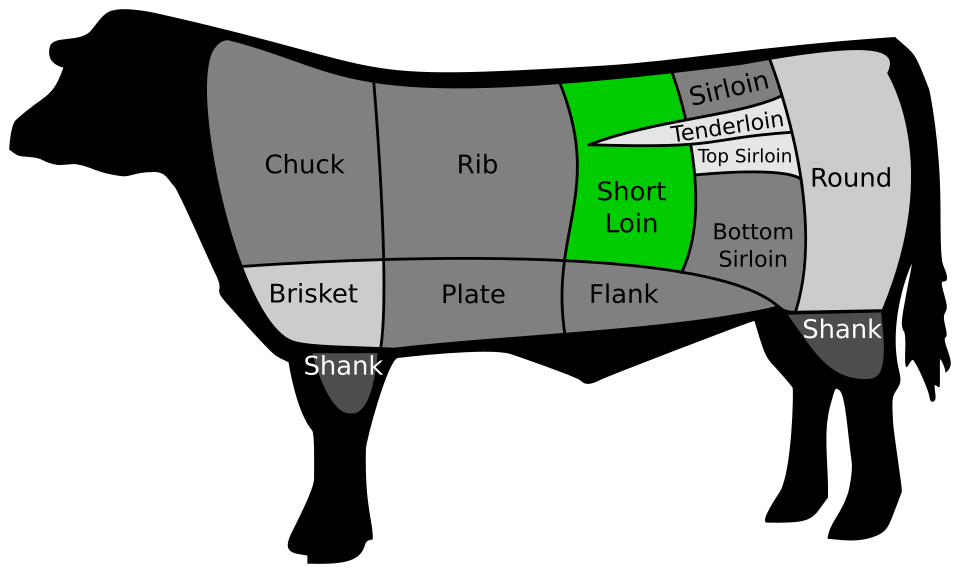
Striploin
New York strip · contre-filet · faux-filet
A single long muscle running along the spine, with a fat cap on one side only. That asymmetry gives it a definite grain and means the order you sear it in changes how it tastes.
A fat cap of at least 5mm, evenly attached along the length, cooks far juicier than a trimmed one.
Which one to buy
- Better forRibeye : Striploin
- GrillingRibeye95 : 85
- SteakAbout the same88 : 90
- Hot potRibeye40 : —
- RoastingStriploin— : 60
Other comparisons
All cuts
Beef Primals
Chicken Portions
Bluefin Tuna Cuts
Temperatures are guidance for whole-muscle cuts. Ground meat and poultry need 71°C / 160°F throughout.