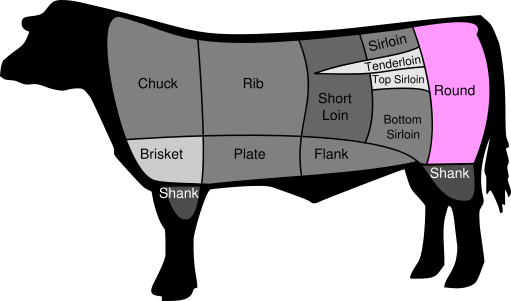
Pin the doneness and method you just left against the pick on this cut’s sheet. Last-versus-now stays on this device — teaching temperatures, not a diagnosis.
Not medical advice, a food-safety certificate or a guarantee. Use the published sheet temps and your own thermometer.
Last cook—
This cook—
Cook sequence from this cut sheet
Follow published Round — teaching, not a thermometer app.
Name the cut — Confirm Round on the sheet.
Pick doneness — Target Medium rare ~57°C.
Pair first method — Lead with Raw beef dishes.
Keep safety note — With no fat to protect it, direct high heat turns this cut dry in moments. Low and slow is the answer.
Last-vs-now is a pin — Cook-pair is a bookmark, not a certificate.
Round: Medium rare (57°C) via Raw beef dishes.
Editorial butchery teaching only. Not HACCP or medical advice.
Substitute cut and safety stop
After the cook sequence for Round, a second sheet pass: published swap cut plus the safety line already on this page.
Name the printed substitute — If Round is missing at the counter, the sheet points to related cut Shank — same atlas, not inventing a new primal.
Check shared method fit — Prefer a published method that still fits the substitute; lead method on this sheet is Raw beef dishes.
Hard stop on safety — With no fat to protect it, direct high heat turns this cut dry in moments. Low and slow is the answer.
Keep cook-pair as a pin — Saving a cook-pair bookmarks this sheet; it is not a food-safety certificate.
Round → swap toward Shank; stop on the printed safety line before plating.
Editorial butchery teaching only. Not HACCP or medical advice.
Cook, swap, or skip
Kitchen teaching. Not a food-safety certificate.
Doneness and method on this cut
What temperature does this page recommend for this cut?
The cut sheet already prints 60°C (Sous vide preferred) for Round. That is the published recommendation on this page, not a live thermometer reading.
Which cooking method fits this cut?
This sheet lists Raw beef dishes · Braised in soy · Jerky with fitness scores. Pair one of those methods with a doneness from the published scale (Blue 46 C through Well done 77 C). The cook-pair block pins last versus now — teaching, not a diagnosis.
Can I serve this cut pink?
Follow the sheet note already on this page: With no fat to protect it, direct high heat turns this cut dry in moments. Low and slow is the answer. Connective-tissue cuts ask for time; tender steaks ask for a rest after the published temp. The safety note at the bottom still applies.
Is the doneness scale a food-safety certificate?
No. The pair tool and the recommended temp are teaching numbers from this atlas. Use the printed sheet and your own thermometer. This page is not a medical or hygiene certificate.
JoeSmack at en.wikipedia · Public domain
The hind leg. It works hard for a living, so it carries almost no fat and the highest protein density on the carcass. That is exactly why raw beef dishes are cut from here.
Profile
Tenderness36
Marbling22
Umami62
Price34
Pairs with
Raw beef dishes90
Braised in soy85
Jerky70
Recommended cooking
60°CSous vide preferred
With no fat to protect it, direct high heat turns this cut dry in moments. Low and slow is the answer.
How to pick it
For anything served raw, buy from a counter that can tell you the slaughter date and choose the clearest, brightest colour.